Trigonometric equations and inequalities
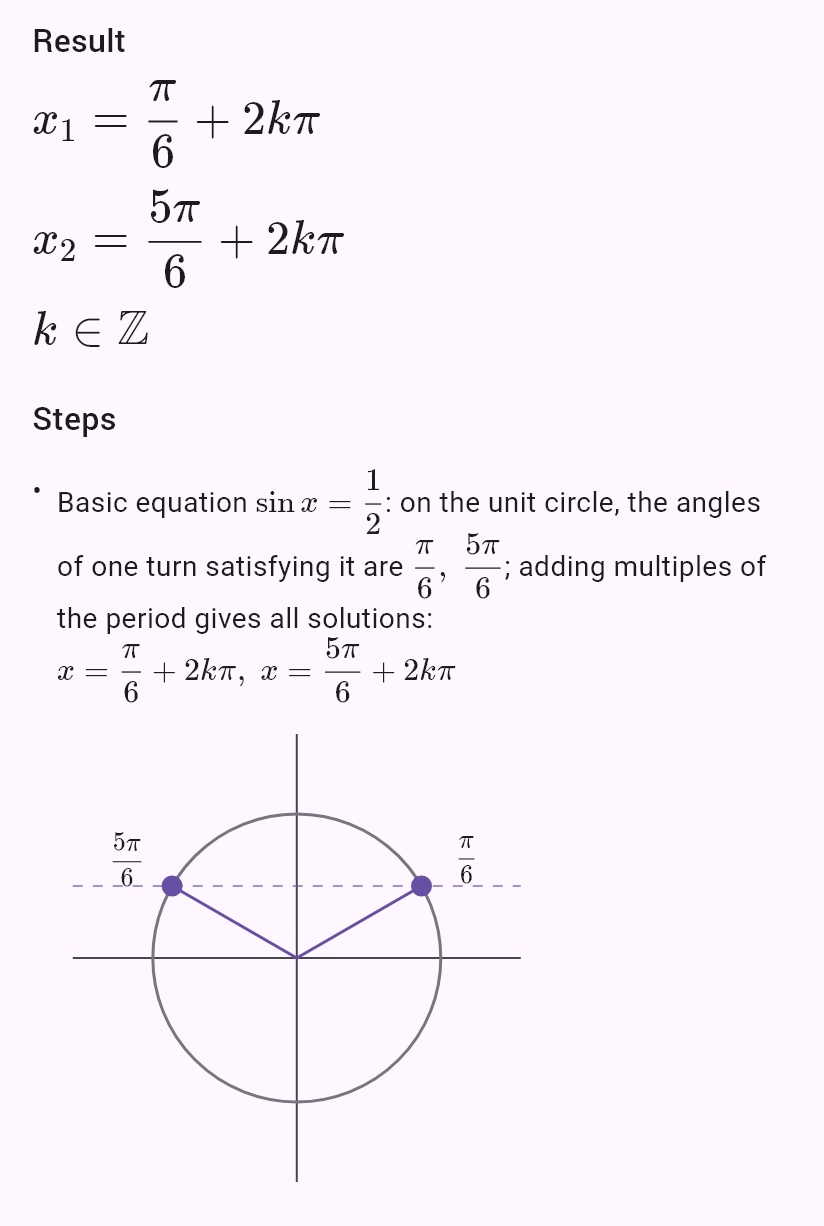
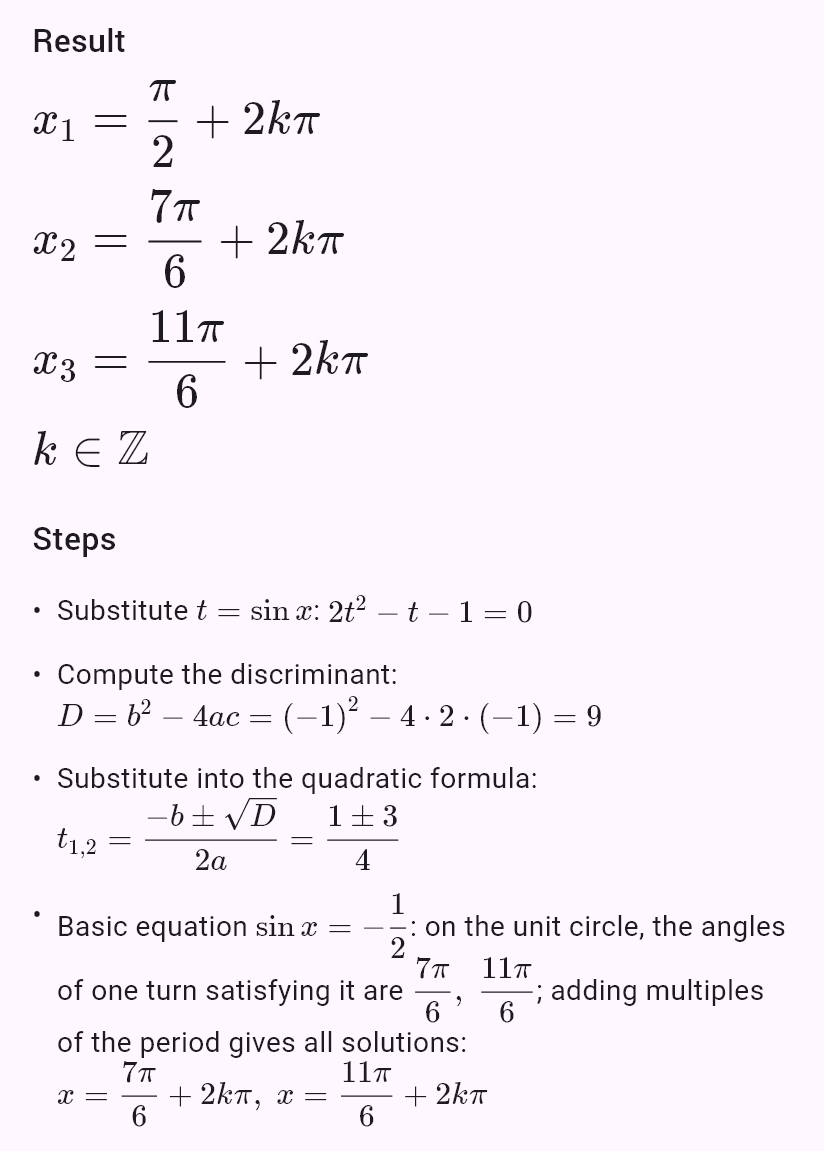
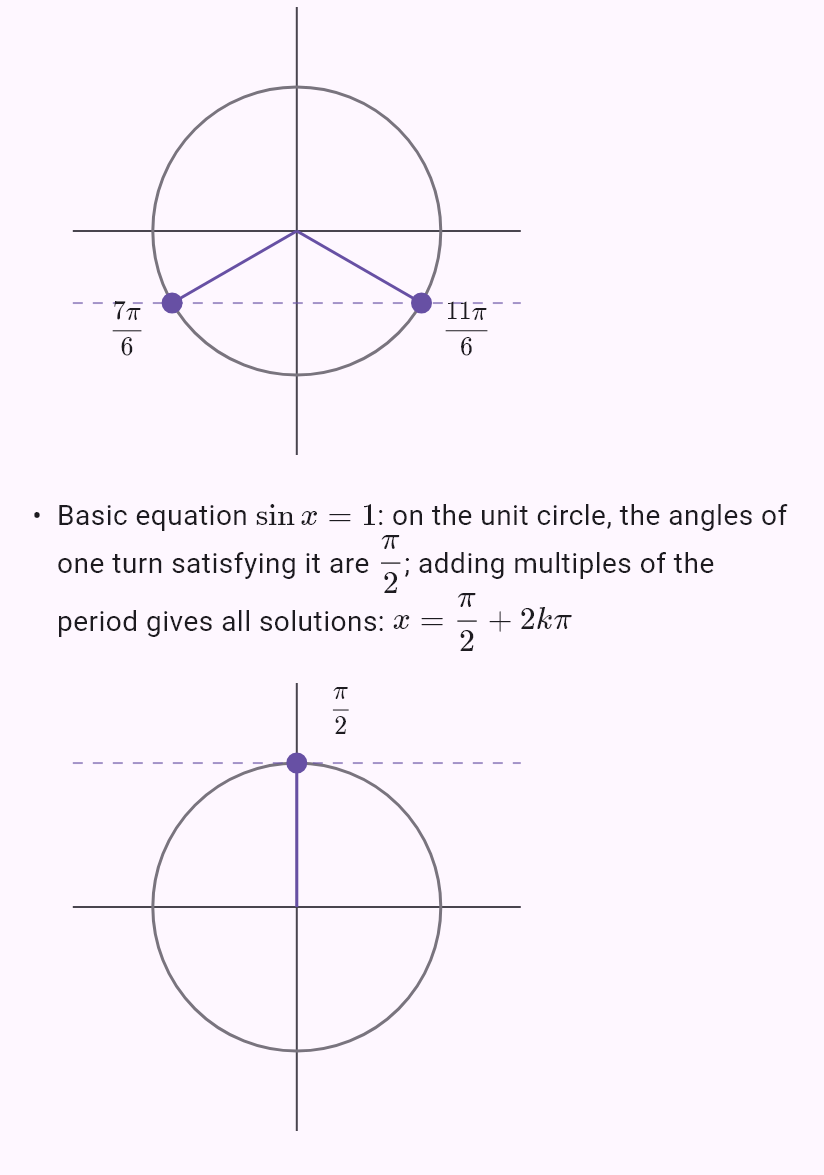
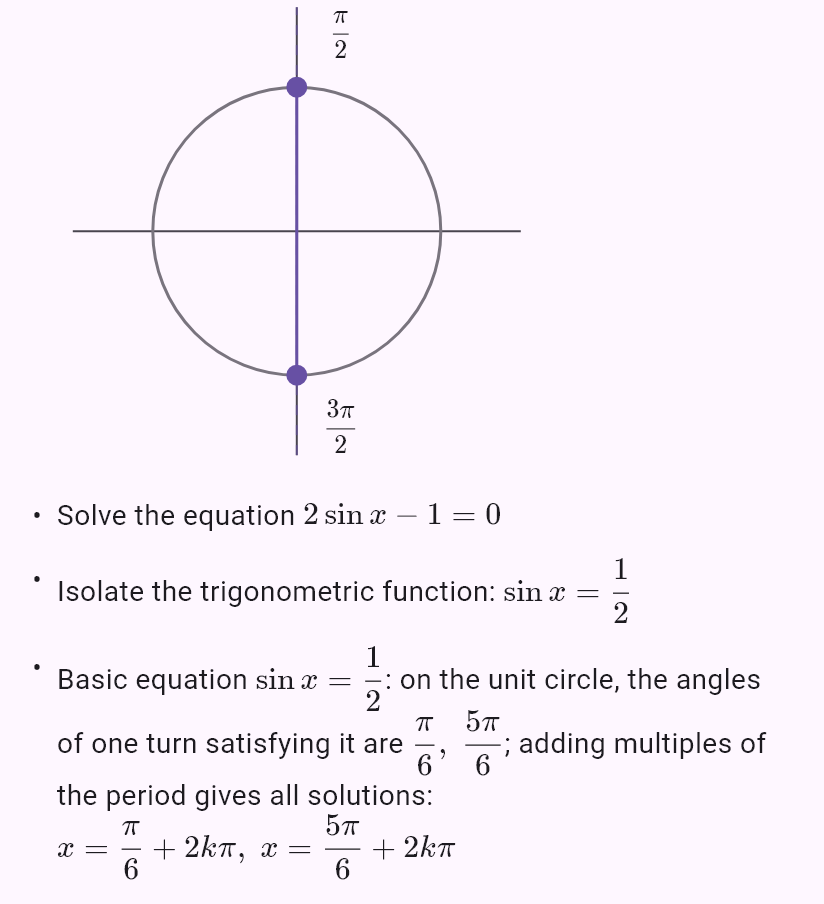
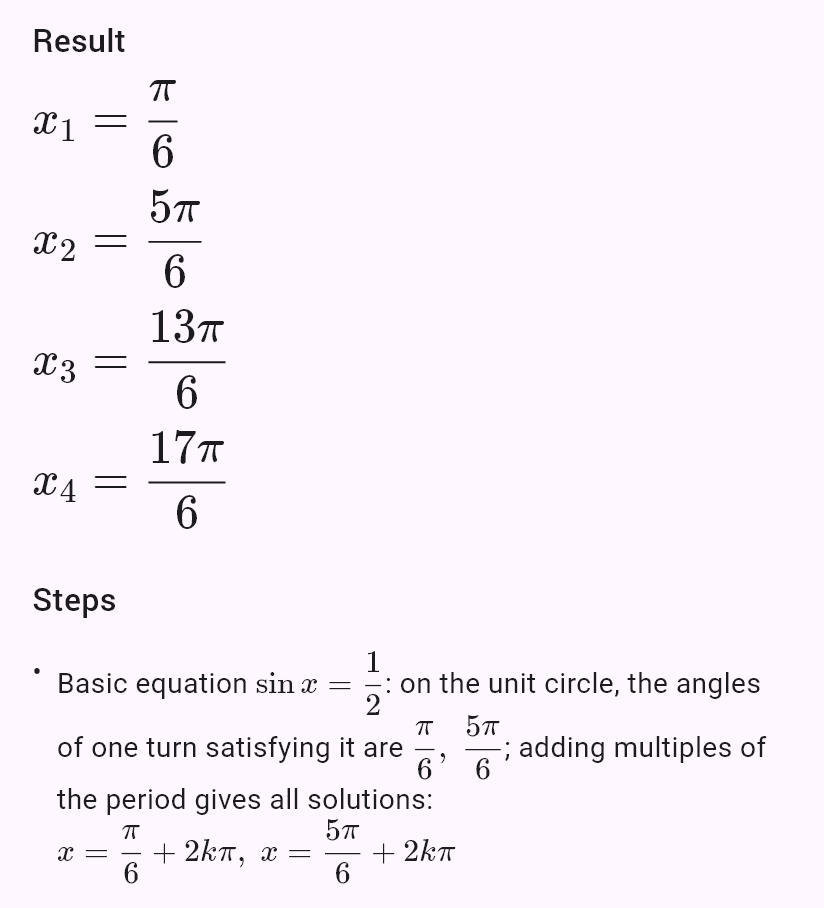
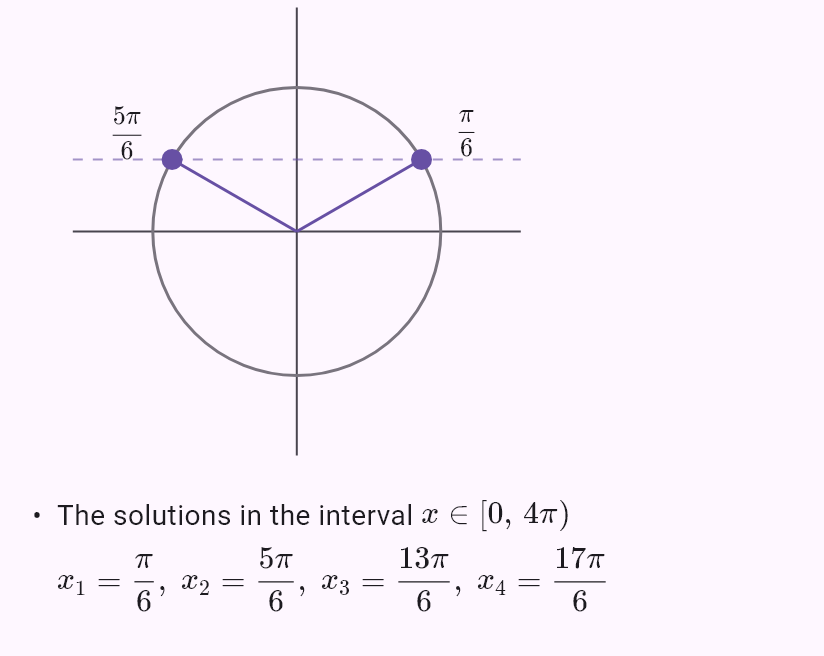
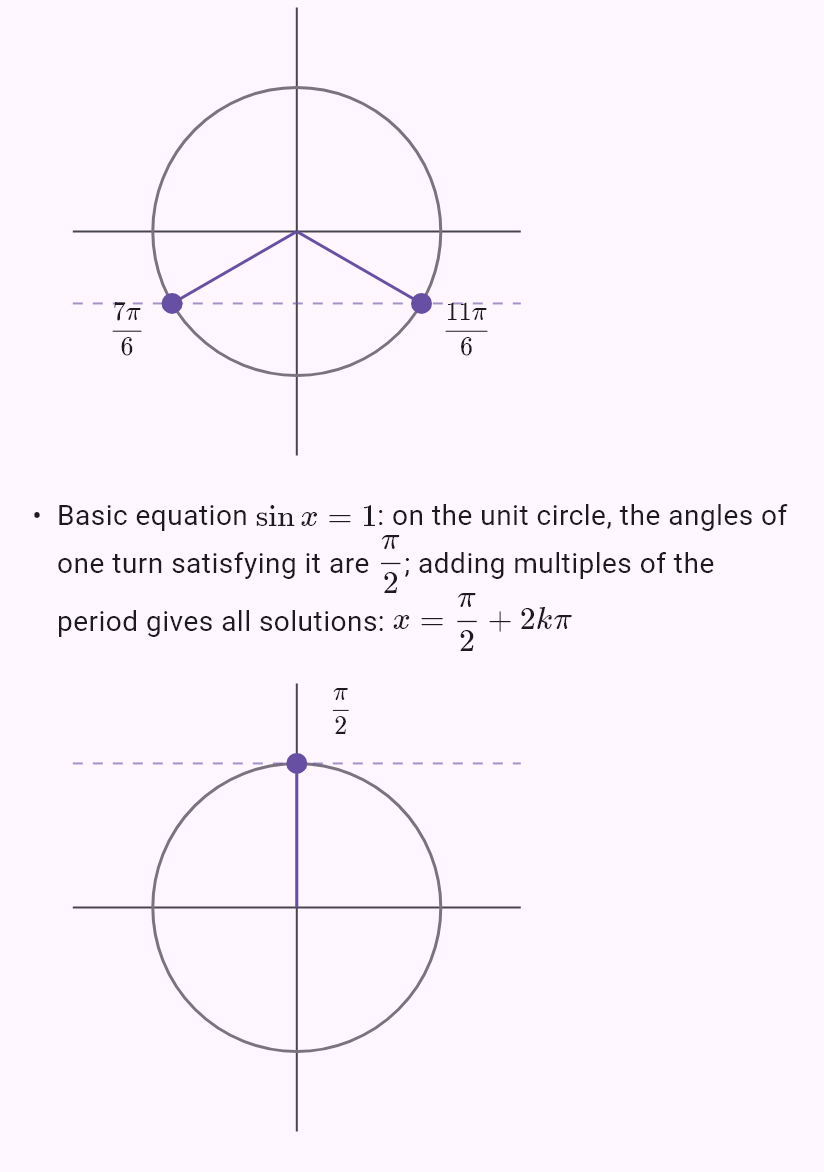
The app brings an equation to basic equations such as sin x = a and solves them on the unit circle: it finds the angles of one turn and adds multiples of the period (x = π/6 + 2kπ, k ∈ ℤ). The circle is drawn right in the steps.
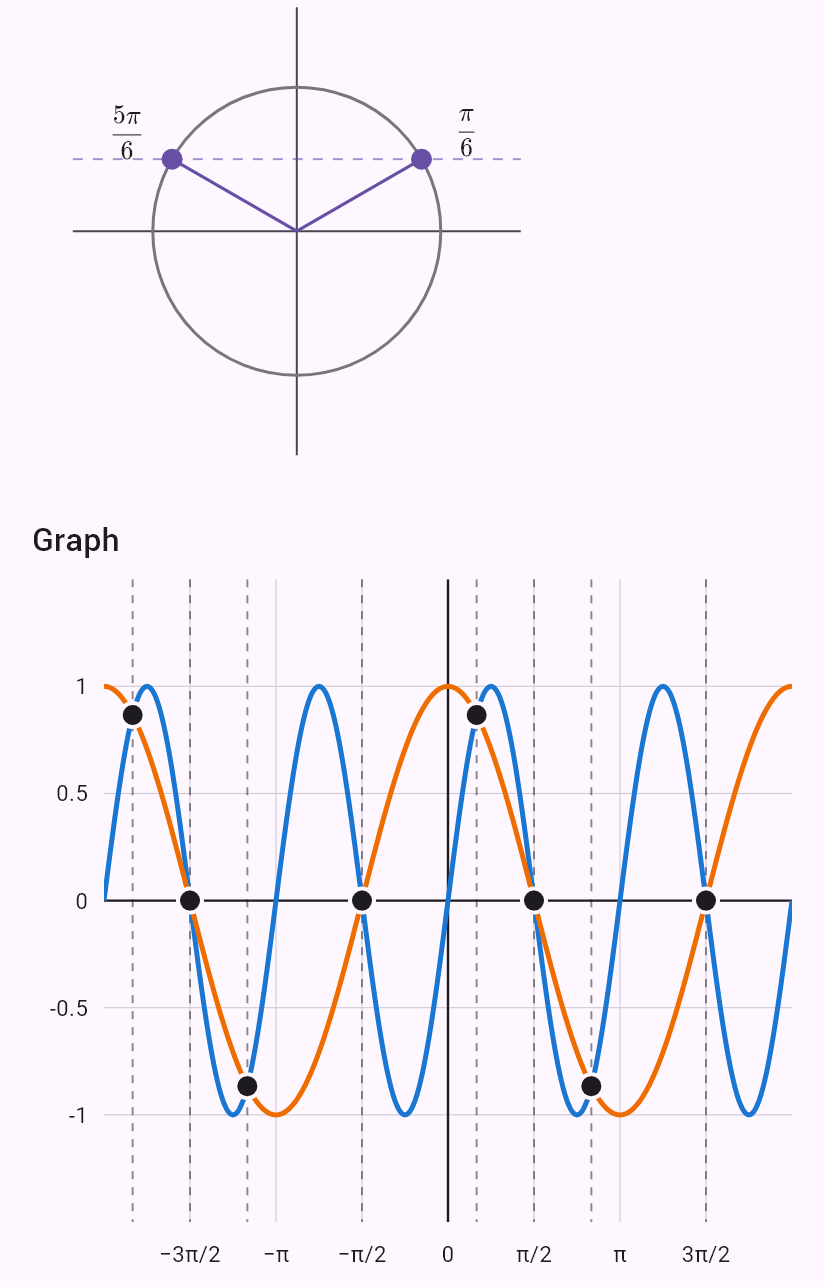
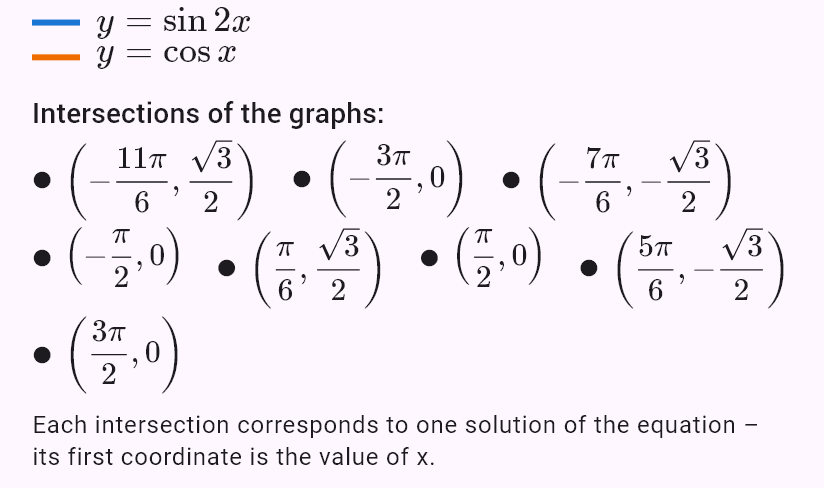
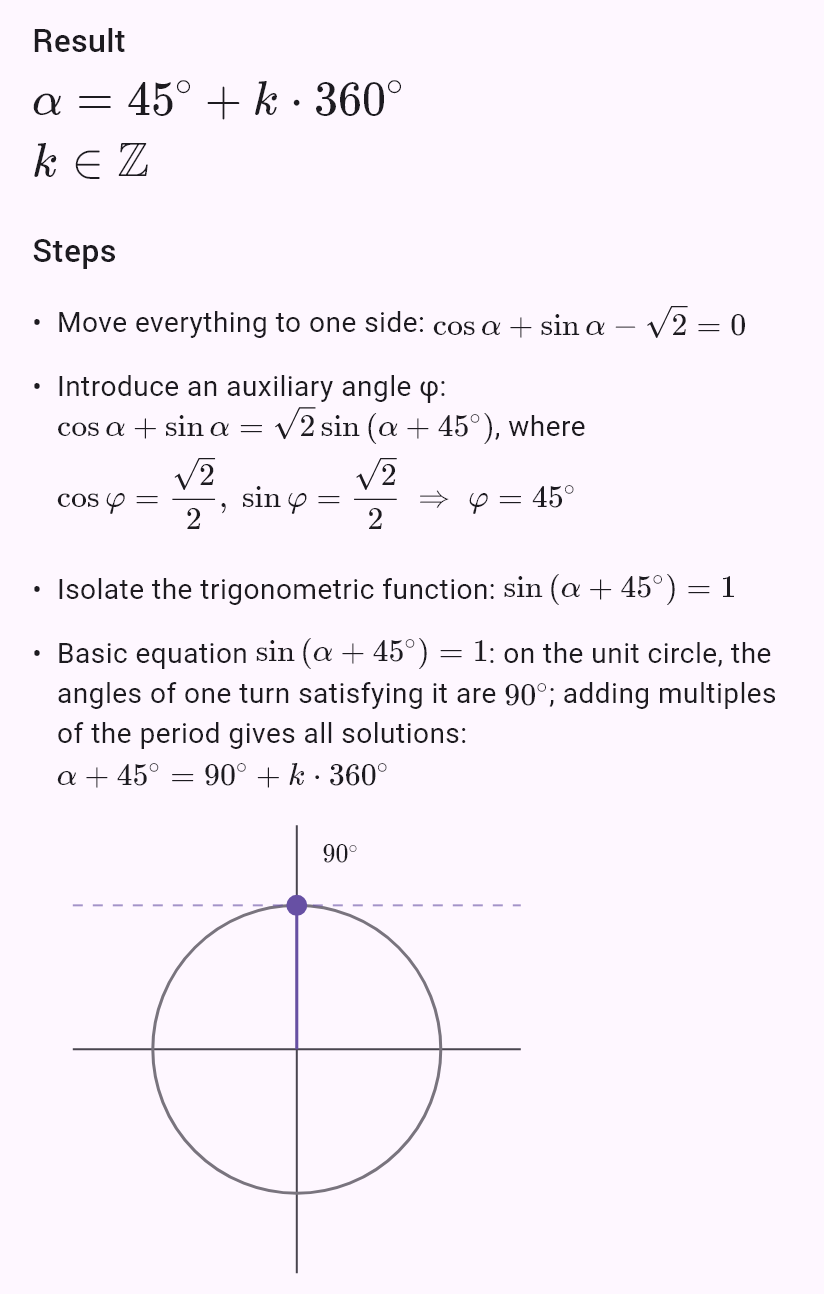
It prefers the known formulas – double and half angle, sin²x + cos²x = 1, sum to product –, then factoring, the substitution t = sin x, dividing a homogeneous equation by cosⁿx and the auxiliary angle for a·sin x + b·cos x = c. The result is also checked numerically over a whole period.
An unknown written as a Latin letter (x, t) is in radians, a Greek one (alpha, β, …) in degrees – as is an input with the ° sign (sin(x + 30°)). To get the roots in a given interval, add the interval after a comma or on the next line.
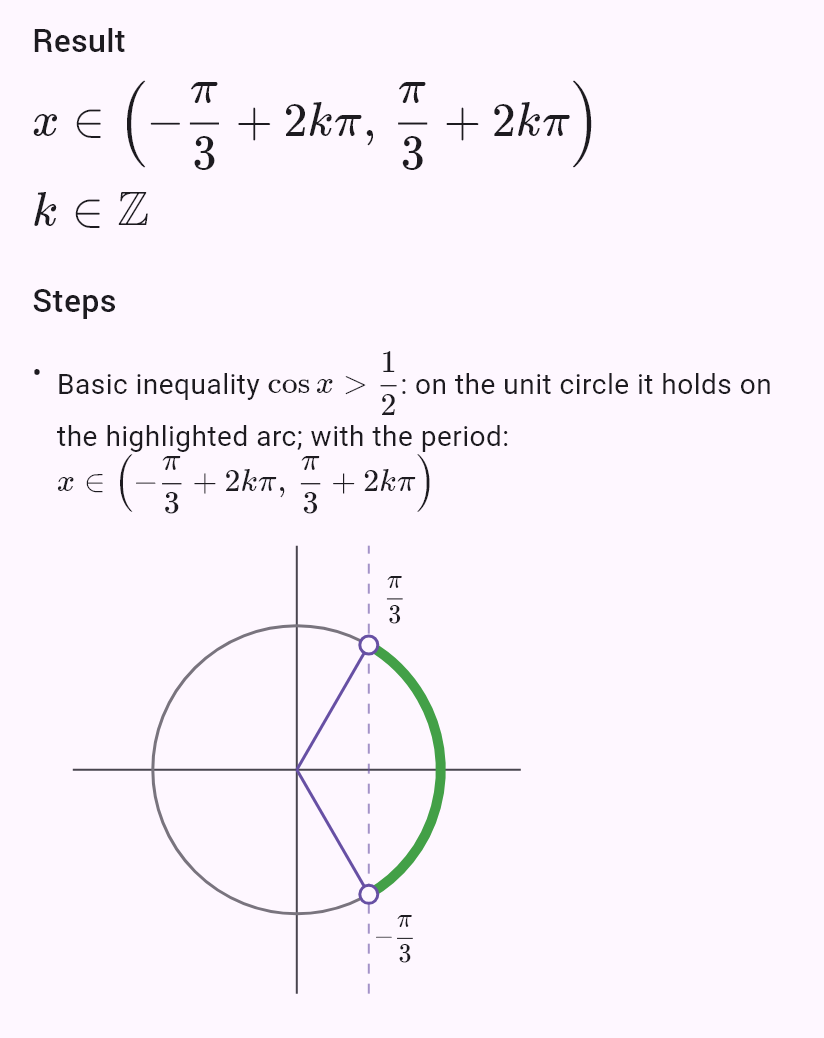
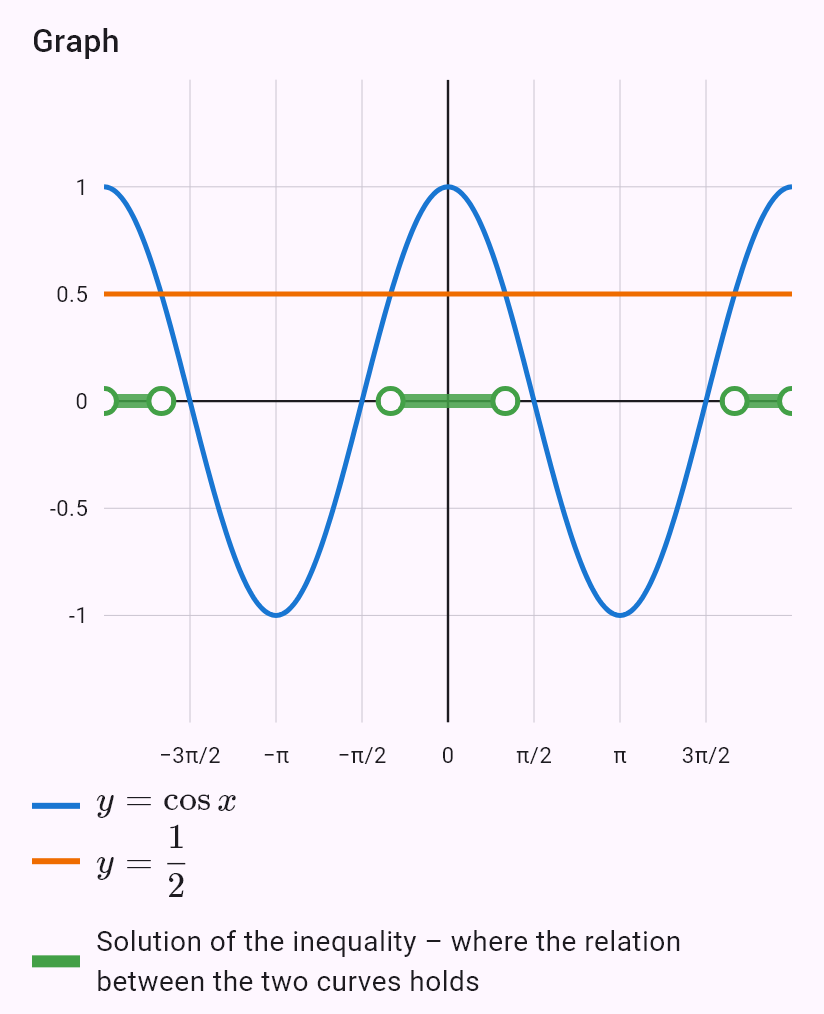
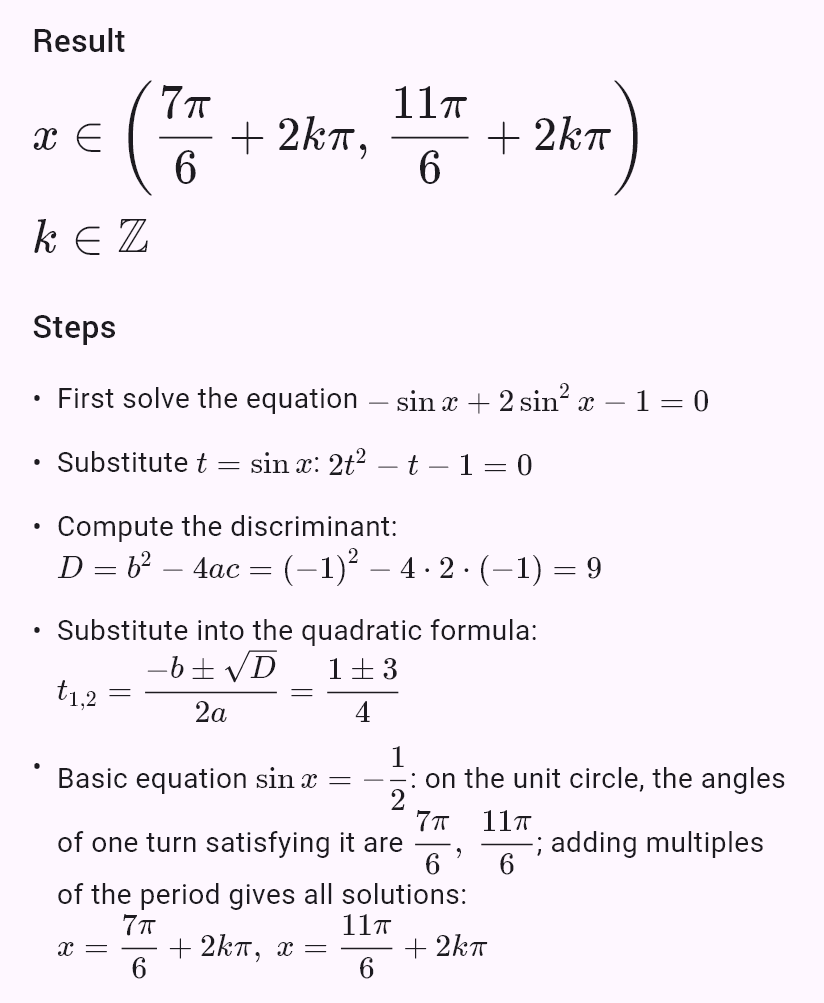
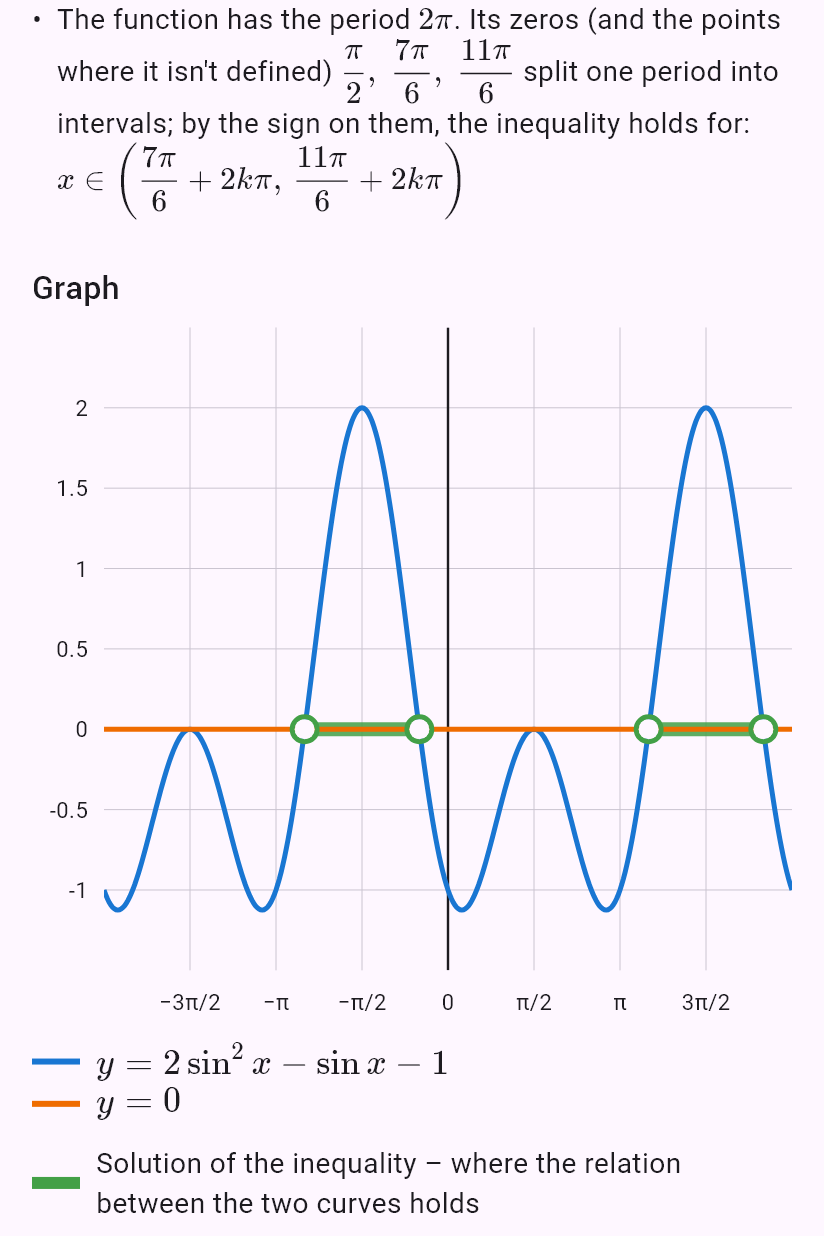
An inequality is solved by an arc of the unit circle, a more complex one by the zeros on one period; the result is intervals with the period.
Examples
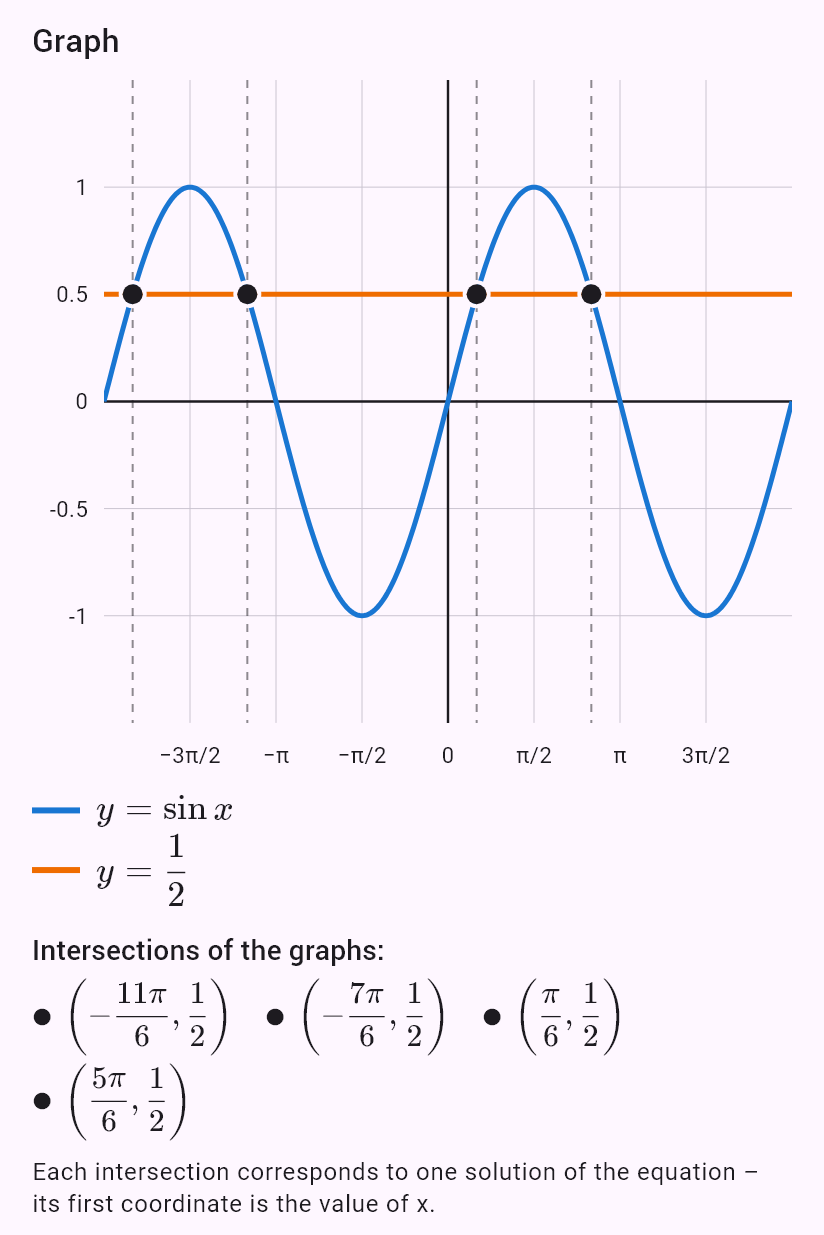
sin x = 1/2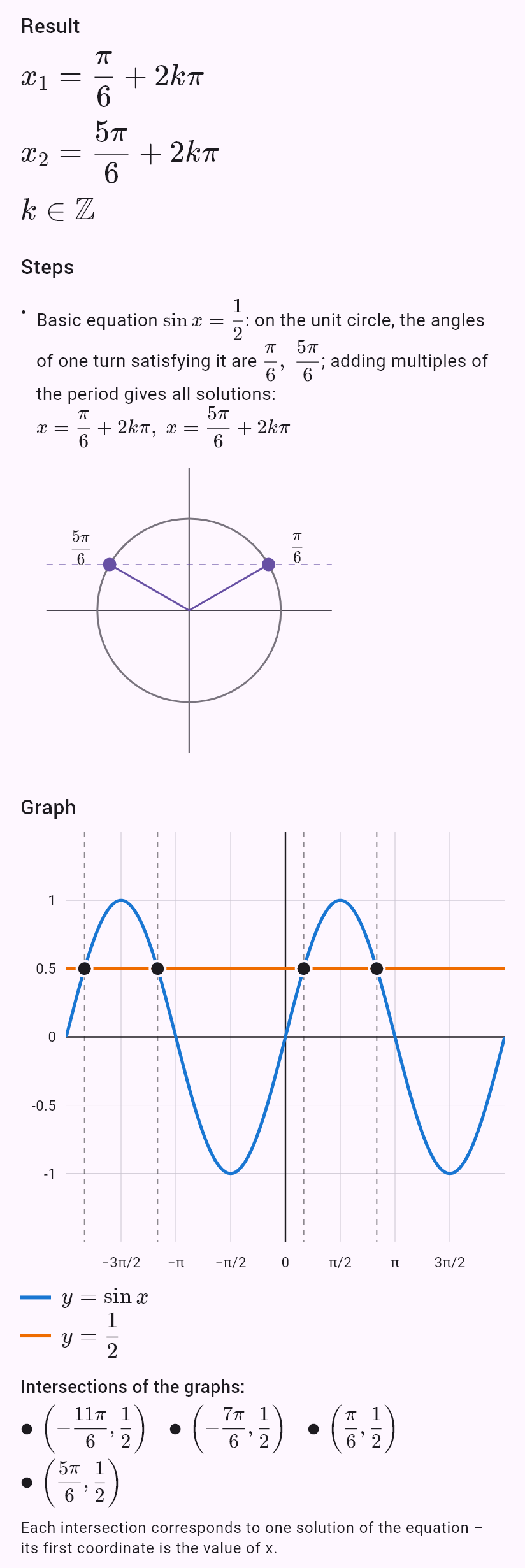
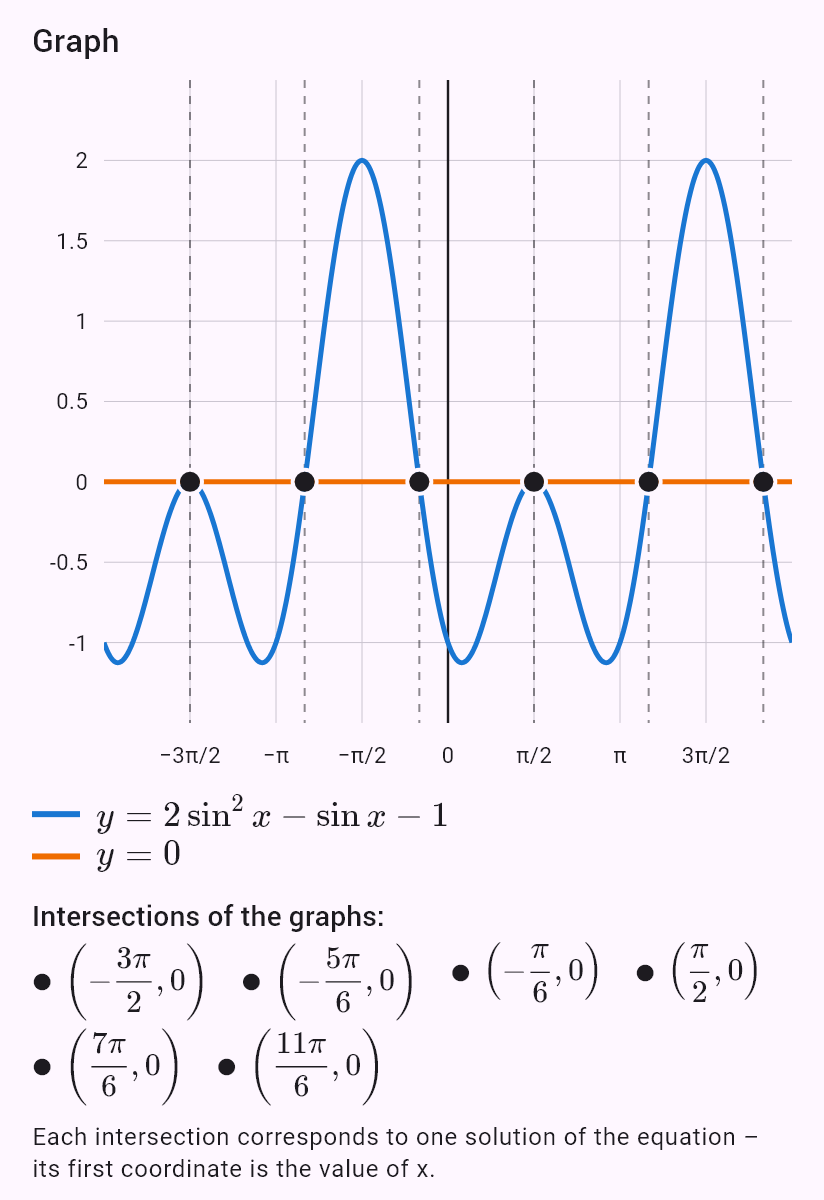
2sin^2 x - sin x - 1 = 0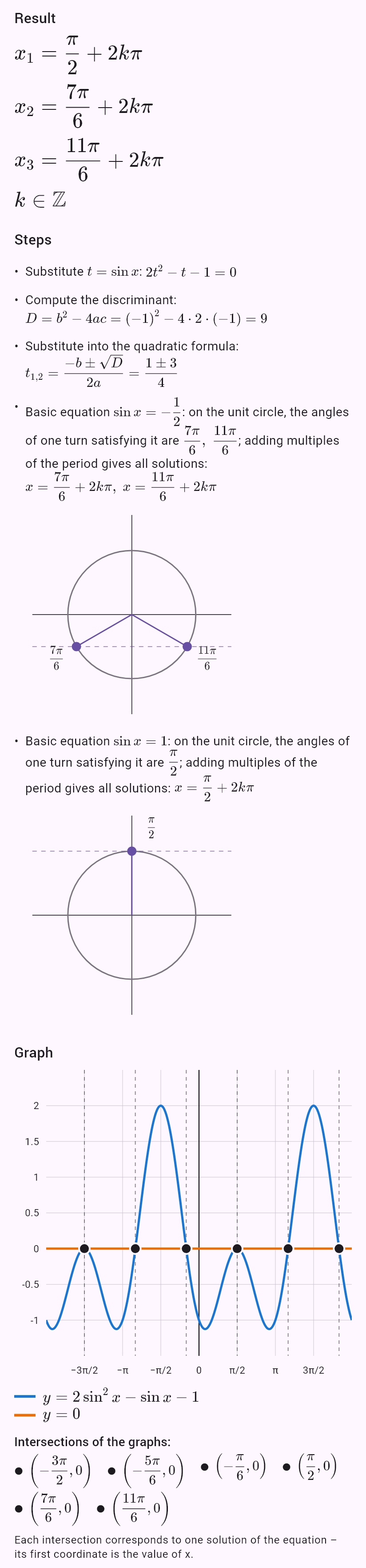
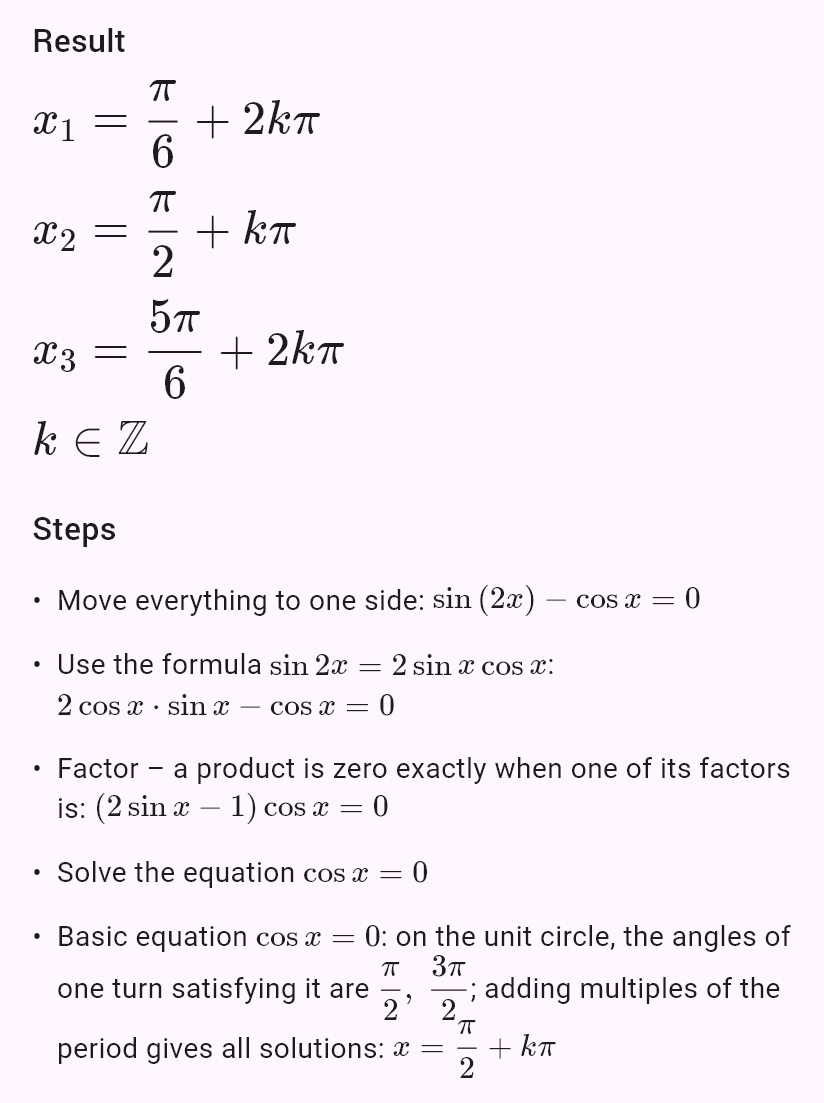
sin 2x = cos x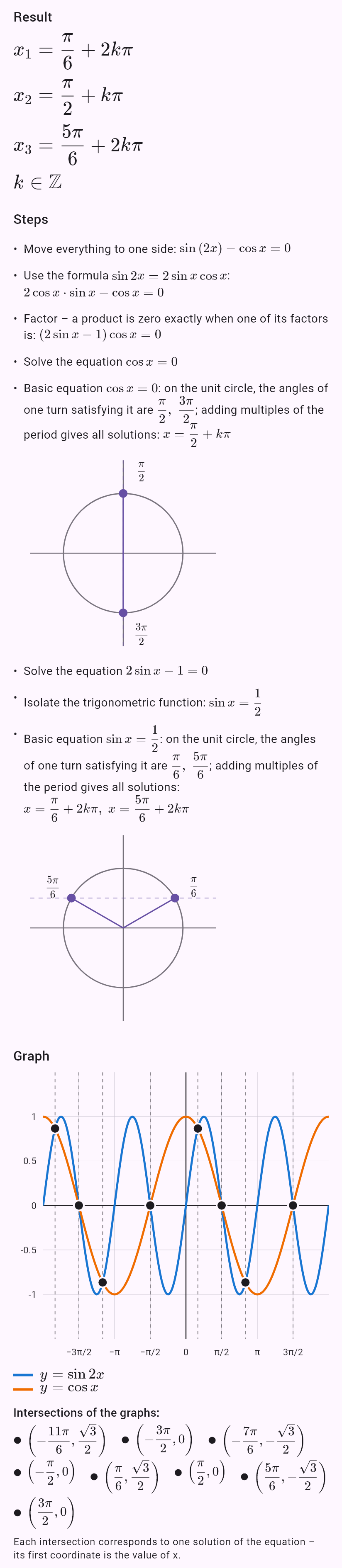
sin x + cos x = 1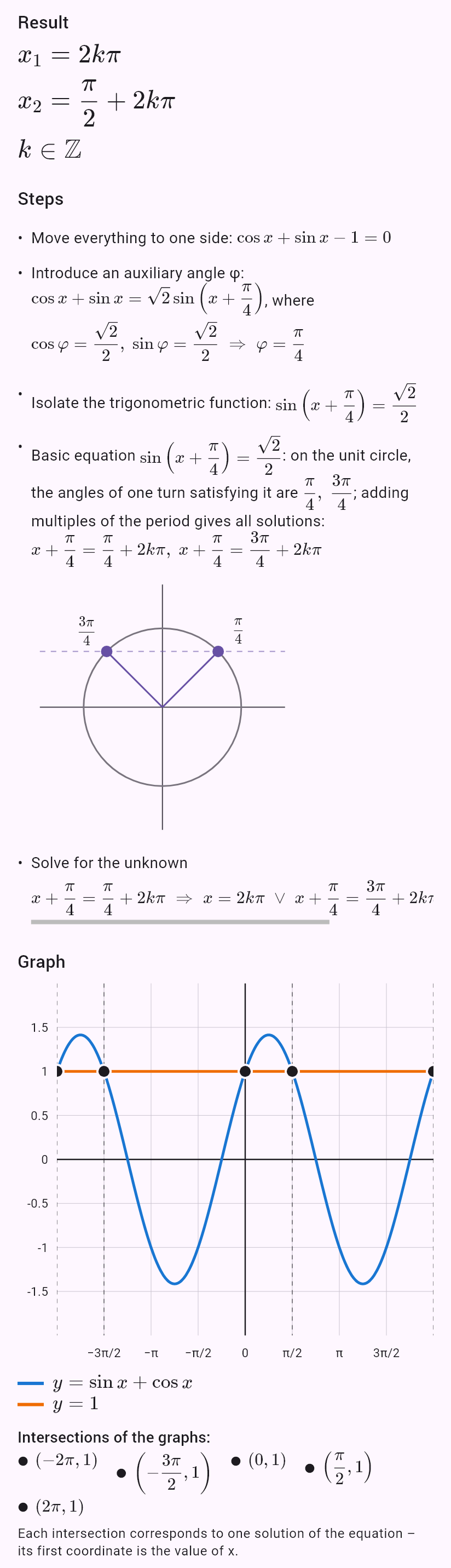
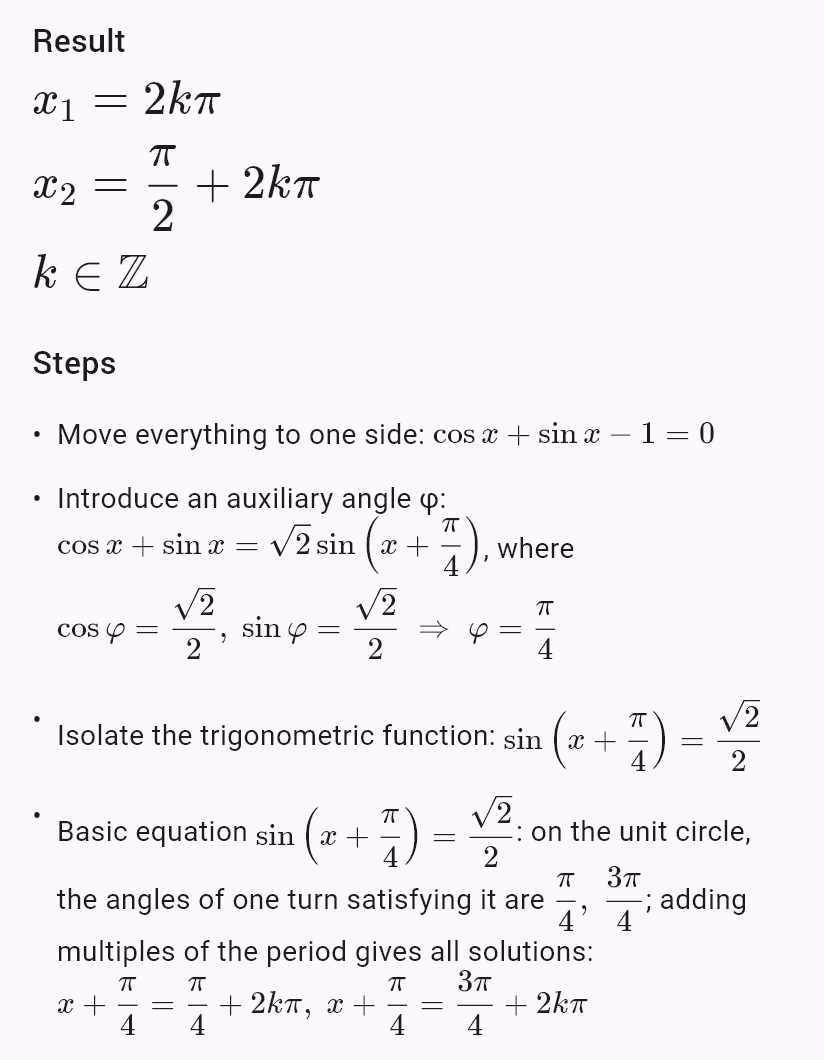
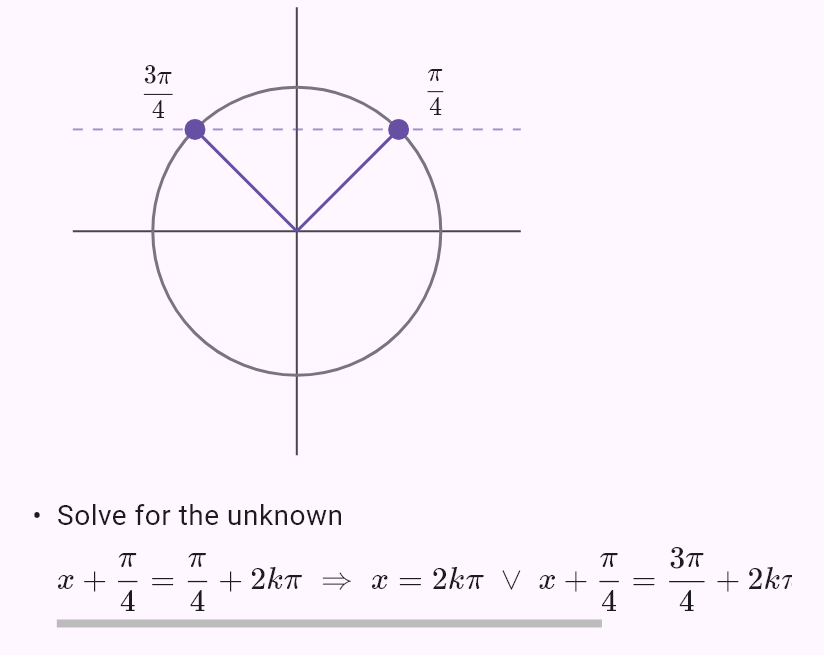
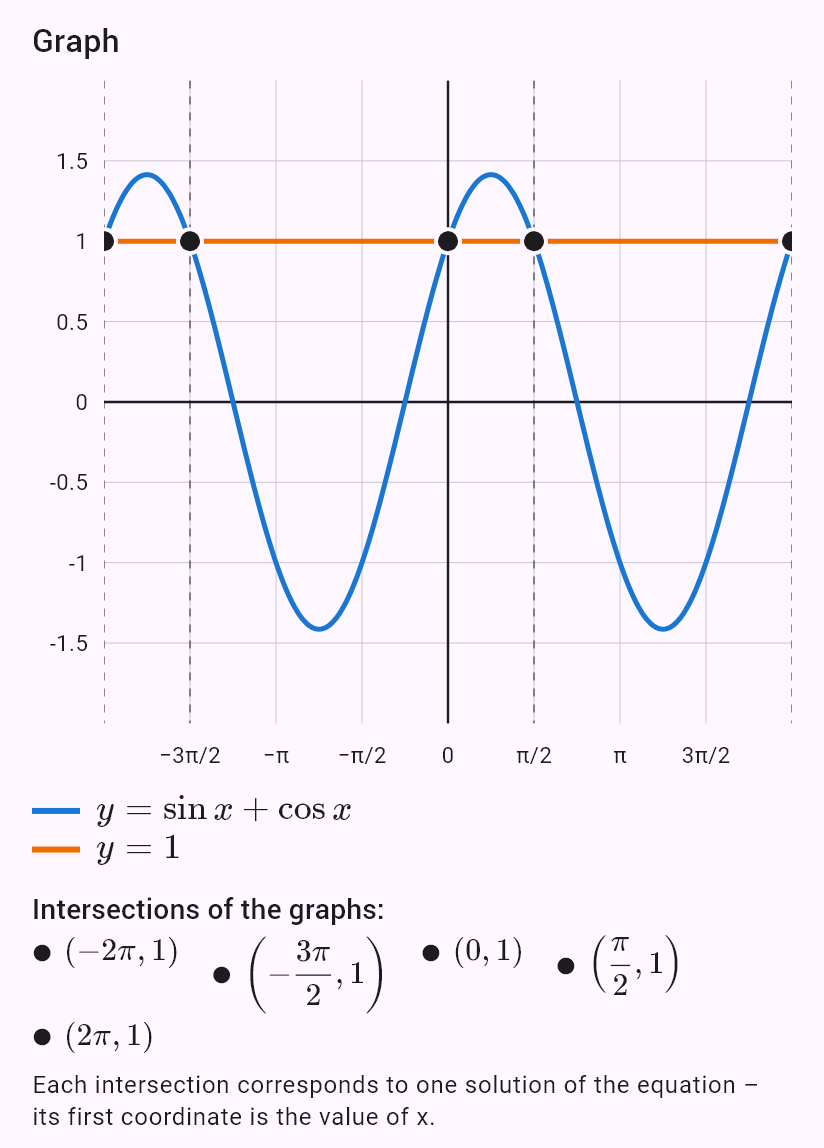
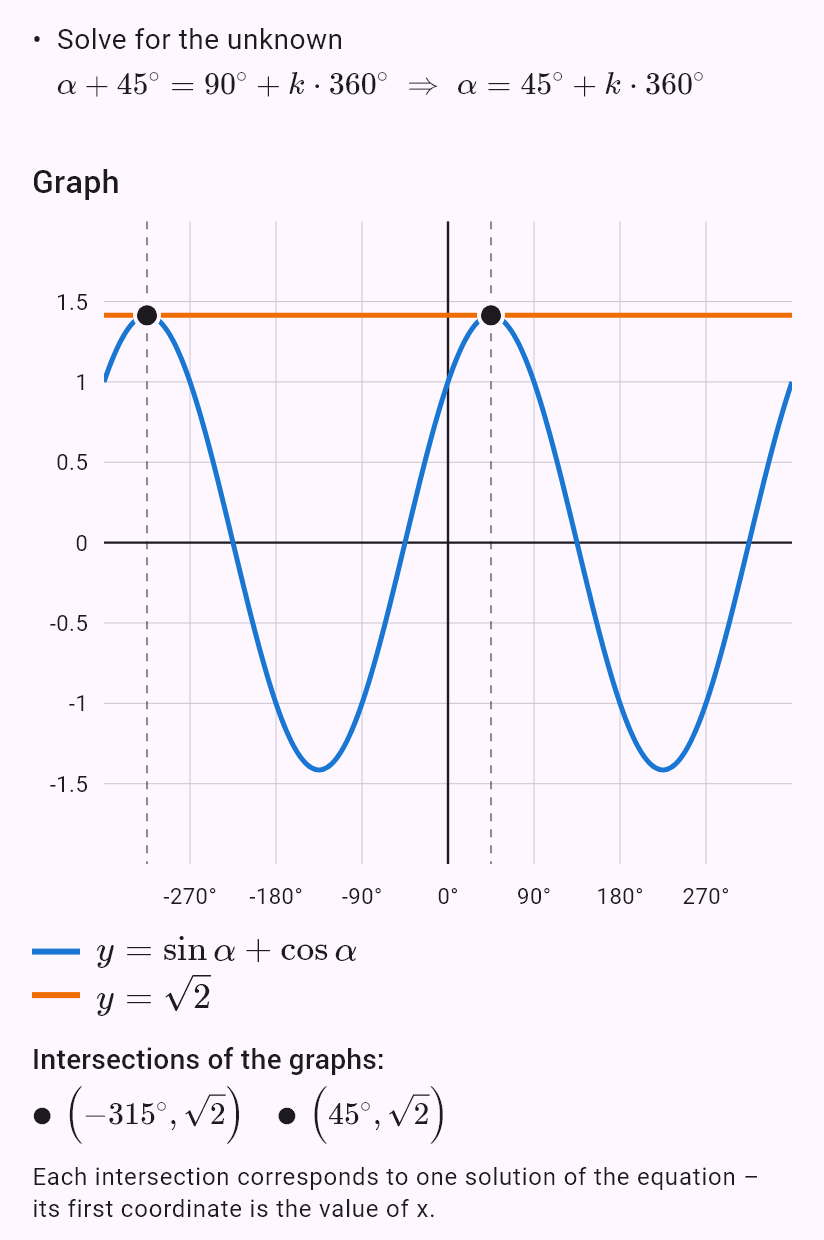
sin alpha + cos alpha = sqrt(2)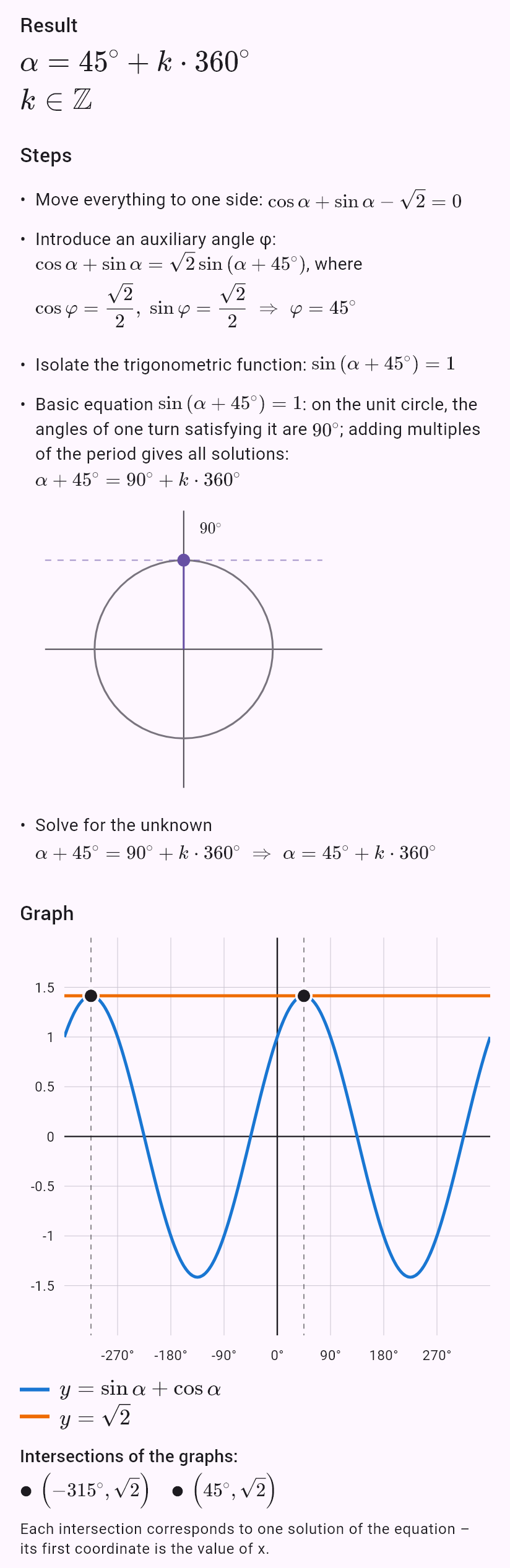
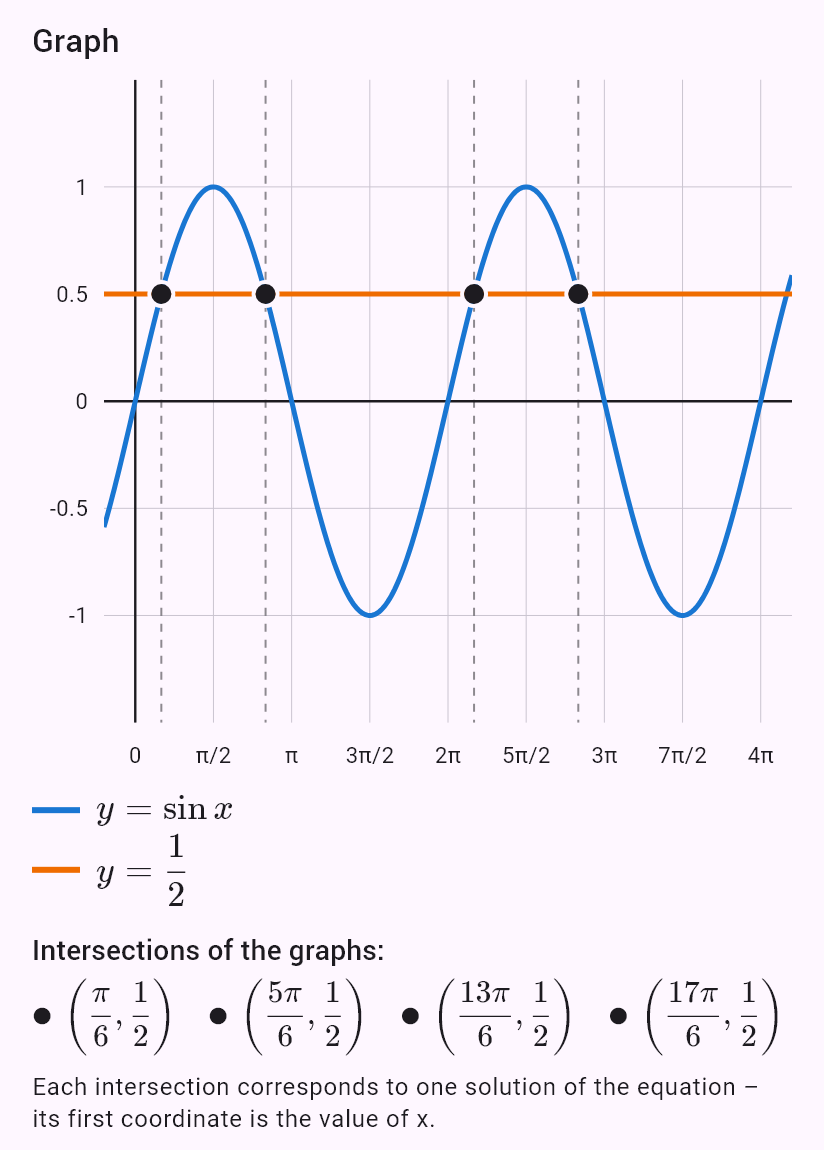
sin x = 1/2, x ∈ <0; 4pi)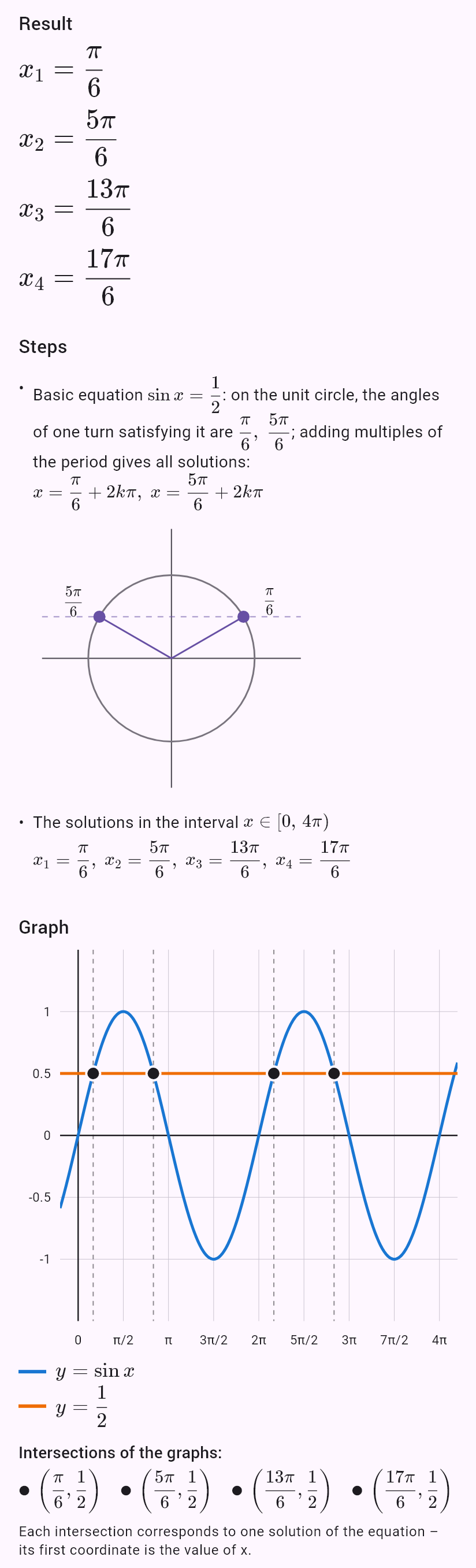
cos x > 1/2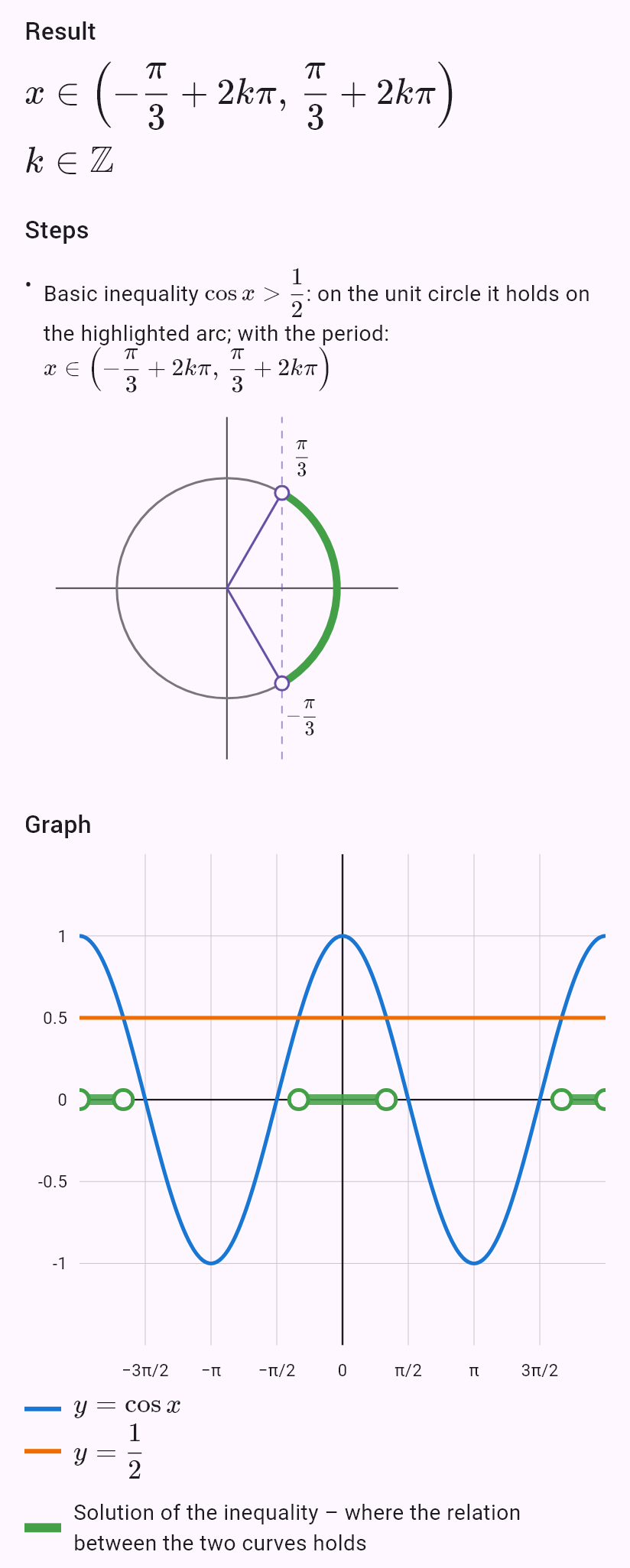
2sin^2 x - sin x - 1 > 0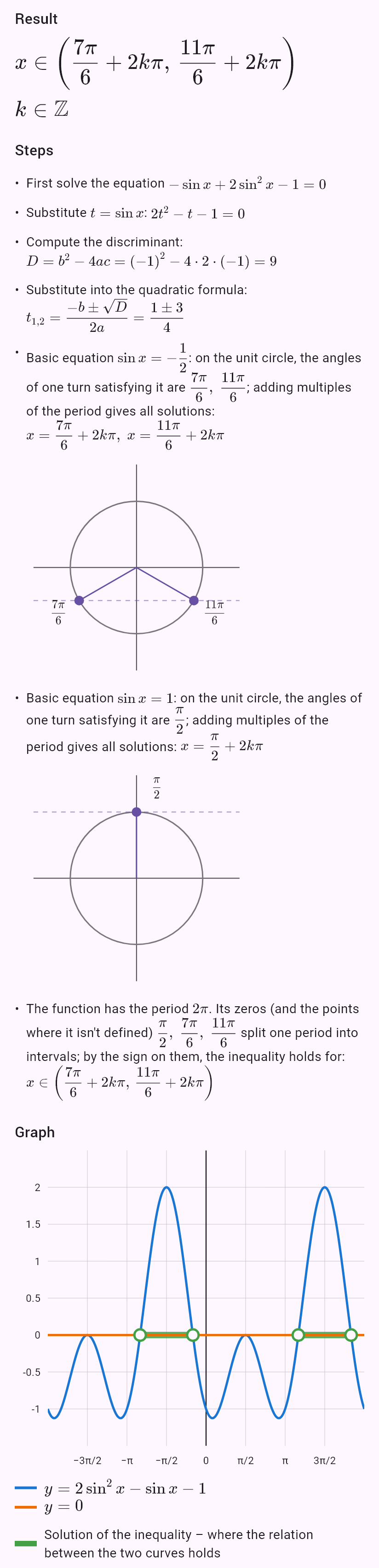
Known limitations
- Equations with the unknown also outside a trigonometric function (x = cos x) are solved only numerically, without the period.
- A double trigonometric inequality (−1/2 < sin x < 1/2) and trigonometric functions inside an absolute value are not supported yet.