Inequalities and systems of inequalities
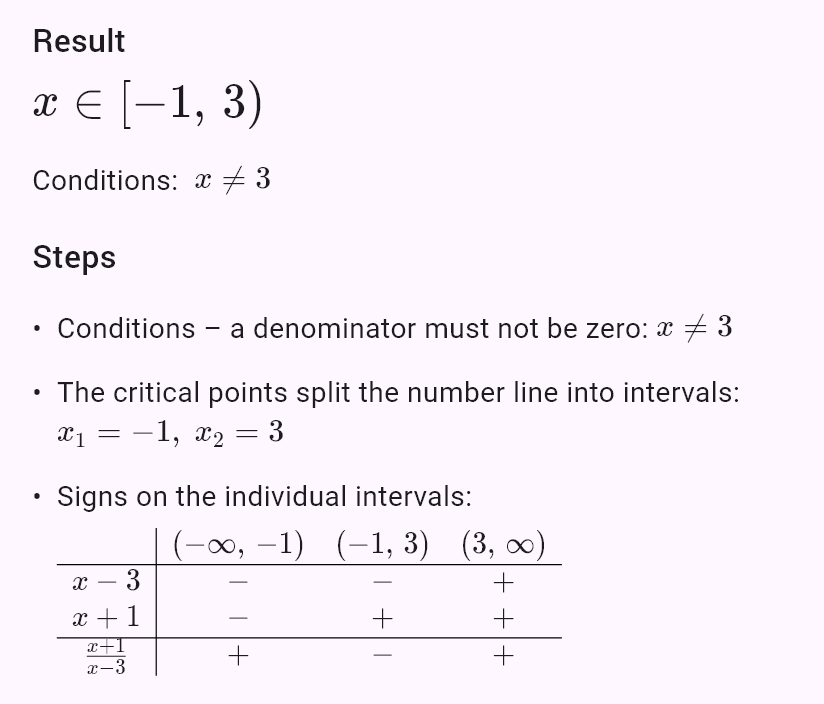
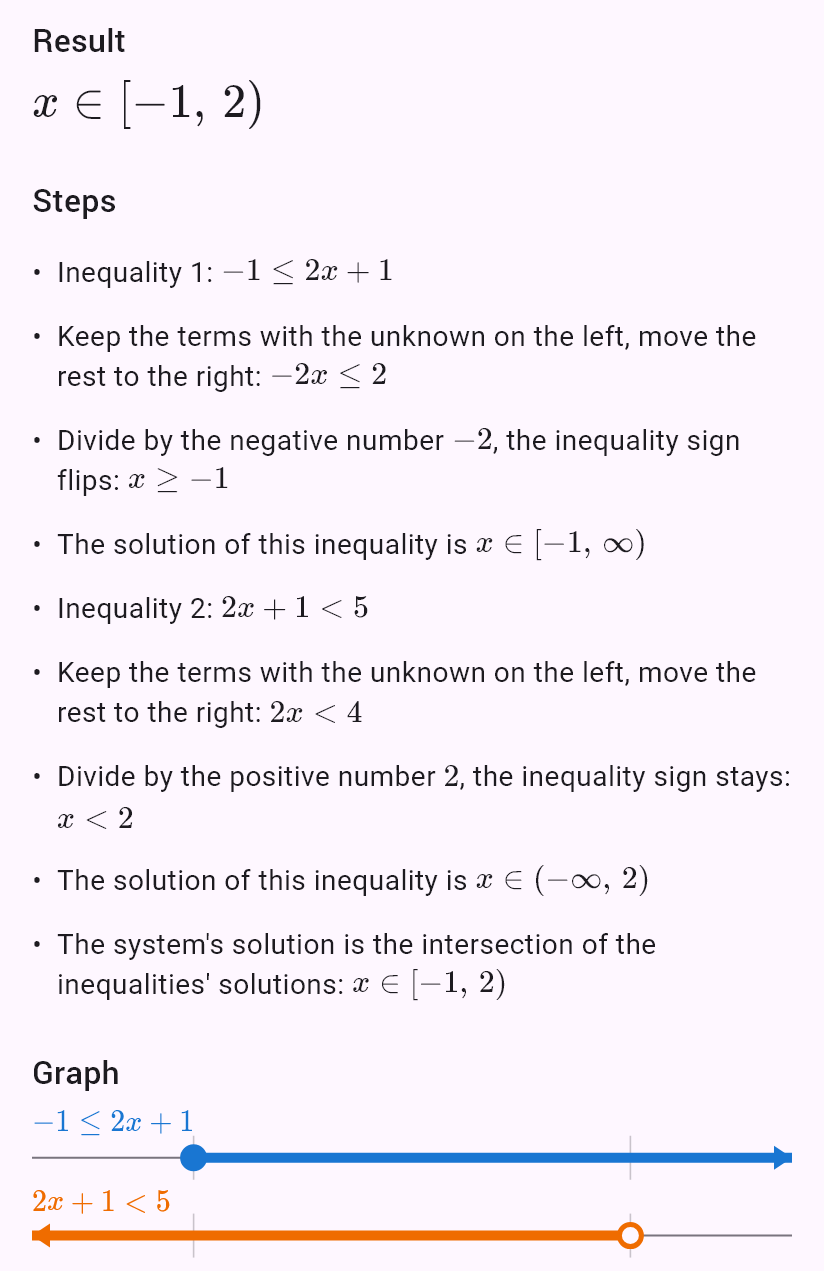
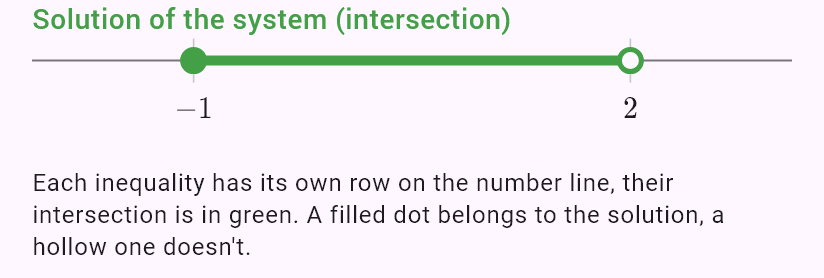
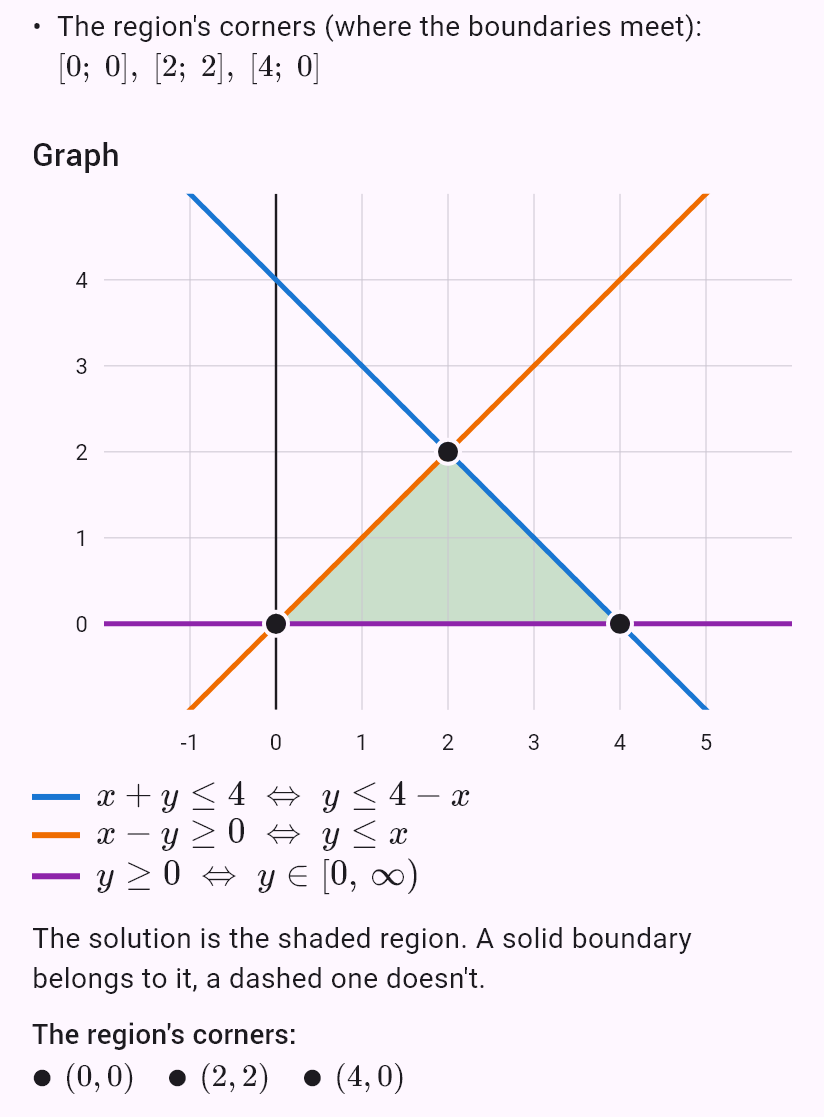
The app solves quadratic and rational inequalities with the zero points and a sign chart. A double inequality and a system of inequalities are solved as the intersection of the solutions of the individual inequalities, shown on a number line. A system of inequalities in two unknowns is solved as a region in the plane, shaded in the graph.
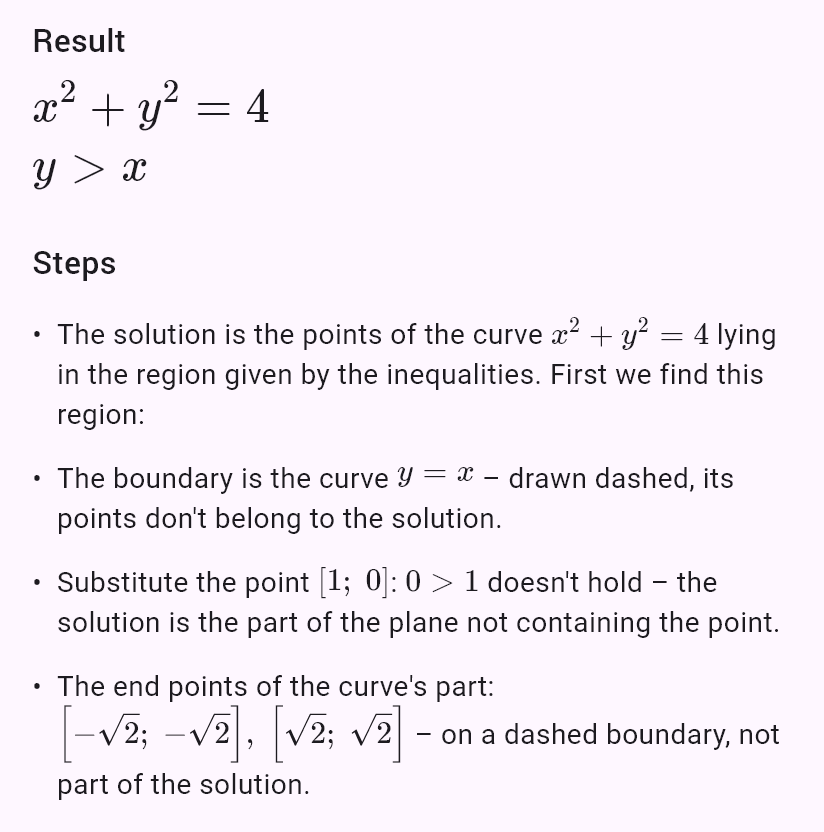
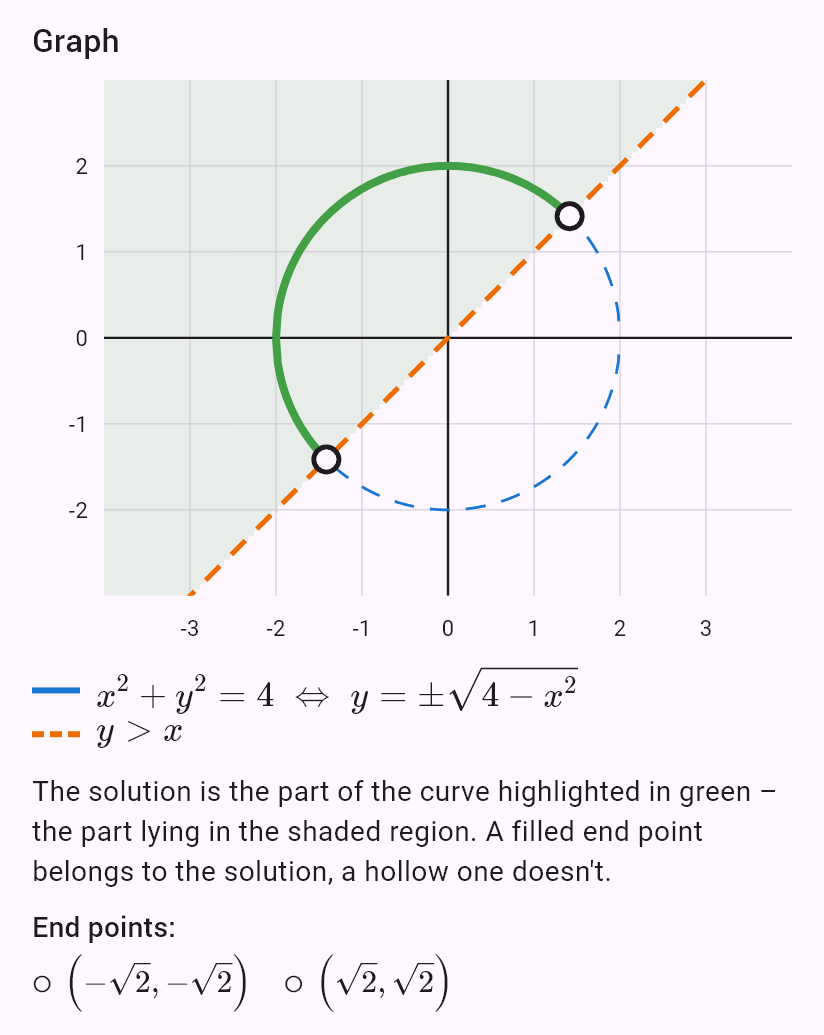
In a system of inequalities in two unknowns the app also lists the region’s corners – the intersections of the boundaries with exact coordinates. A system of an equation and inequalities in one unknown is solved by solving the equation and substituting its roots into the inequalities; in two unknowns the solution is the part of the equation’s curve lying in the inequalities’ region – highlighted in the graph, its end points computed exactly. A system can also be written on one line, separated by semicolons (2ˣ > 4; 3ˣ < 81).
Examples
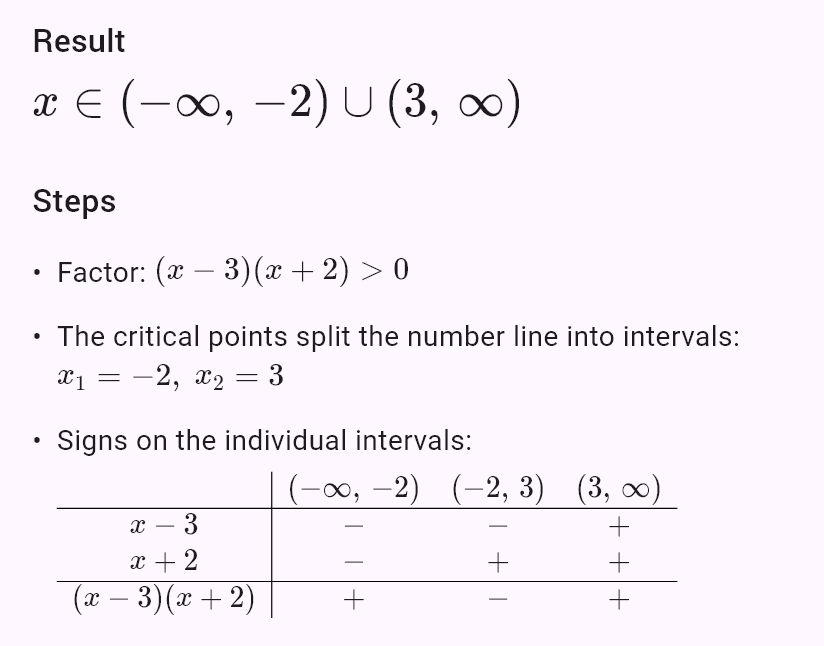
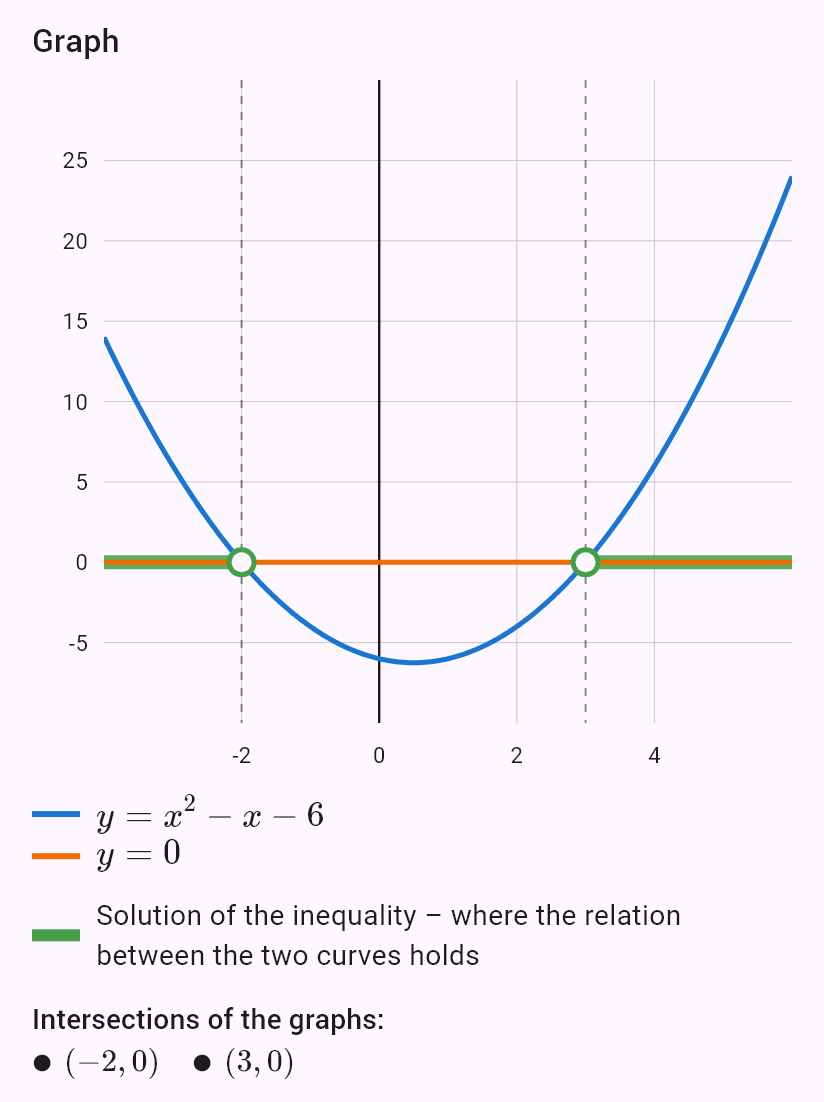
x^2 - x - 6 > 0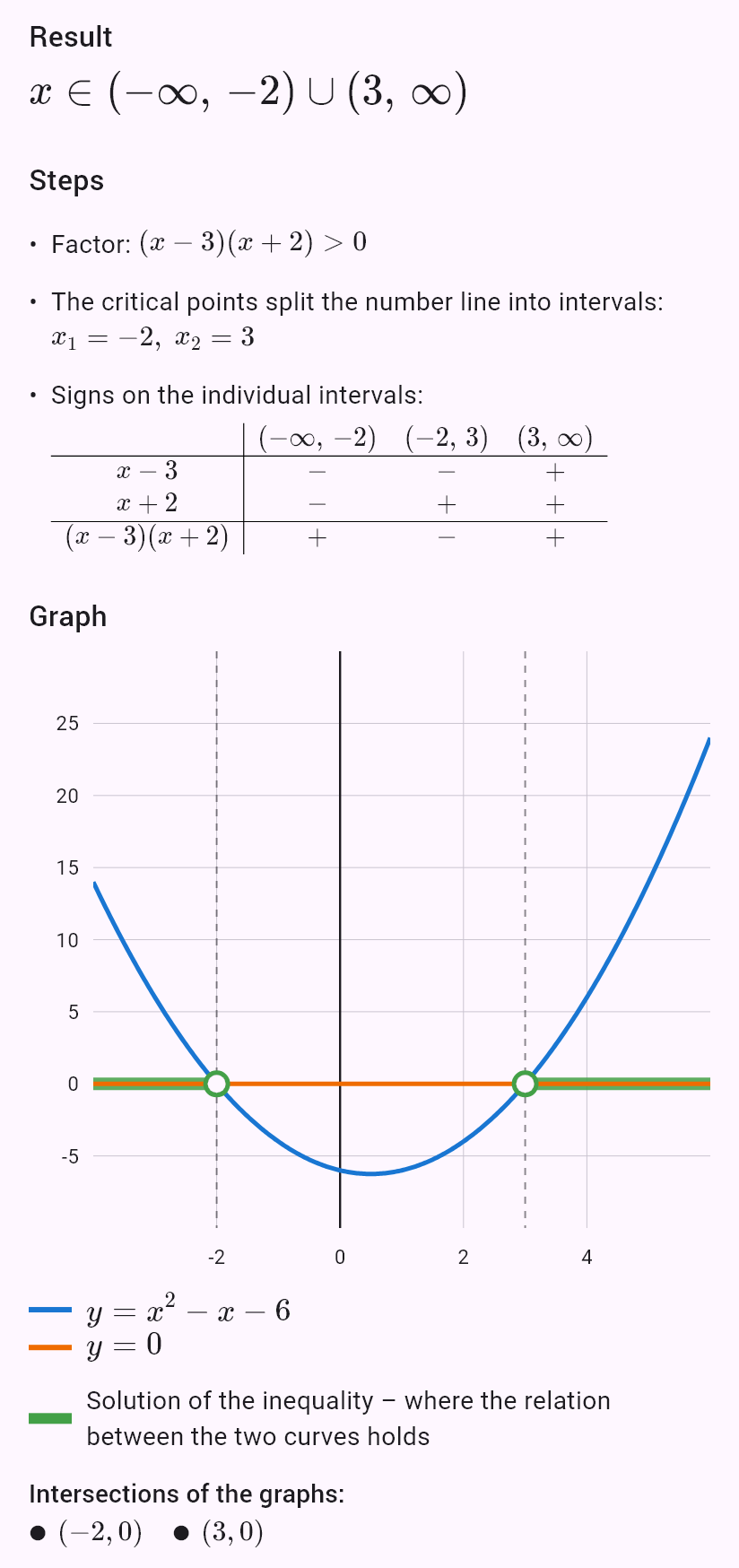
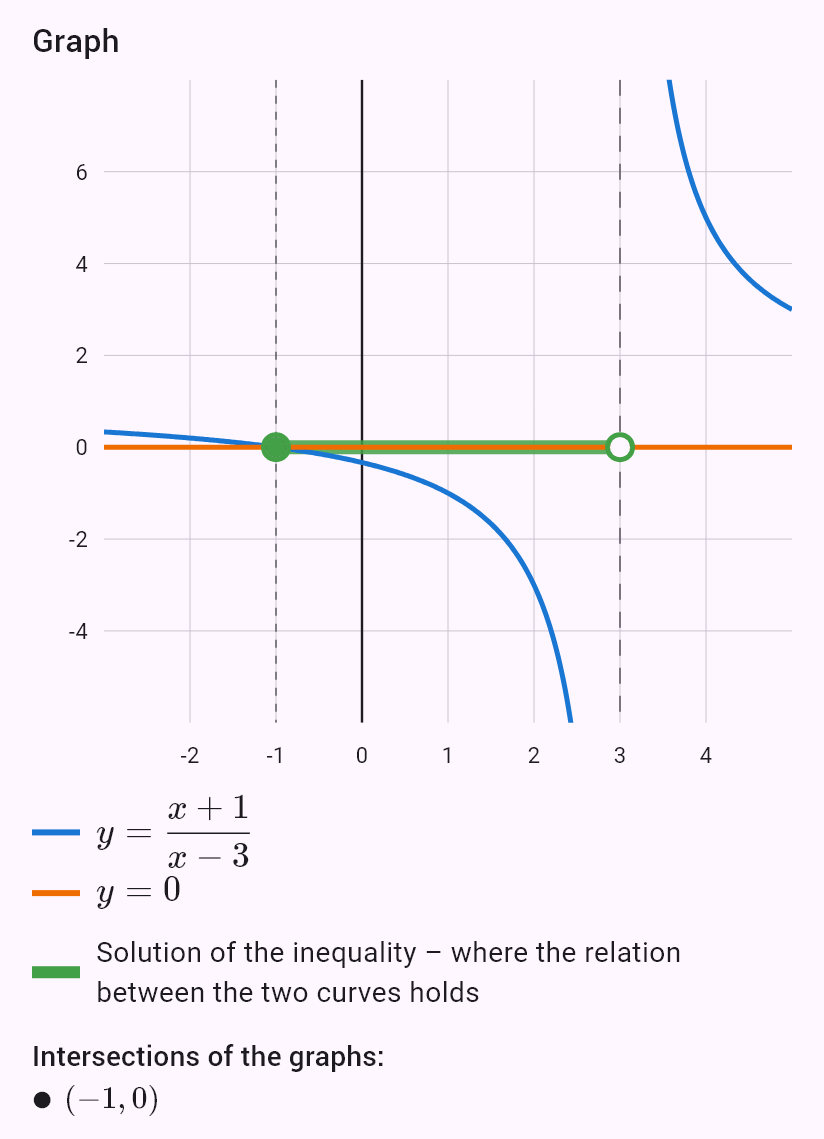
(x+1)/(x-3) <= 0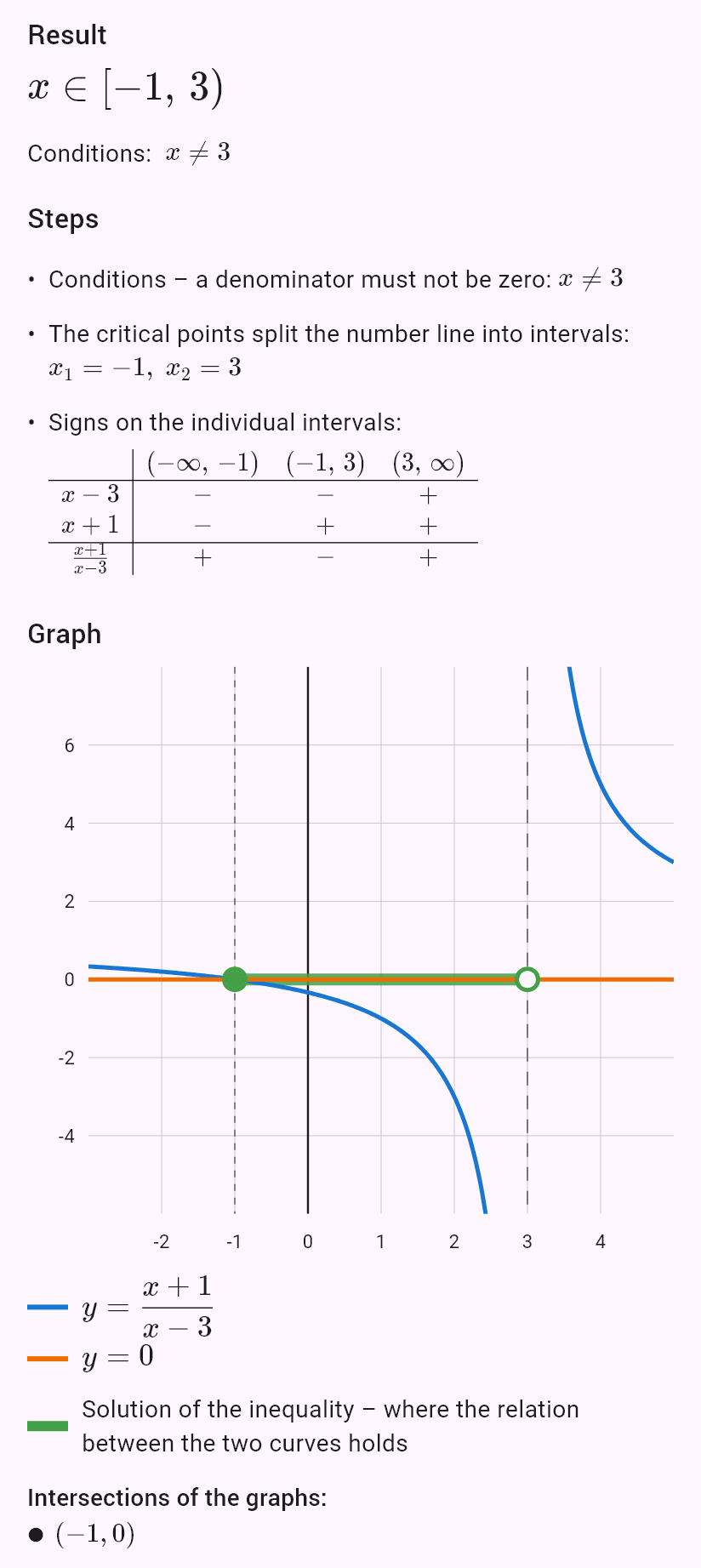
-1 <= 2x + 1 < 5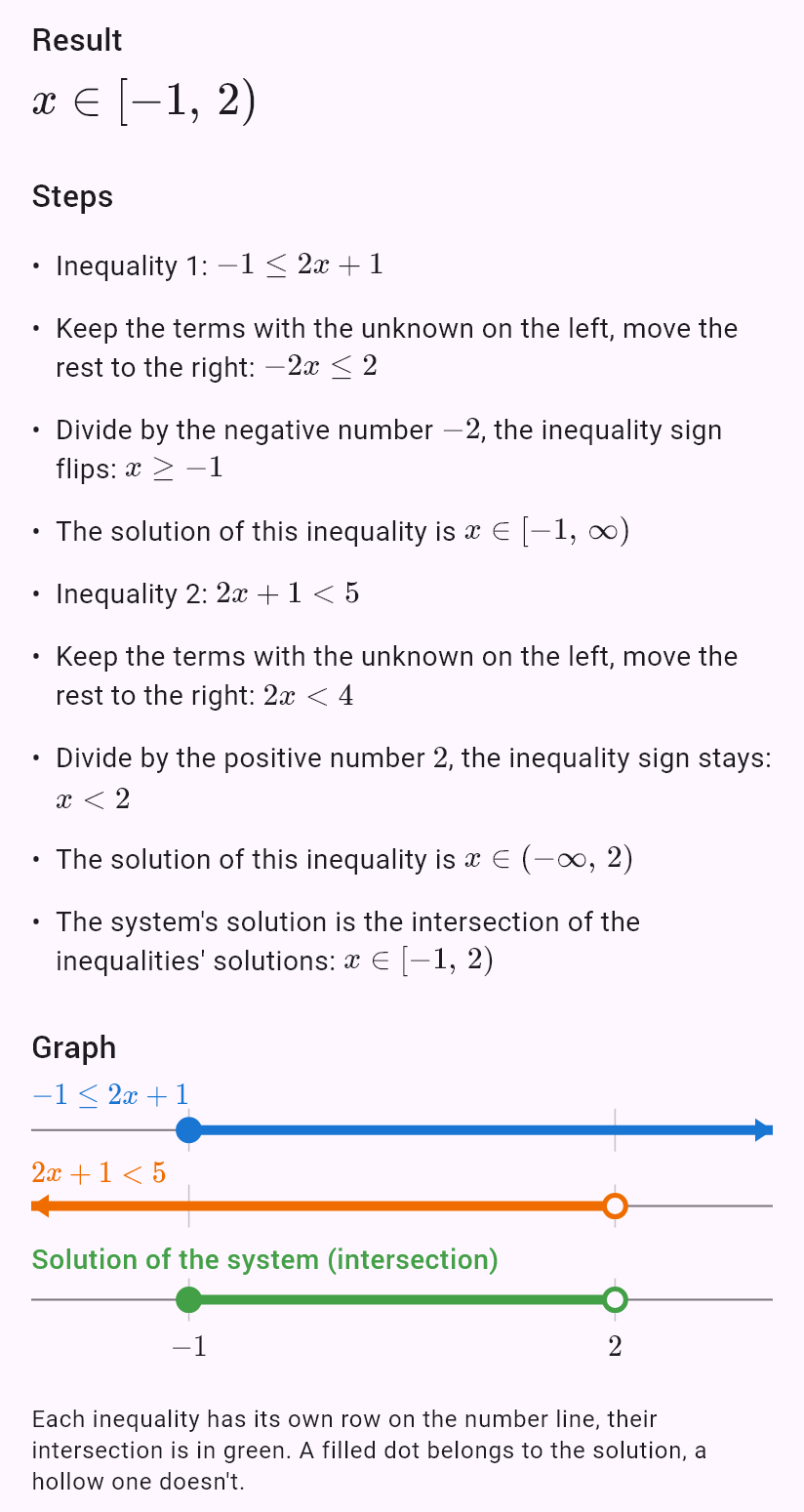
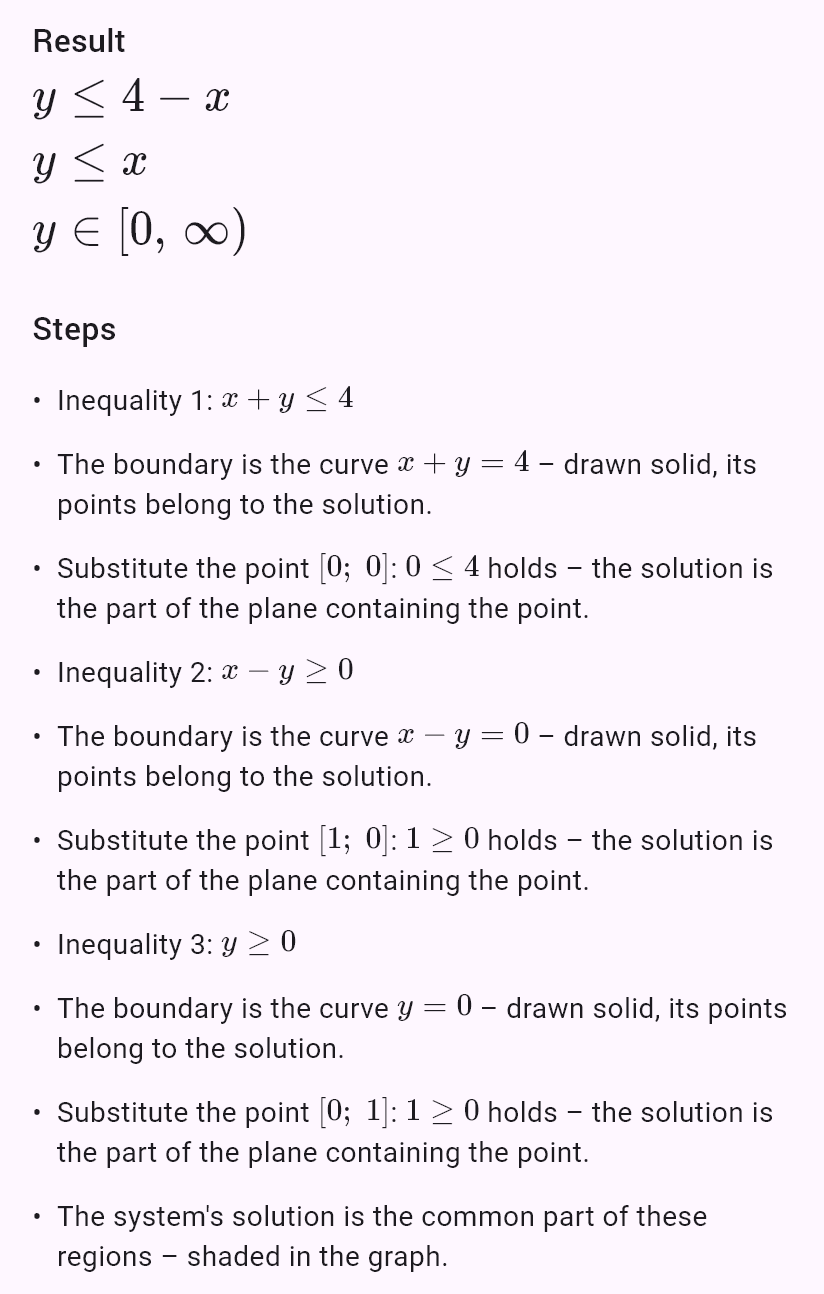
x + y <= 4
x - y >= 0
y >= 0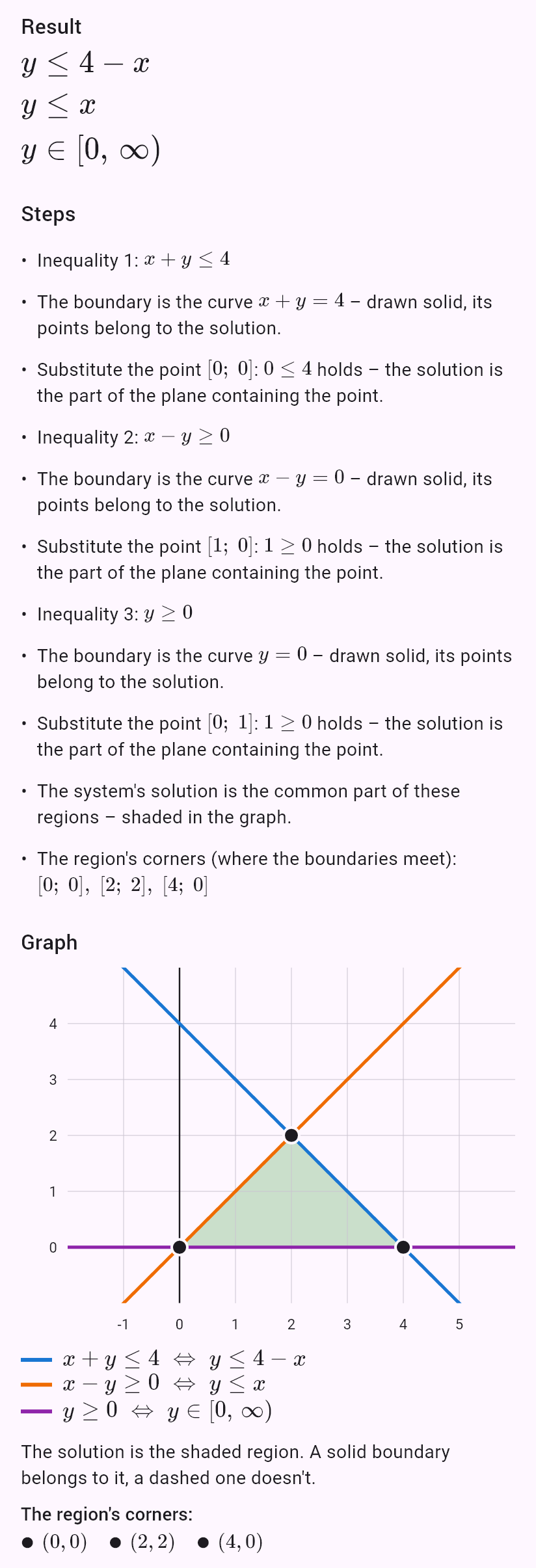
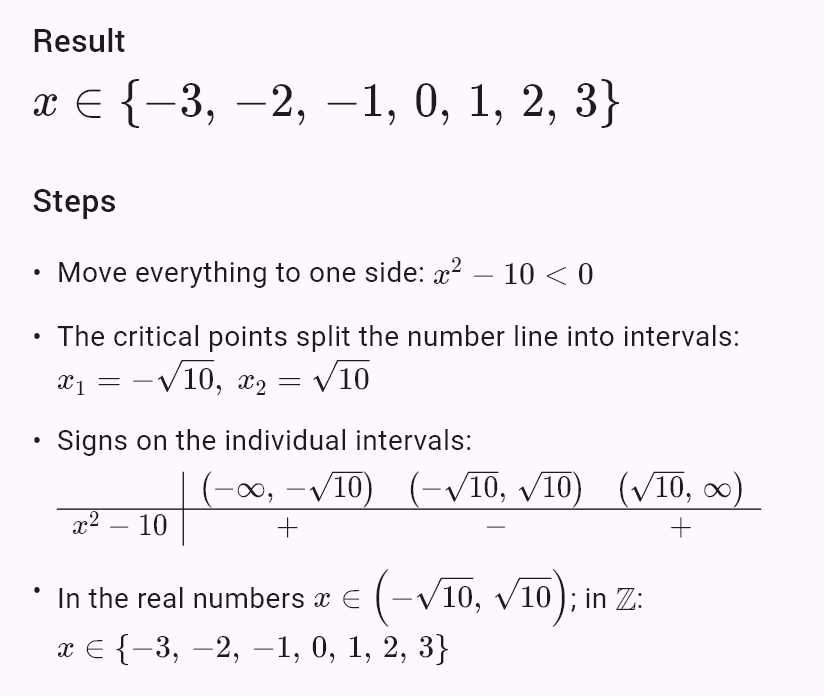
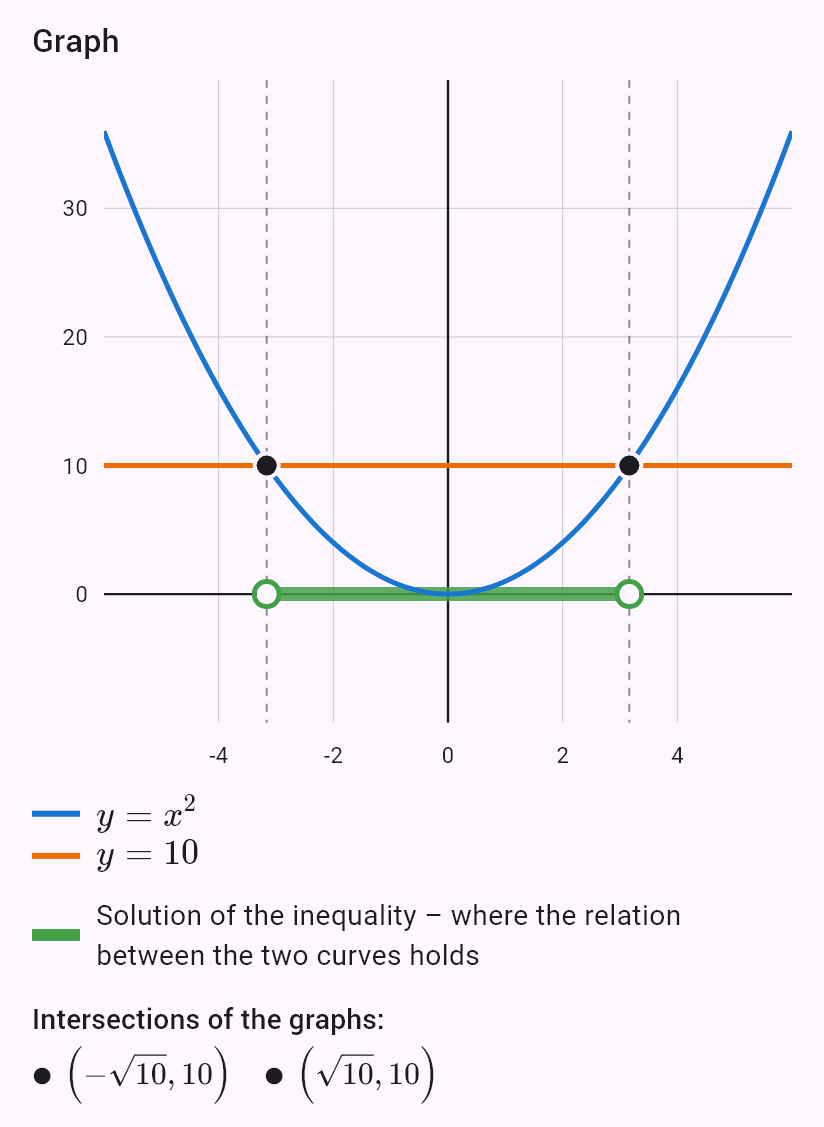
x^2 < 10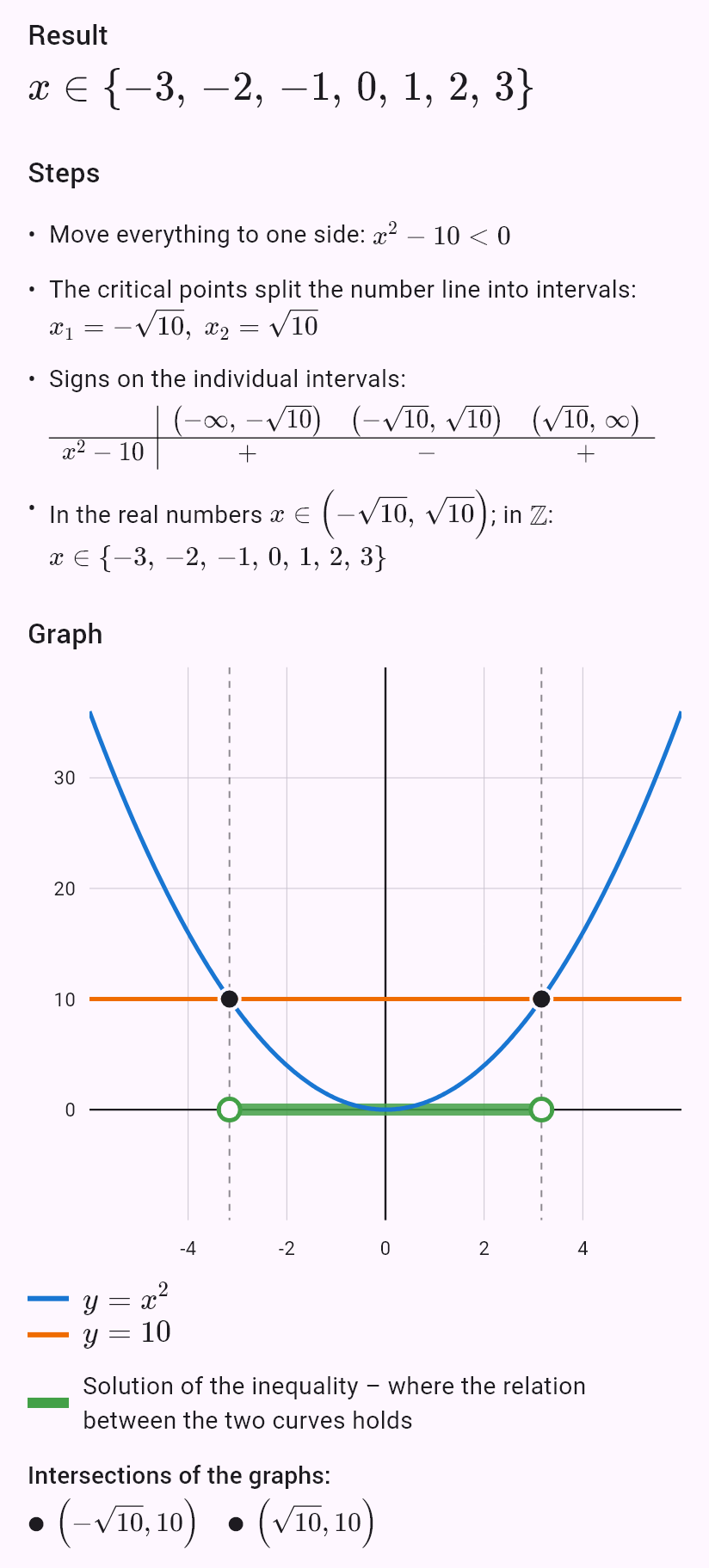
x^2 - x - 6 = 0
x > 0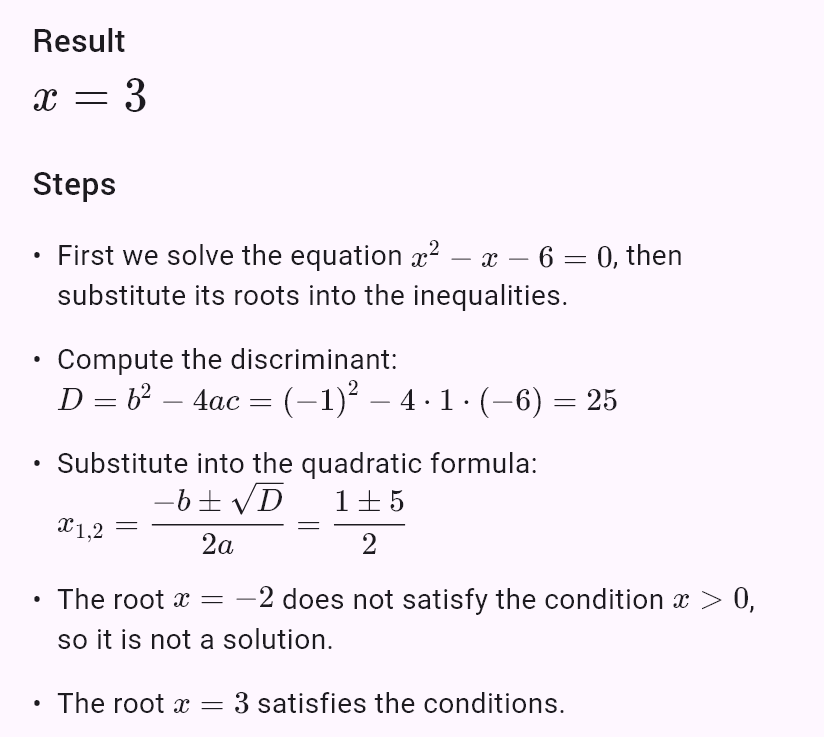
x^2 + y^2 = 4
y > x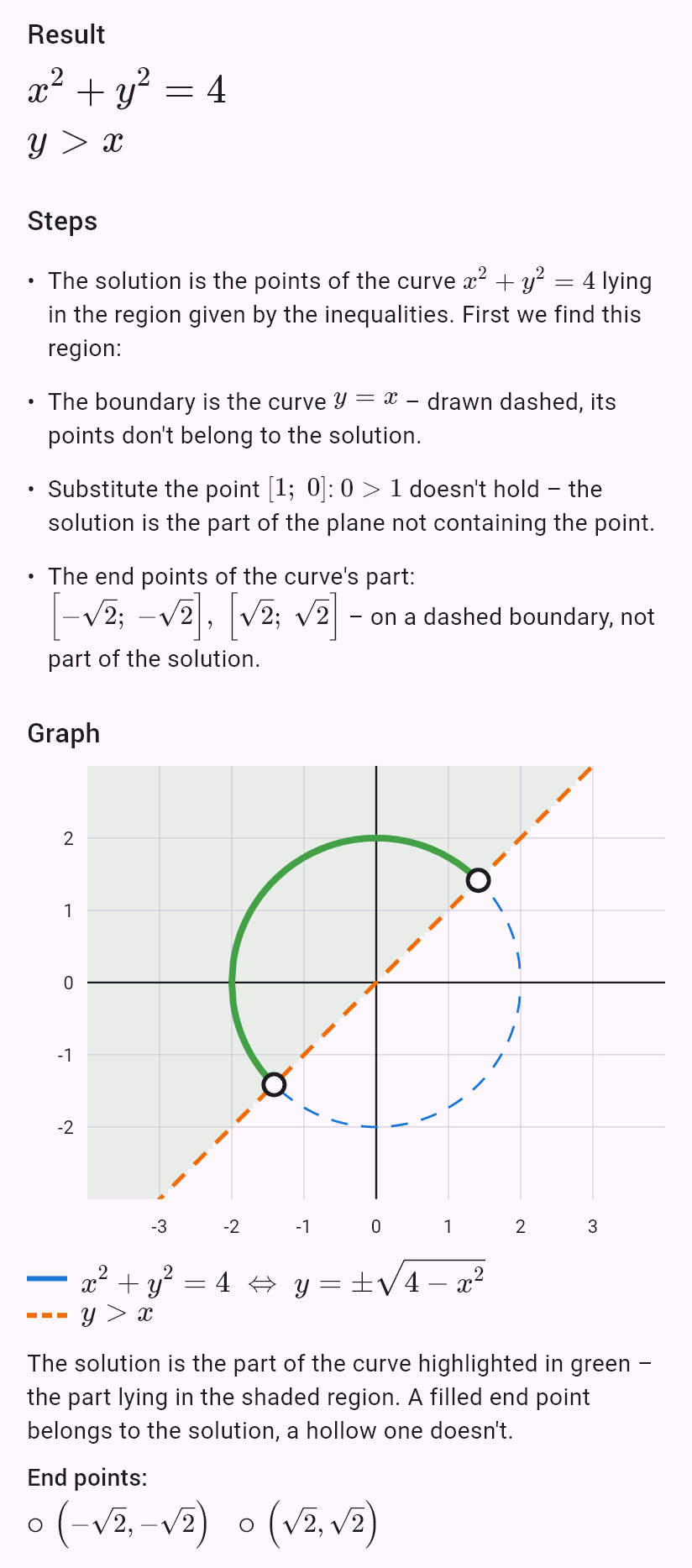
Known limitations
- A system with two or more equations together with inequalities is not solved yet.