Absolute value
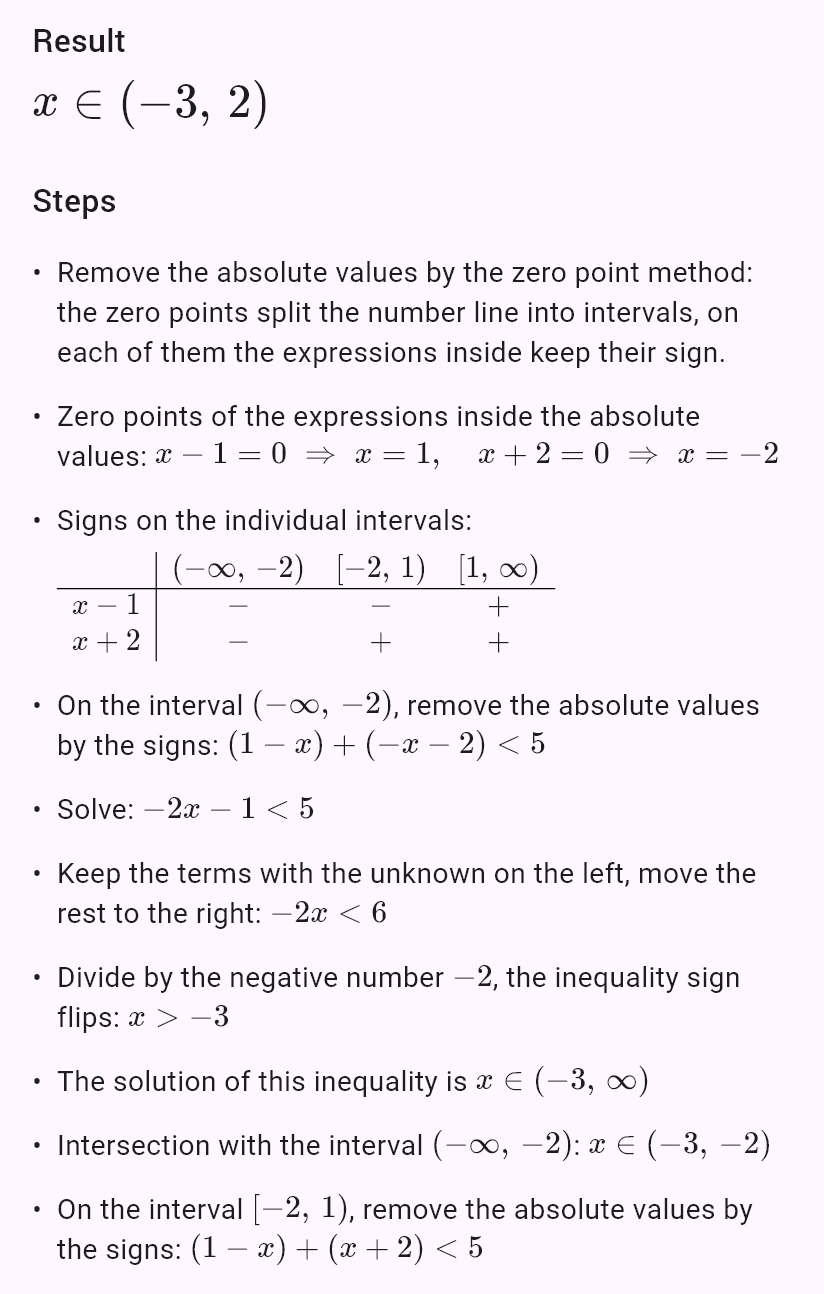
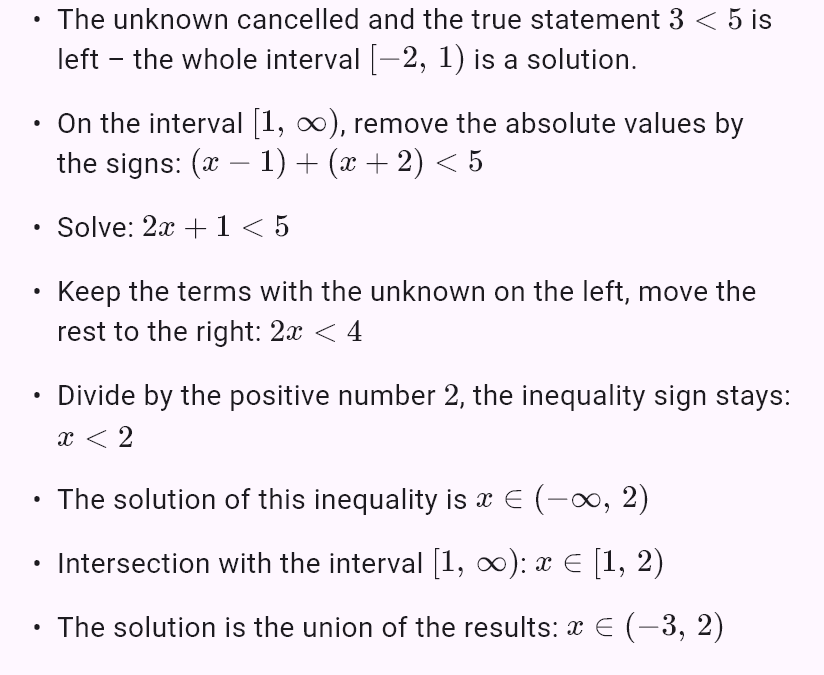
The app solves equations and inequalities with absolute values in two ways, which you choose with a chip: “By the definition” – a shortcut that writes out |a| = b or |a| < b – and “Zero points” – splitting the number line into intervals on which each absolute value has a fixed sign. Without a choice it picks the more suitable one itself.
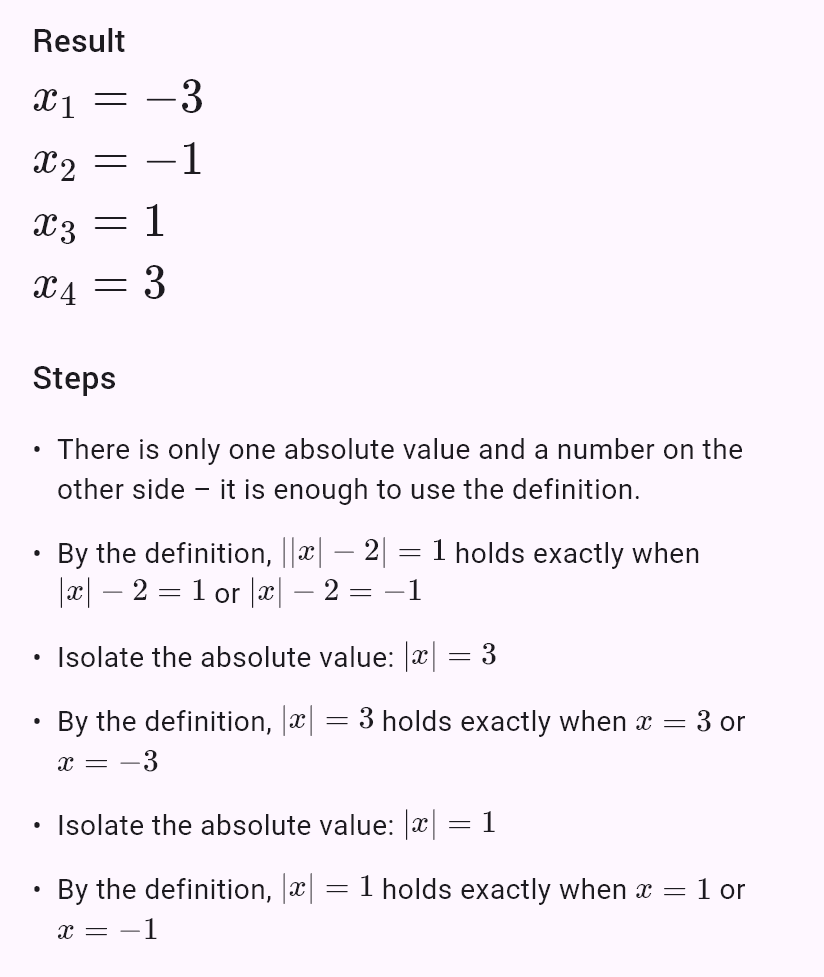
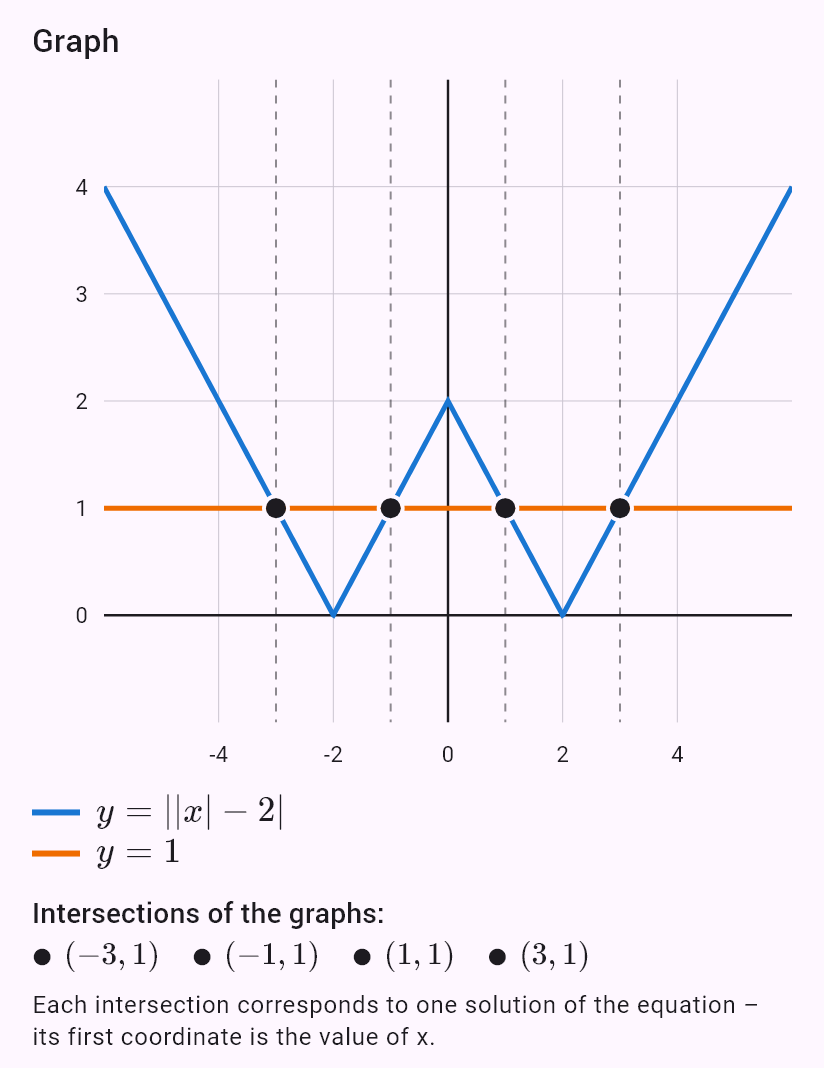
Nested absolute values (||x| − 2| = 1) are solved the same way: by the definition step by step from the outside in, by zero points from the inside out – first the zero points of the inner absolute values, then the remaining absolute value on each interval.
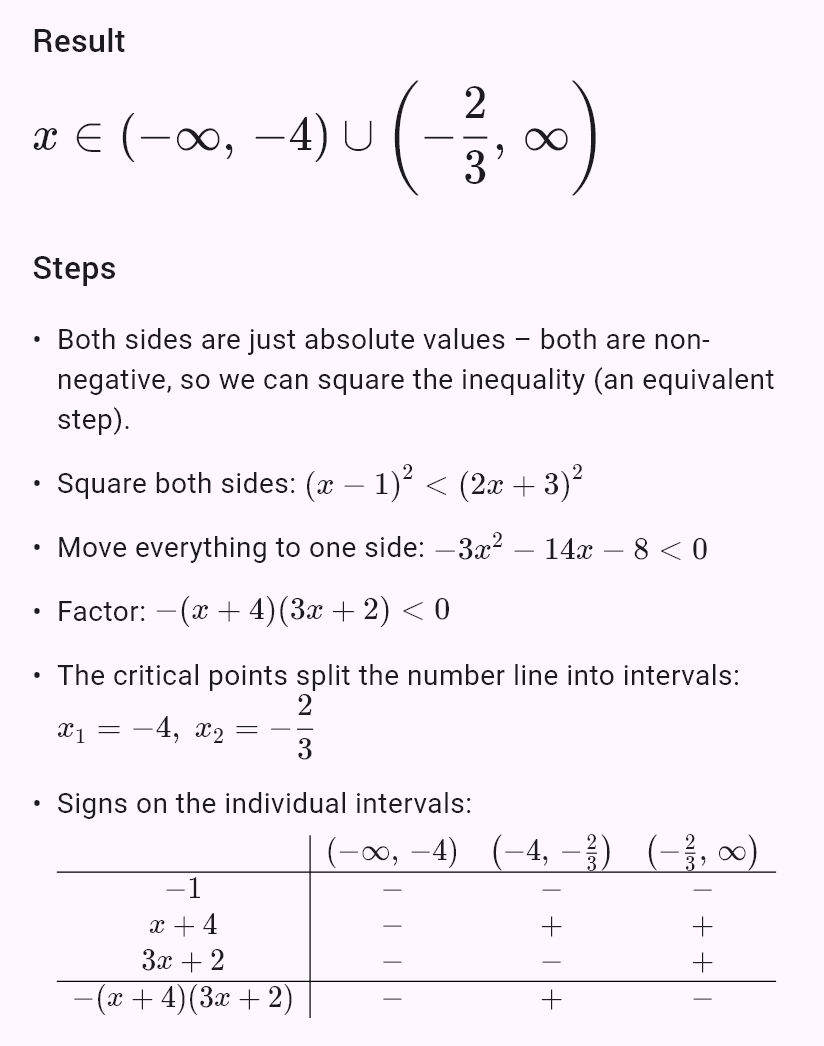
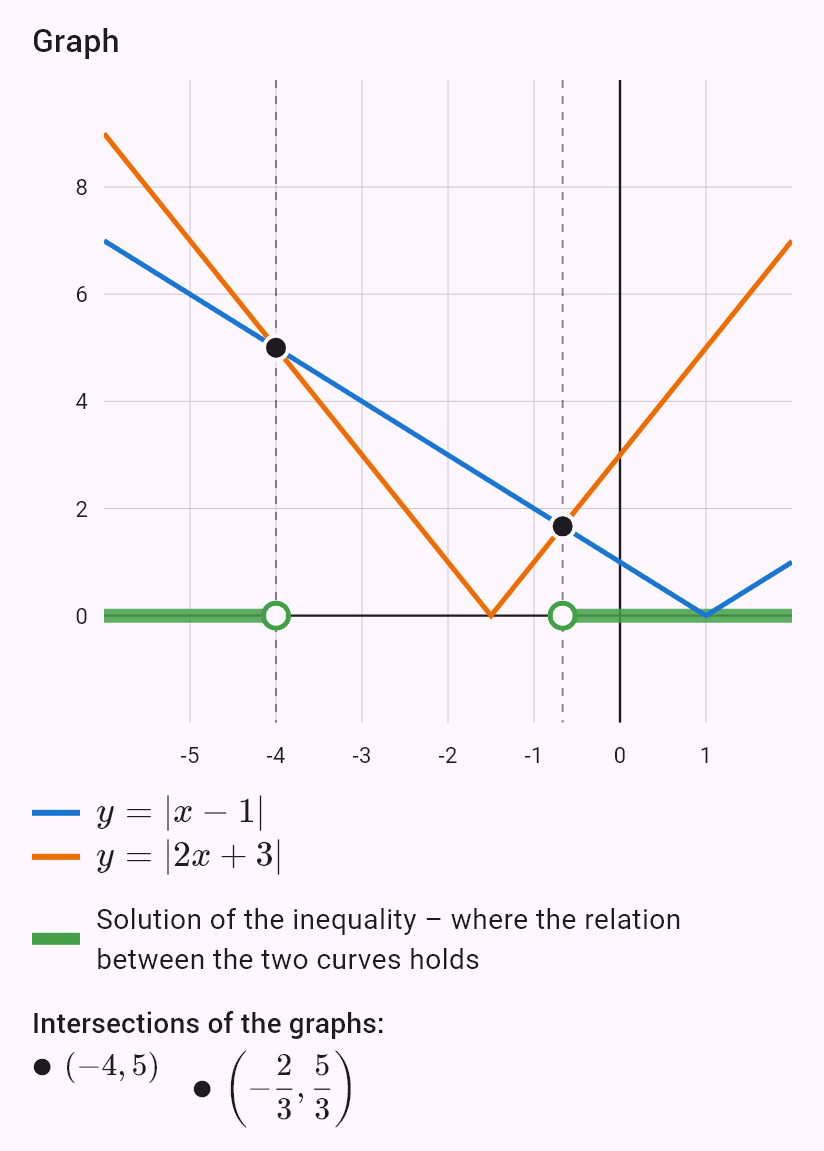
An inequality |f| < |g| (just an absolute value on each side) can also be solved with the “By squaring” chip: both sides are non-negative, so it is squared and solved as a quadratic one. An expression with absolute values alone (|x − 1| + |x + 2|) is simplified by pieces – zero points, a sign chart and the expression without absolute values on each interval.
Examples
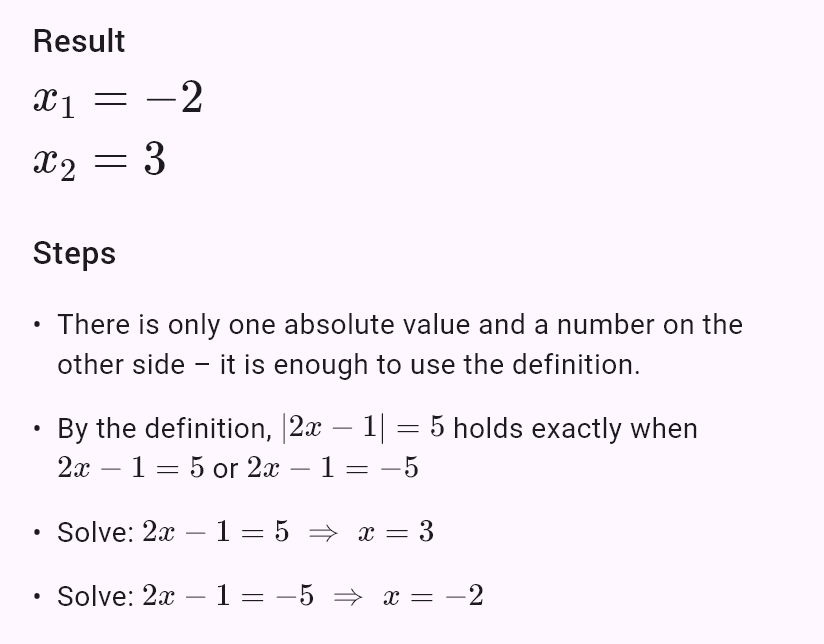
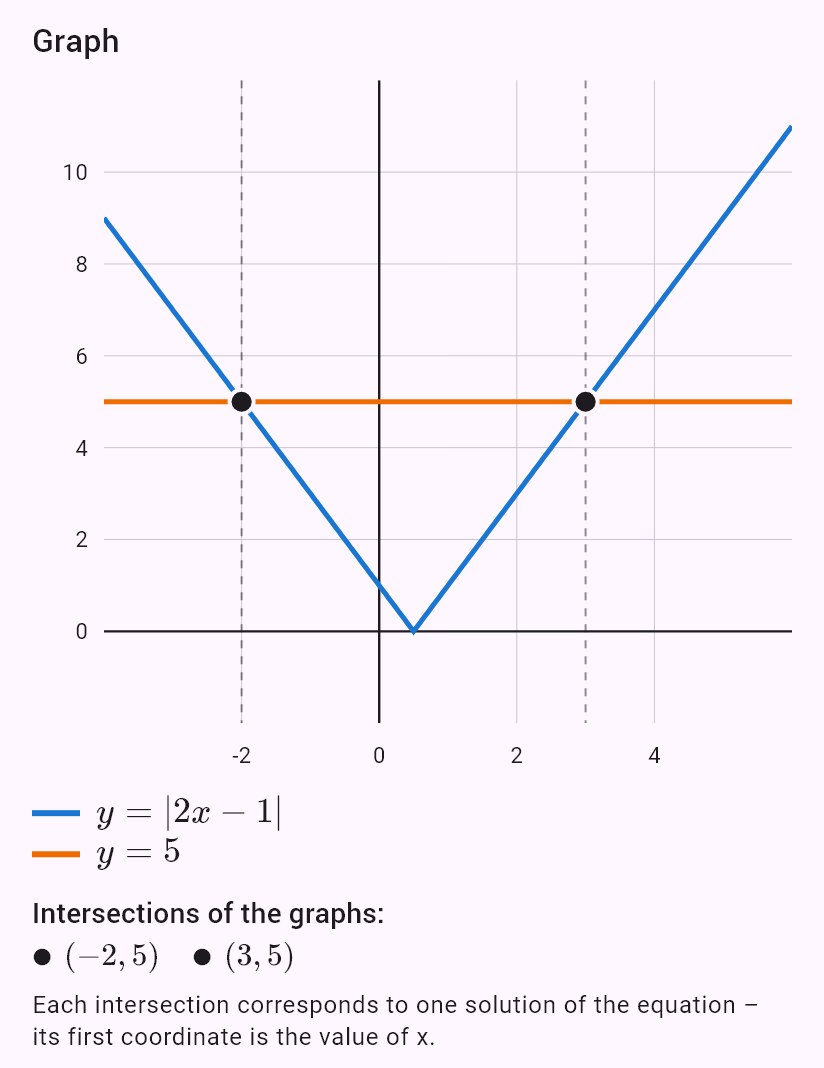
|2x - 1| = 5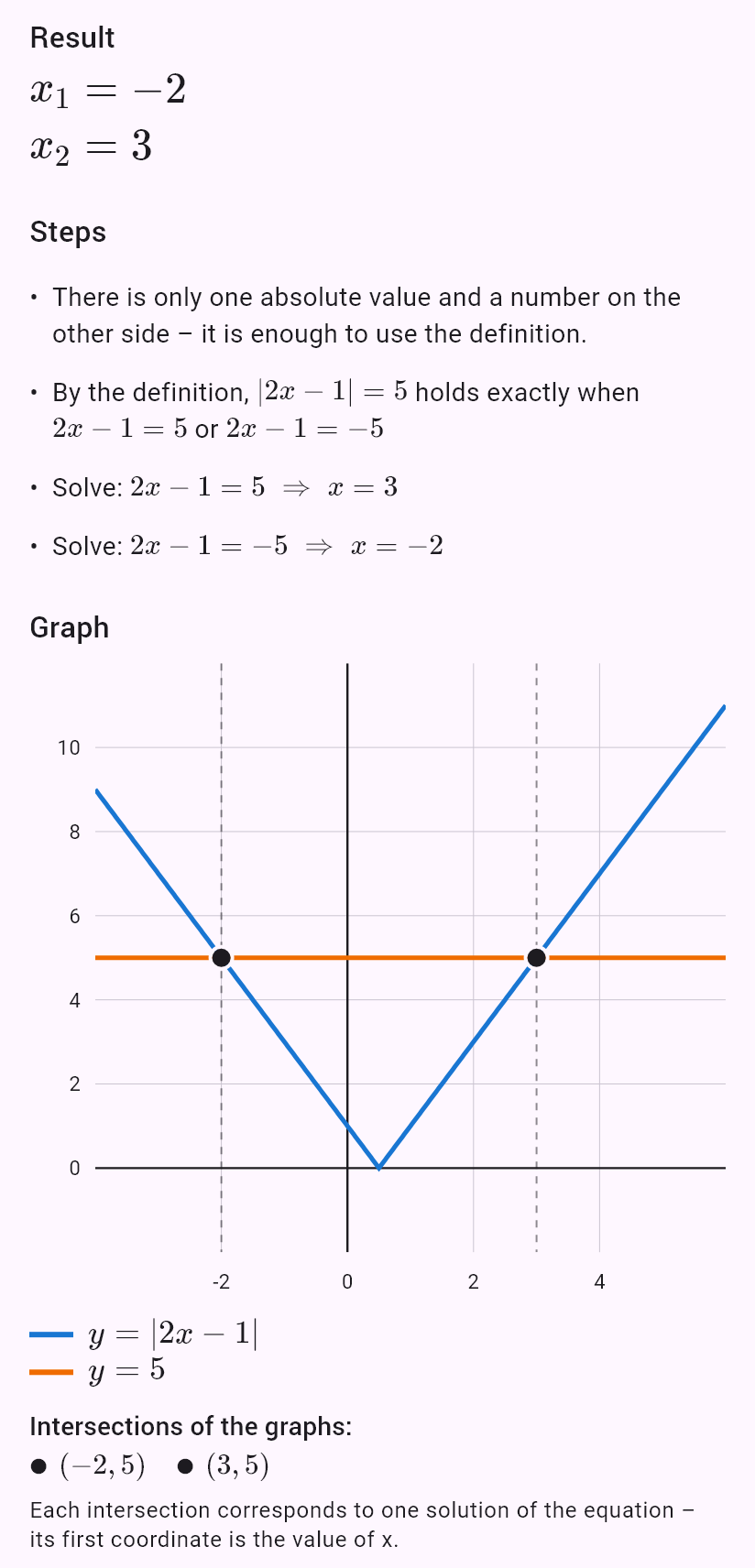
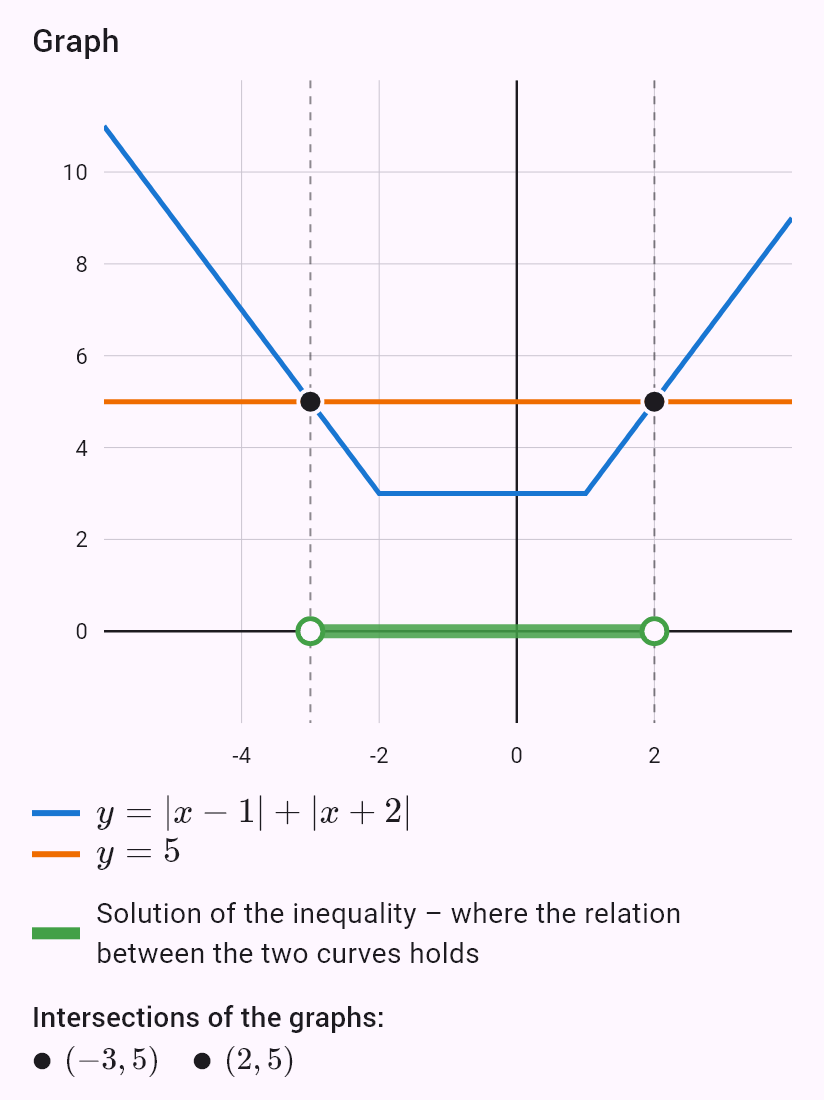
|x - 1| + |x + 2| < 5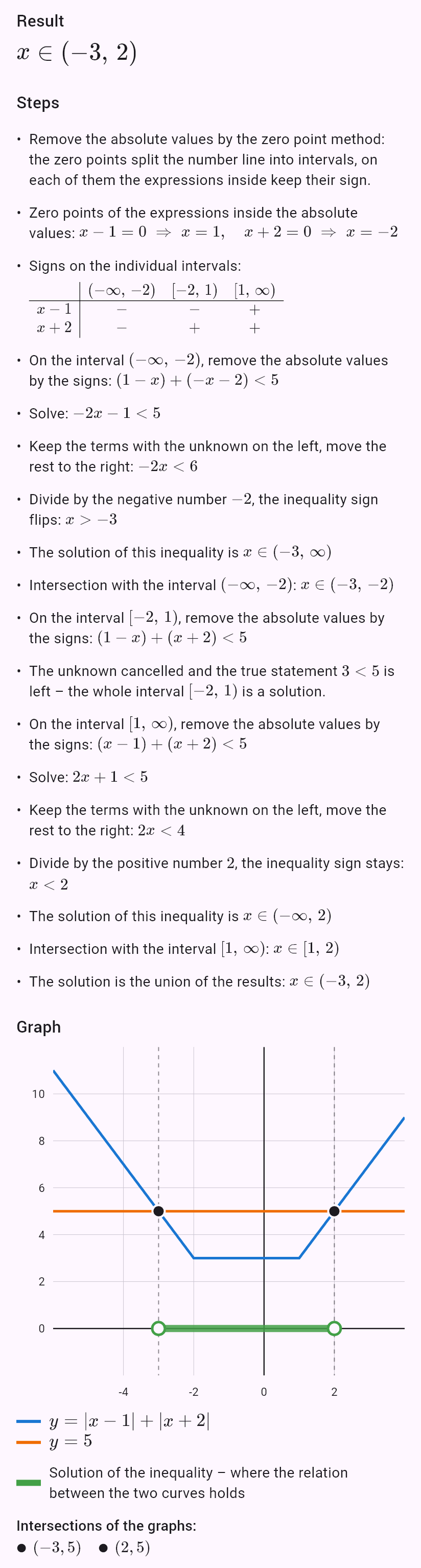
||x| - 2| = 1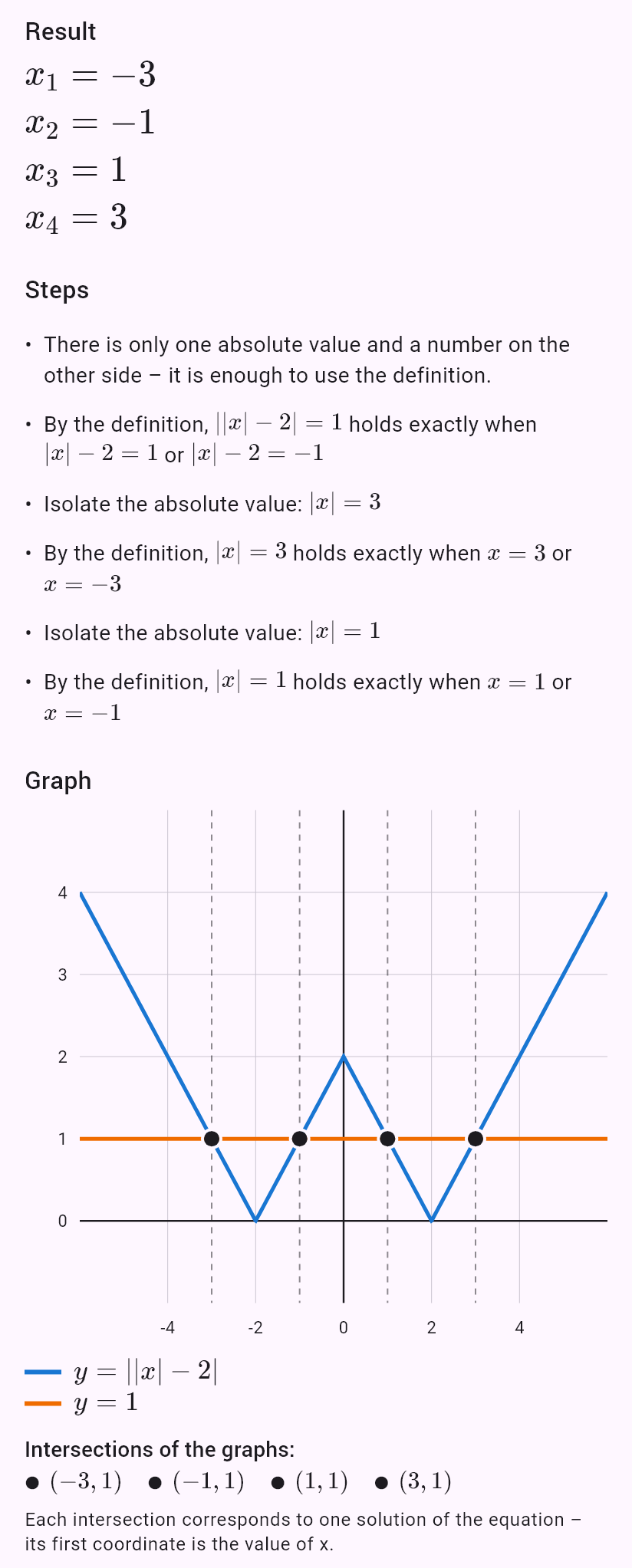
|x - 1| < |2x + 3| By squaring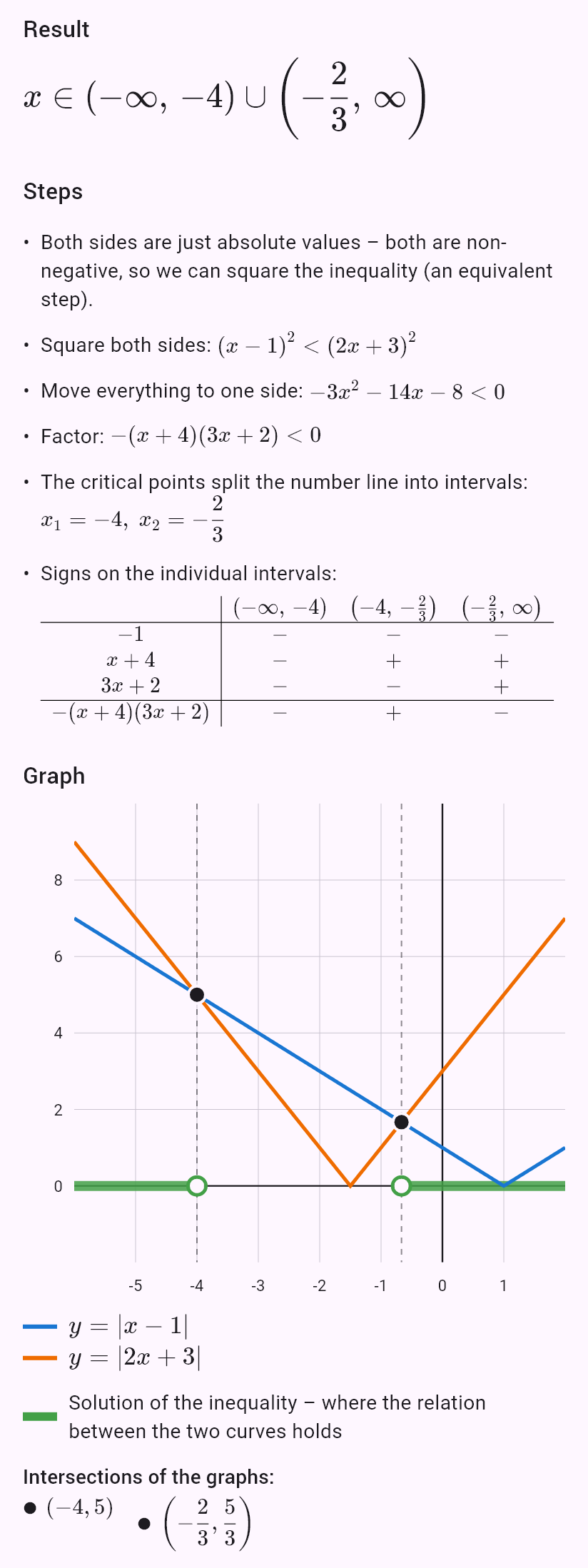
|x - 1| + |x + 2|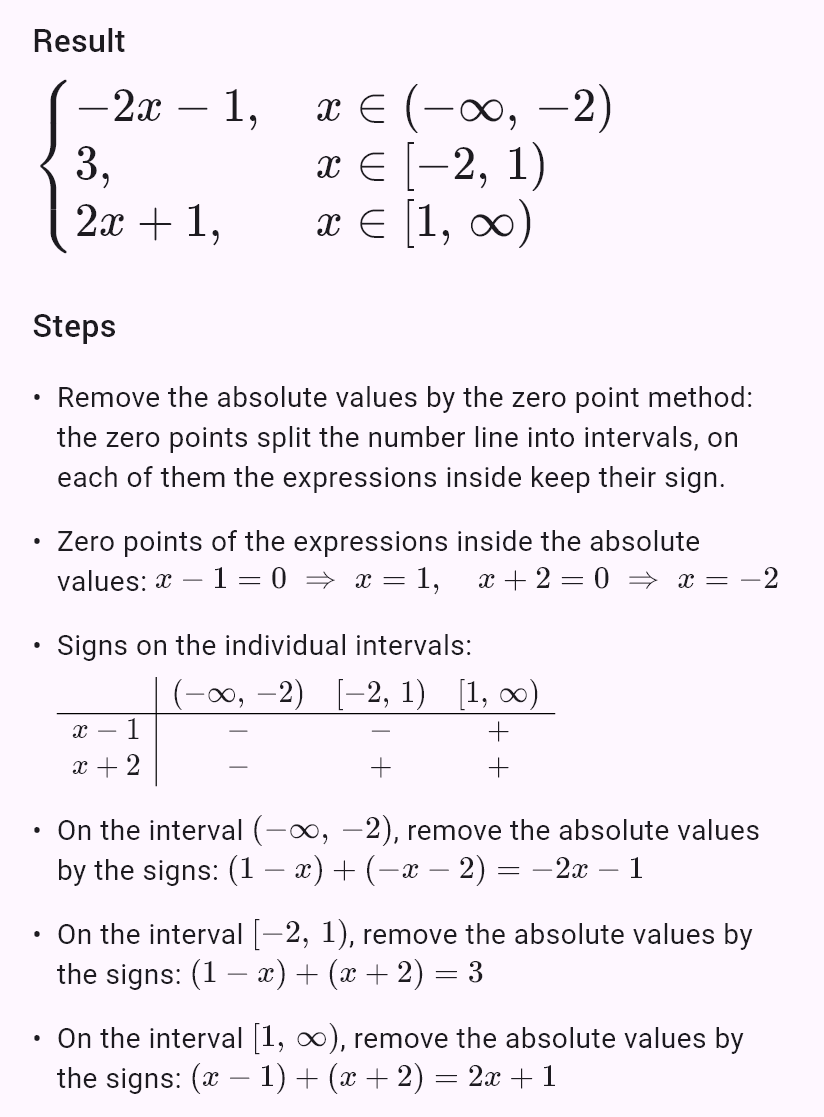
Known limitations
- An expression with absolute values is simplified only on the whole number line, not on a given interval; squaring is offered only for an inequality with a single absolute value on each side.