Function analysis
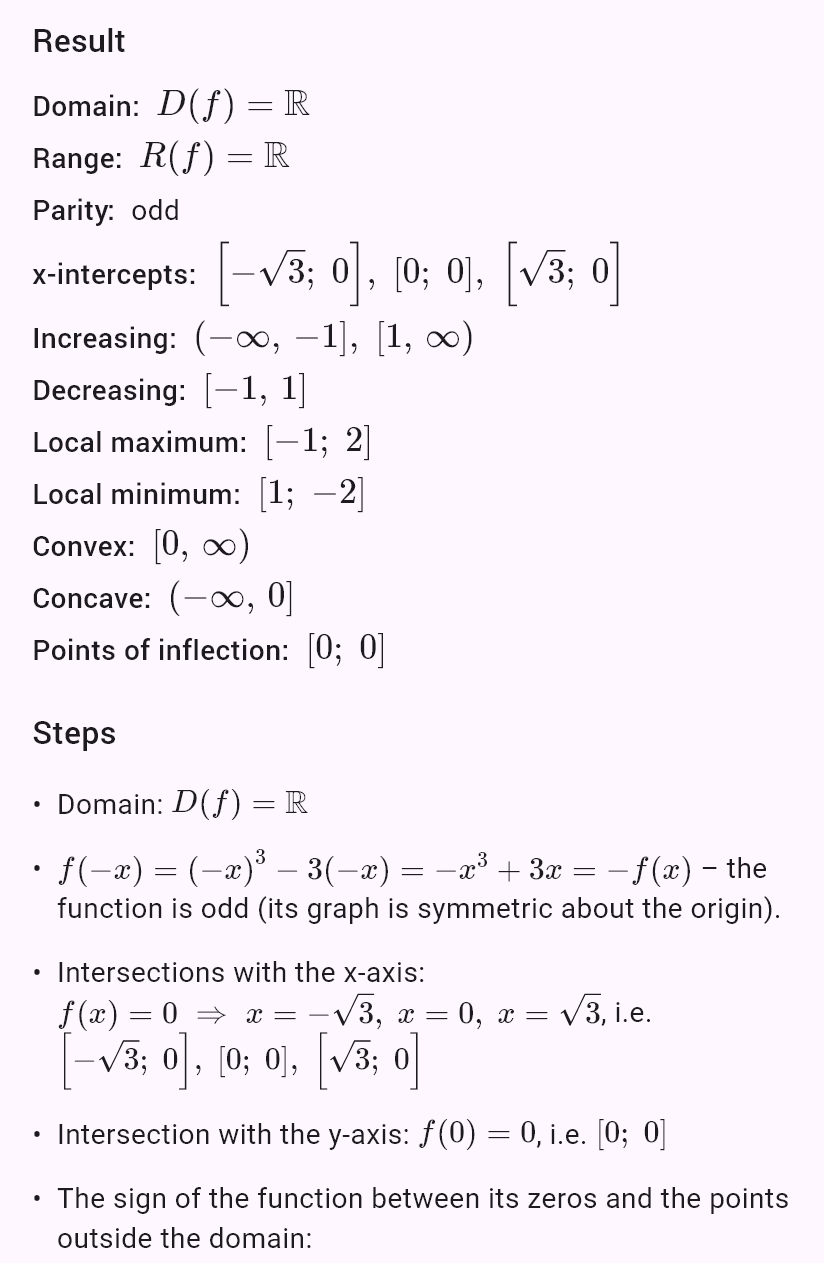
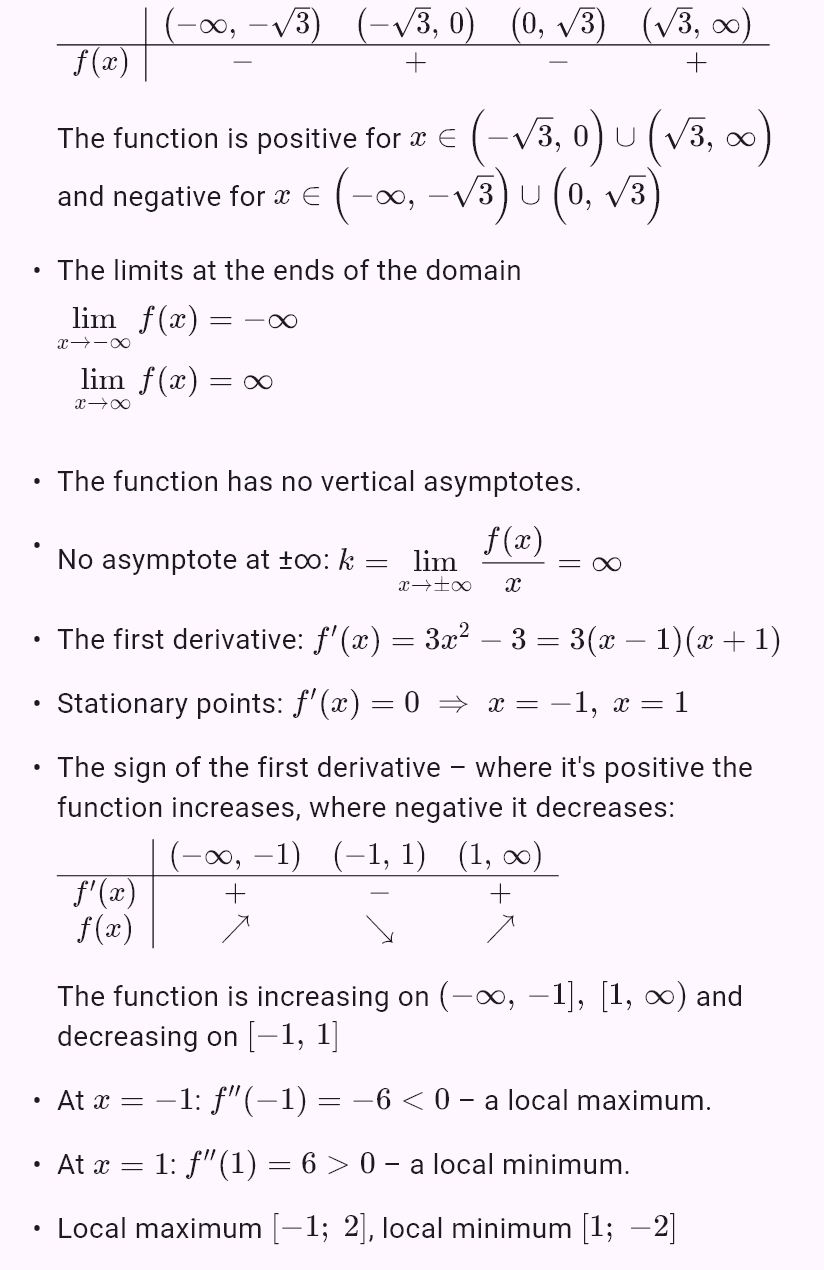
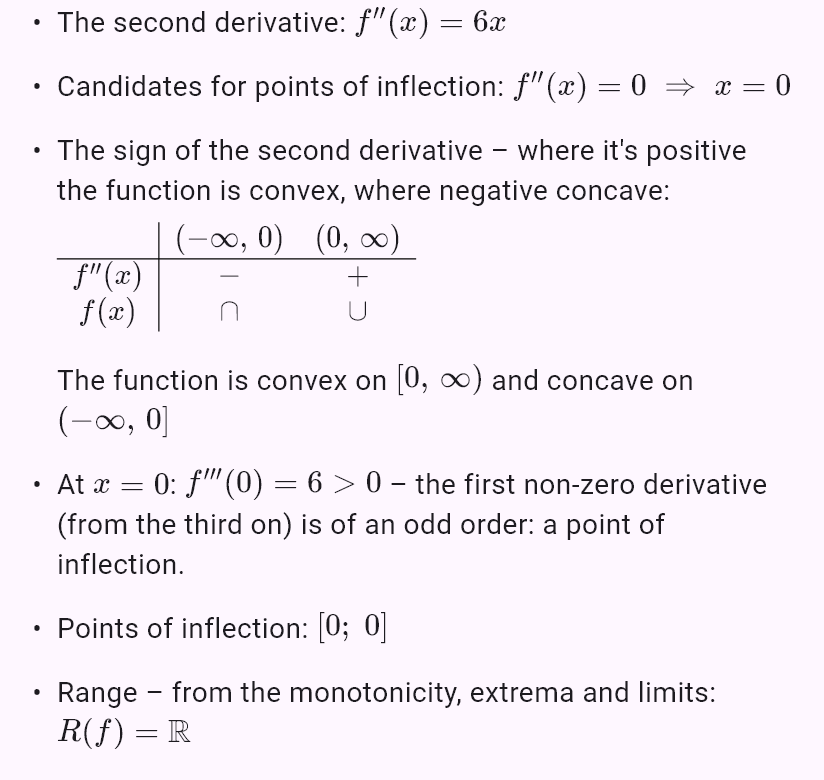
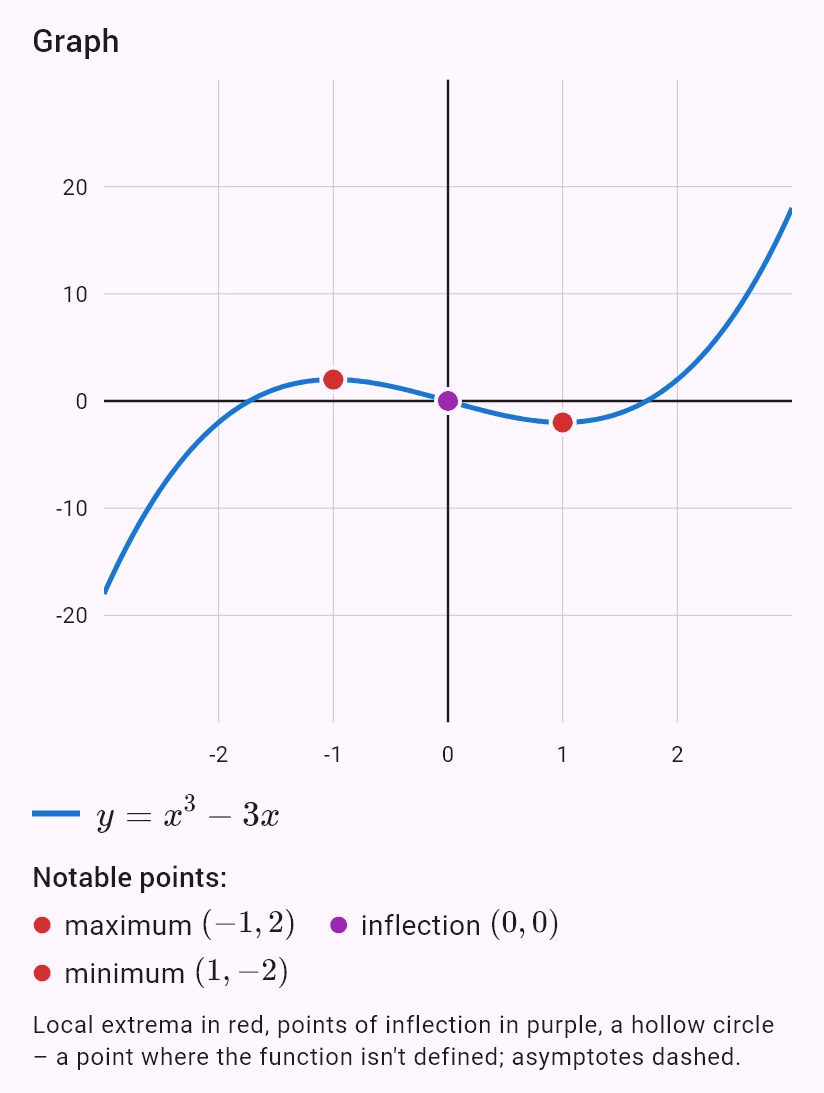
The app analyzes a function in the usual order: domain, even or odd, intercepts, the sign of the function, limits at the ends of the domain and asymptotes, the first derivative – monotonicity and extrema (also by higher derivatives), the second derivative – concavity and inflection points, and finally the range. It sums everything up in an overview and draws a graph with the points marked.
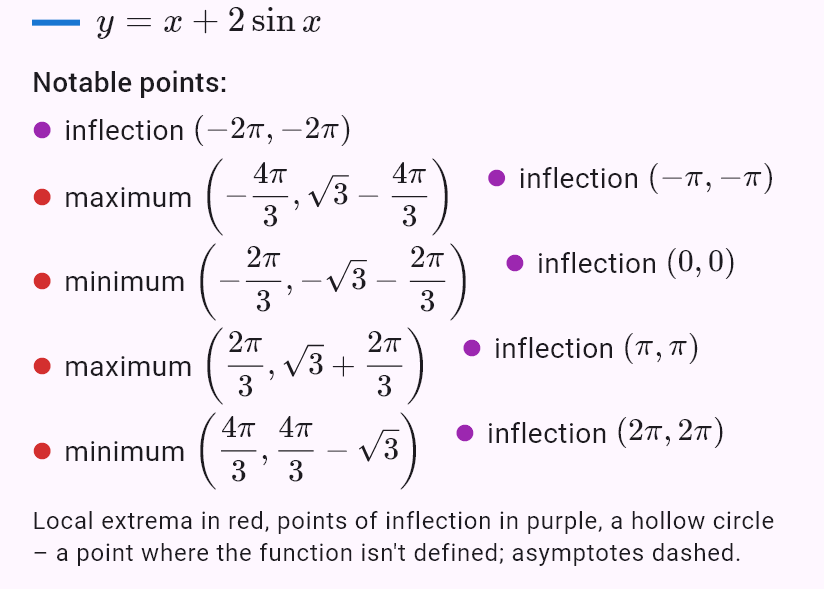
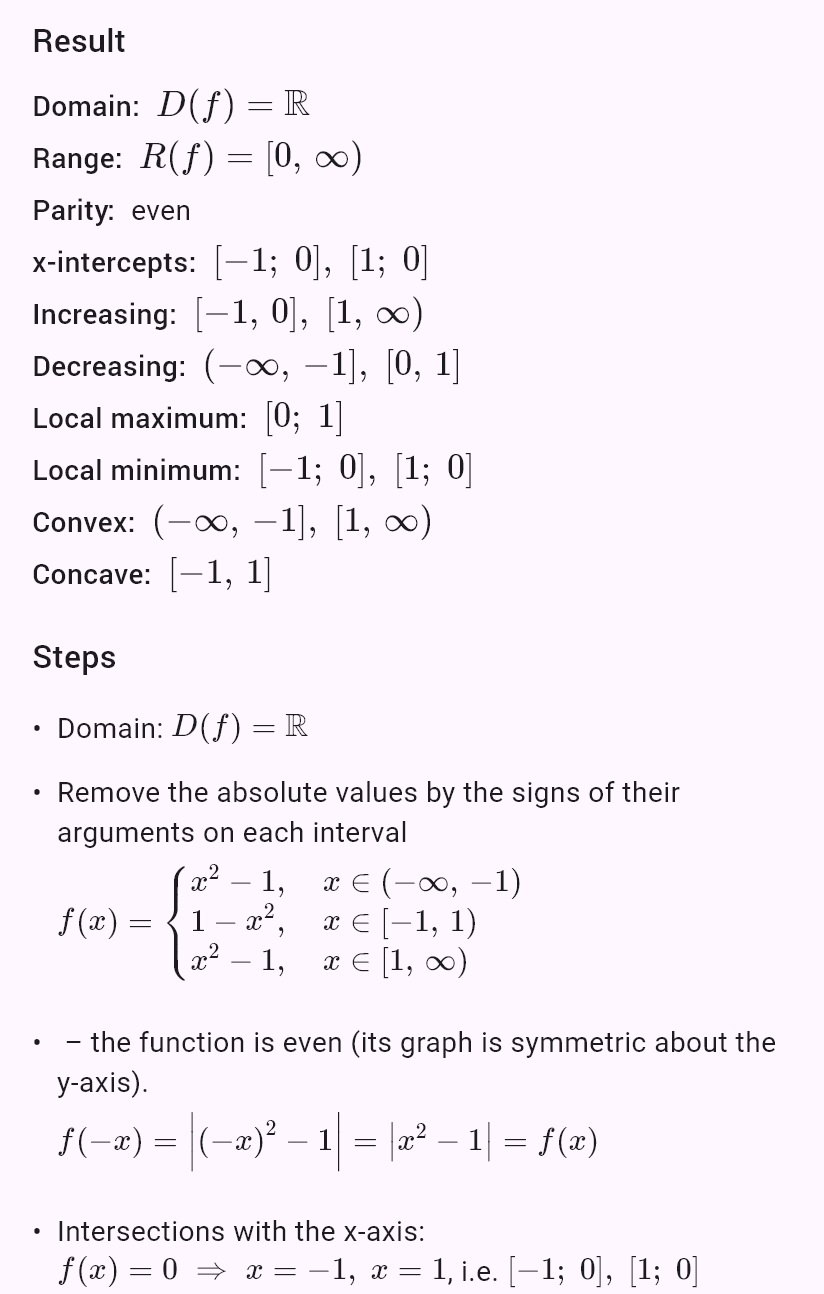
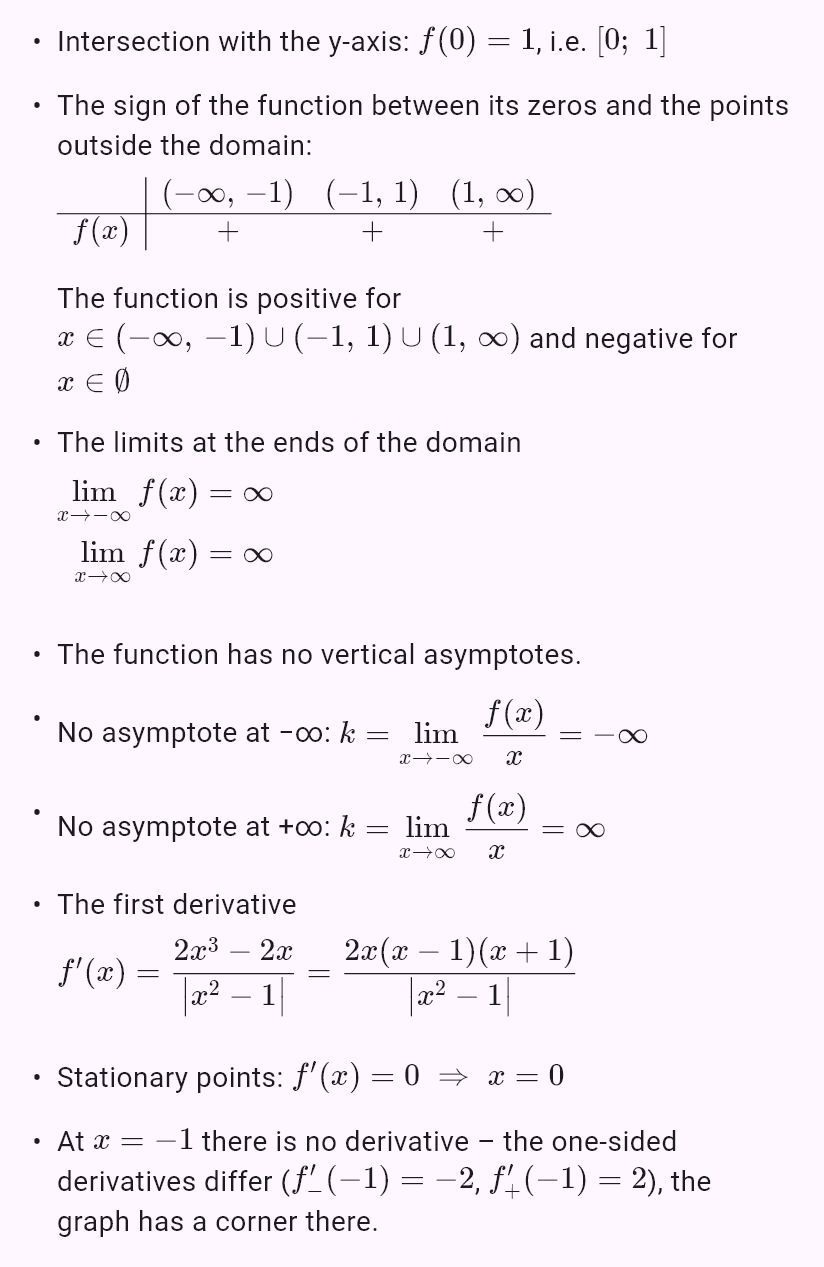
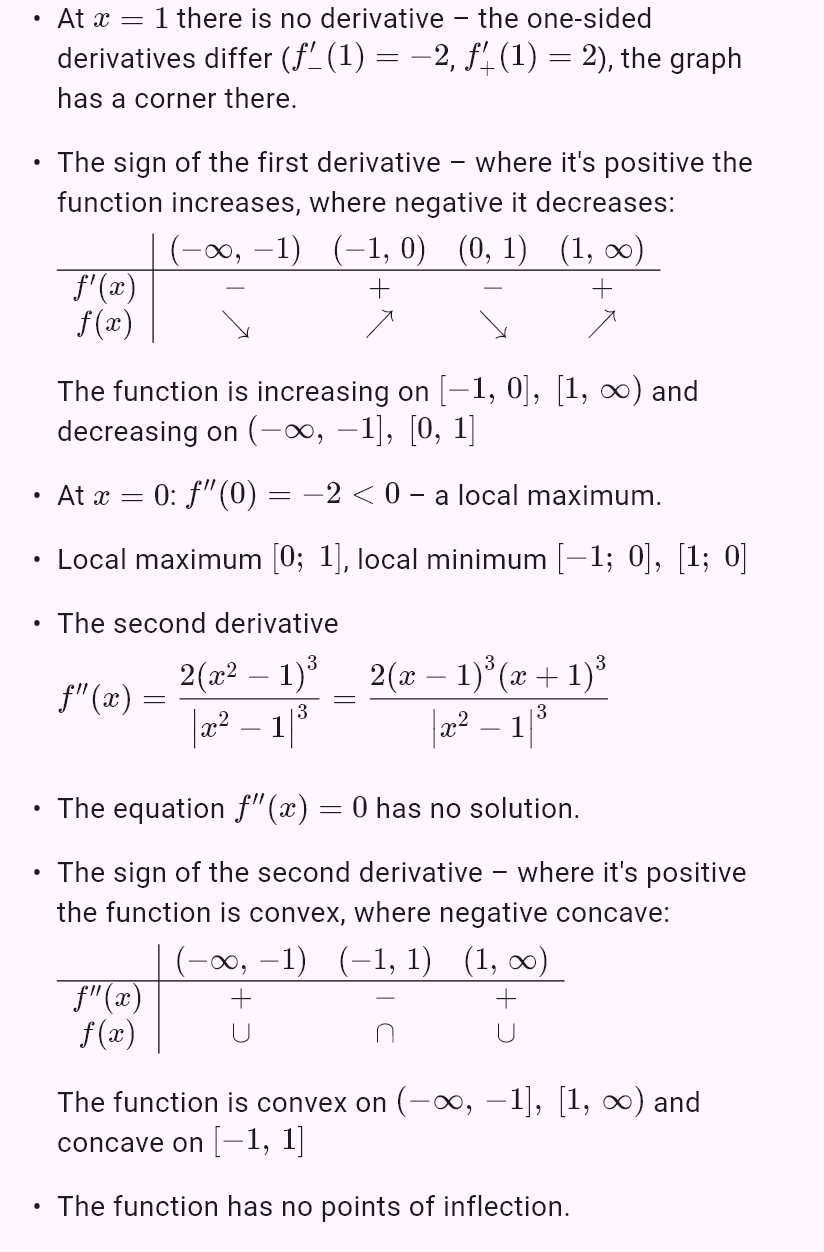
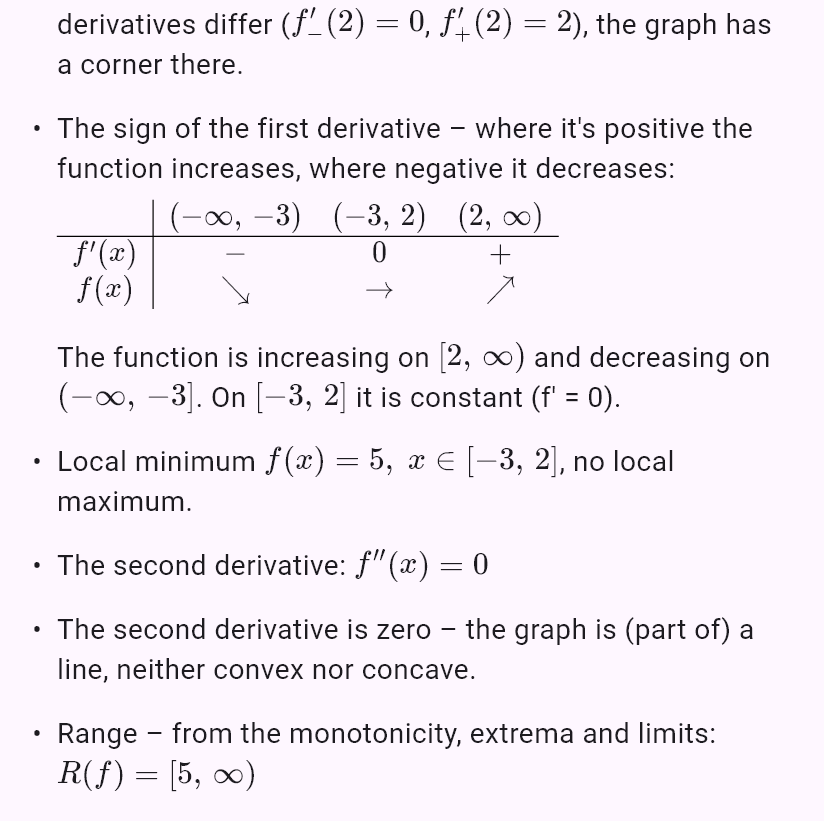
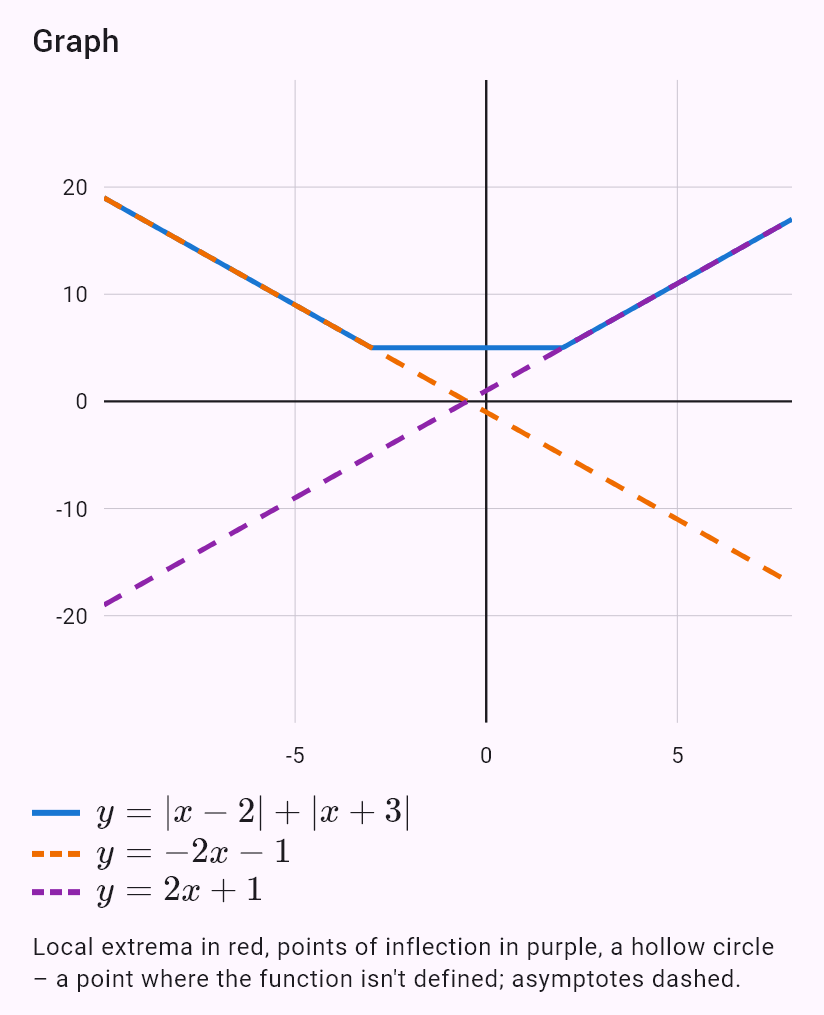
For a trigonometric function the app finds the period, examines the function on one period and writes the results with the period (a maximum at x = π/2 + 2kπ); if only the derivative is periodic (x + 2 sin x), the extrema and monotonicity repeat with the period. Absolute values are removed by the signs on the intervals and the one-sided derivatives compared at the corners; where the derivative is infinite, a vertical tangent is shown. Nested absolute values and sums of absolute values are analyzed by pieces; where the function is constant on an interval, this is stated with its value (a minimum at every point of the interval).
How to enter it
analysis y = x^3 - 3x | With the word “analysis” before the function. |
x^3 - 3x | A function with the “Analyze function” chip. |
Examples
x^3 - 3x Analyze function
x^2/(x - 1) Analyze function
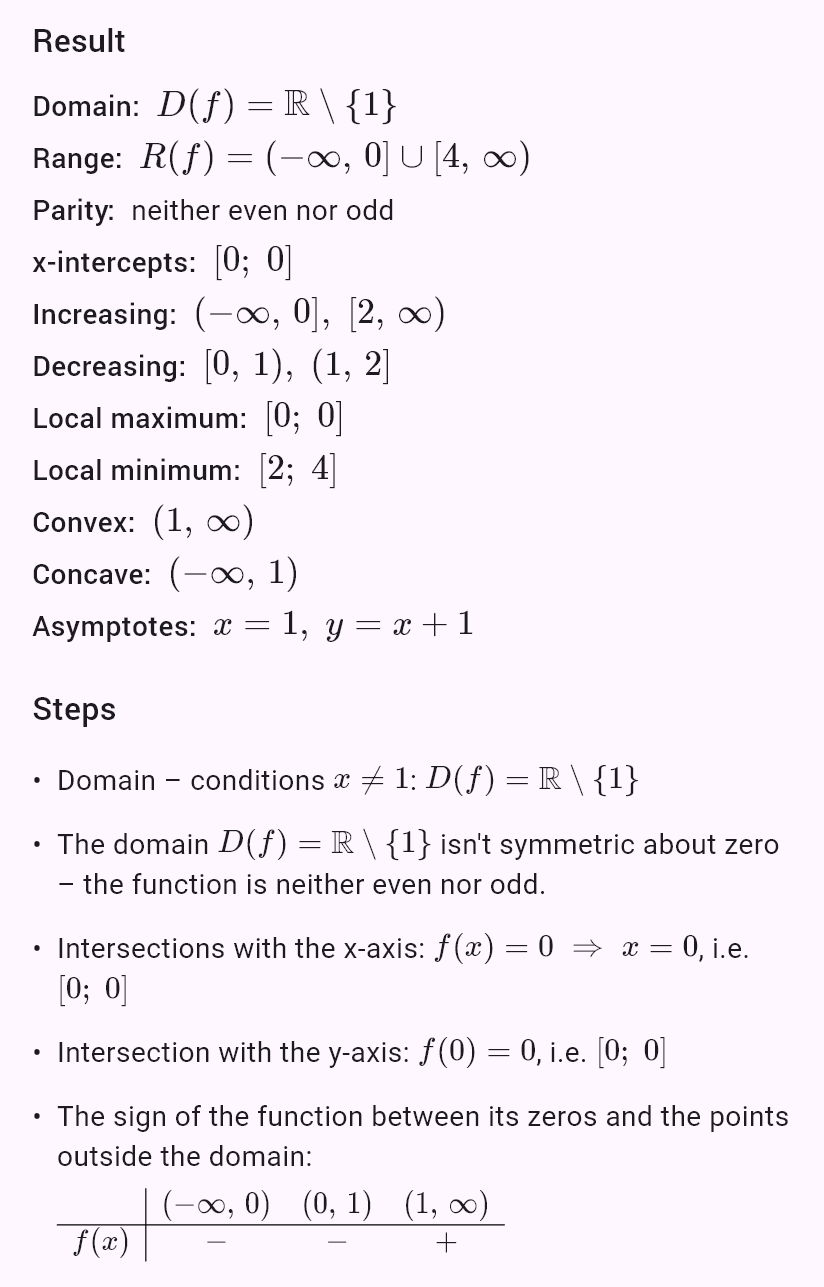
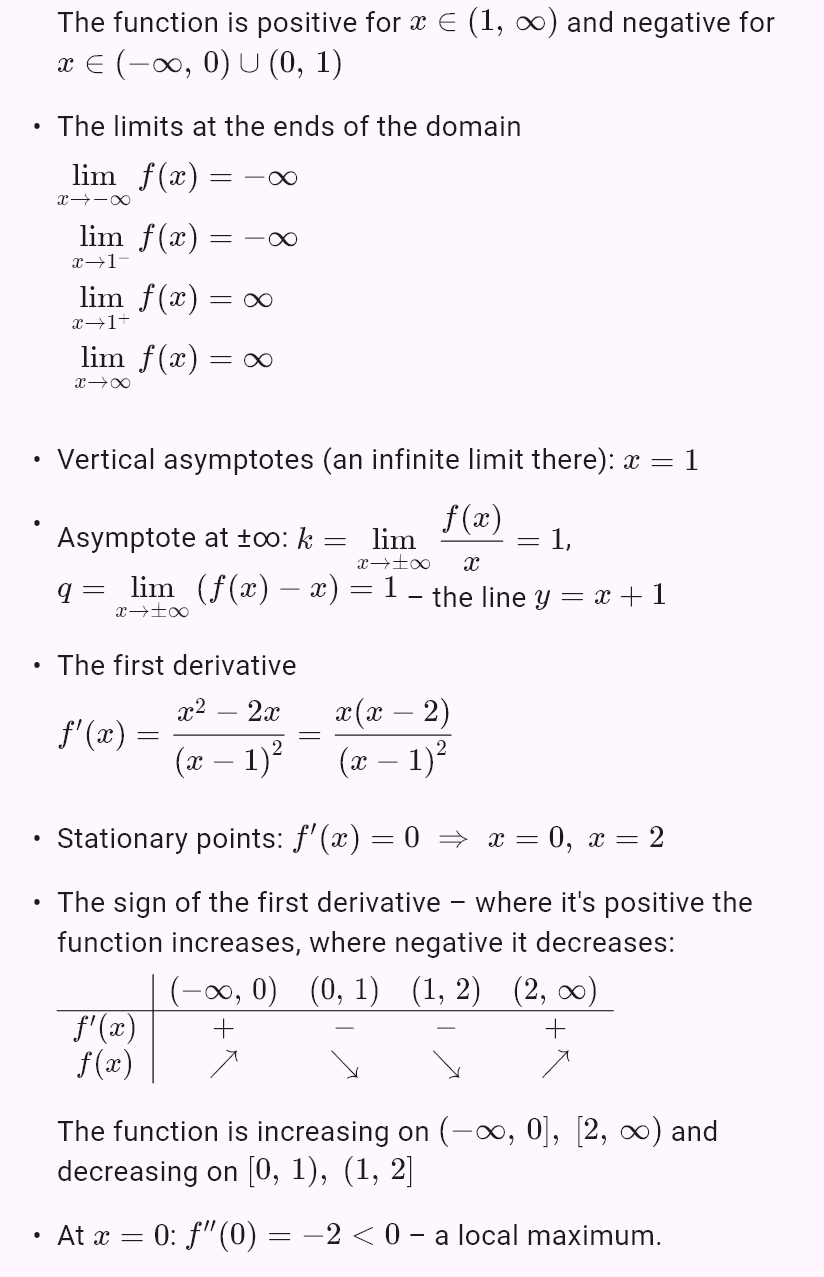
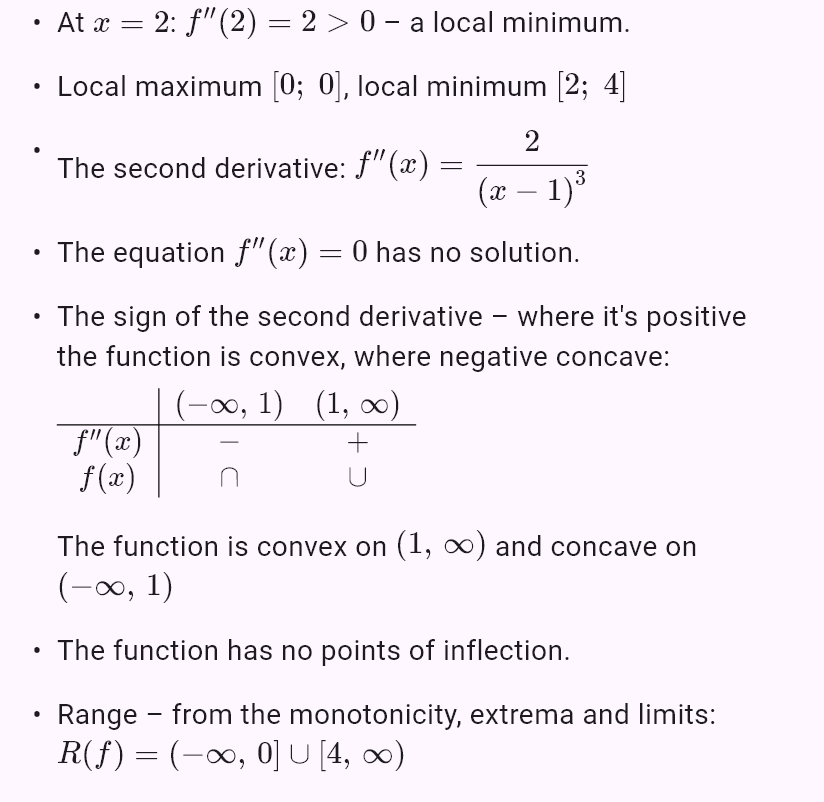
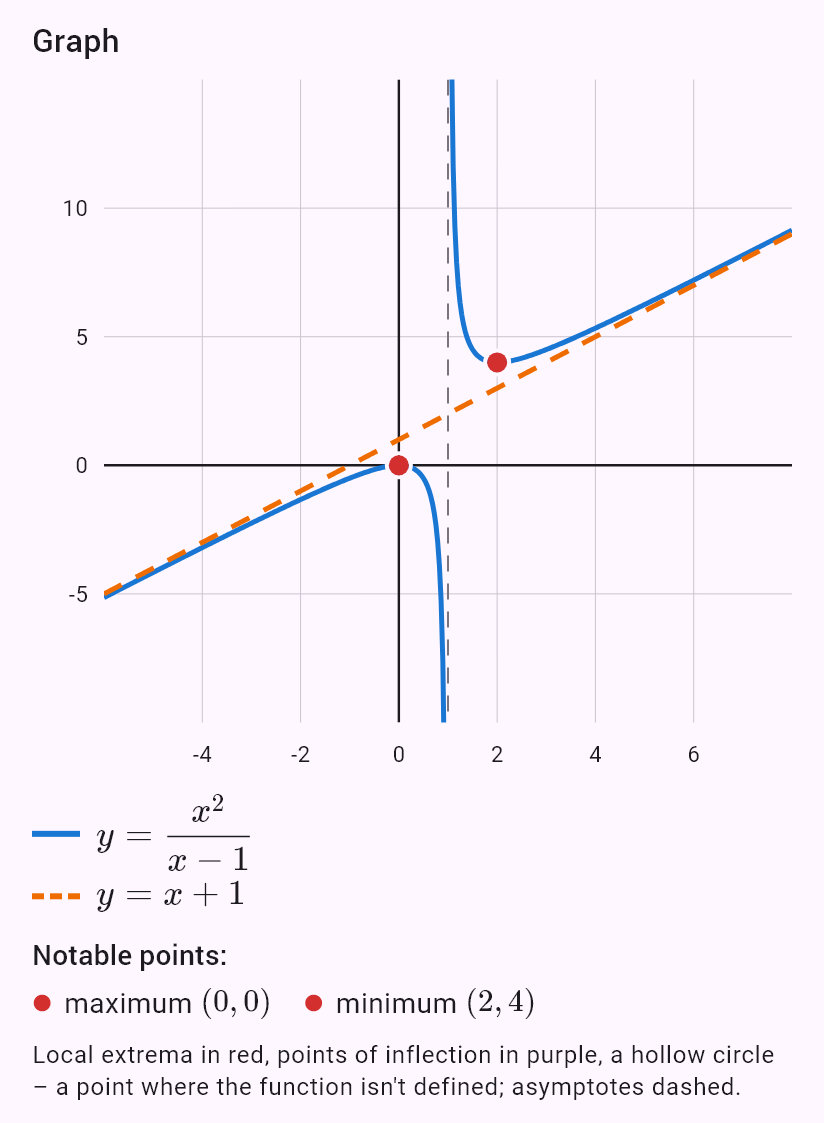
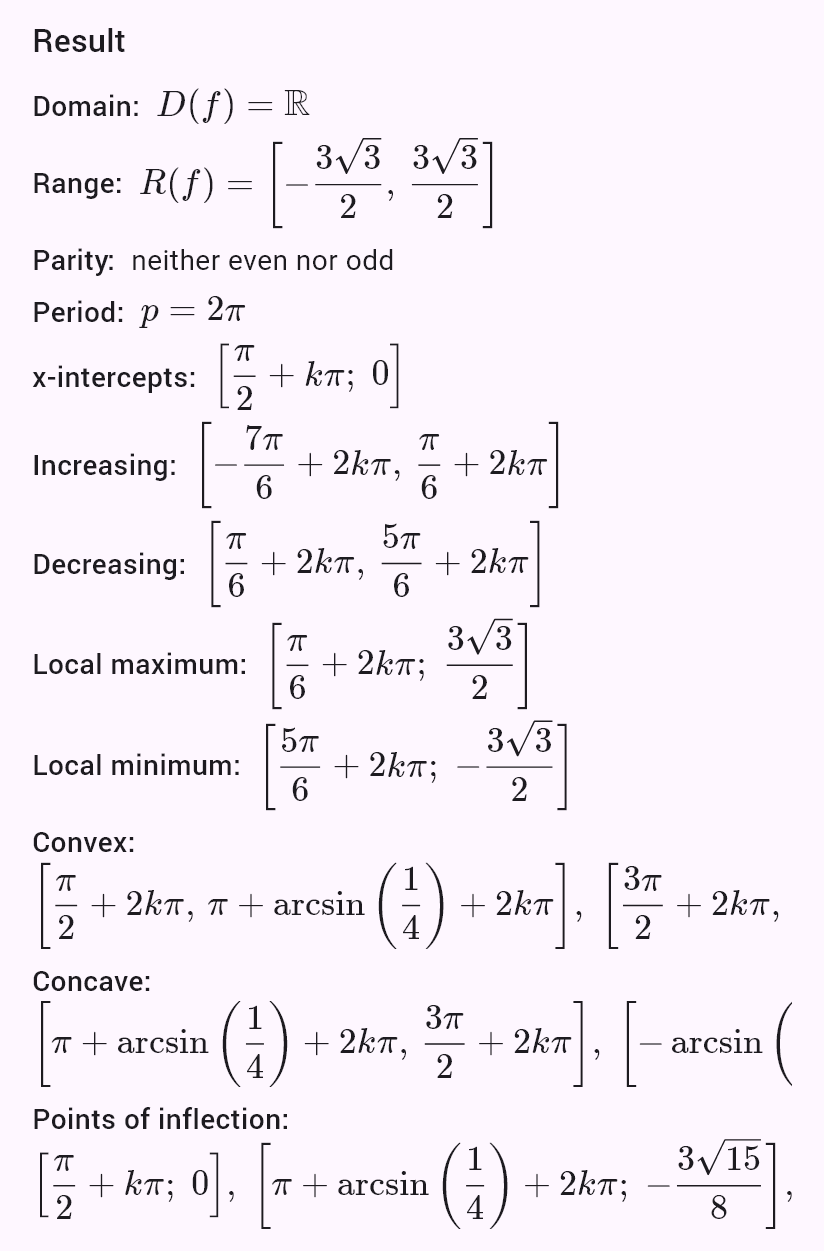
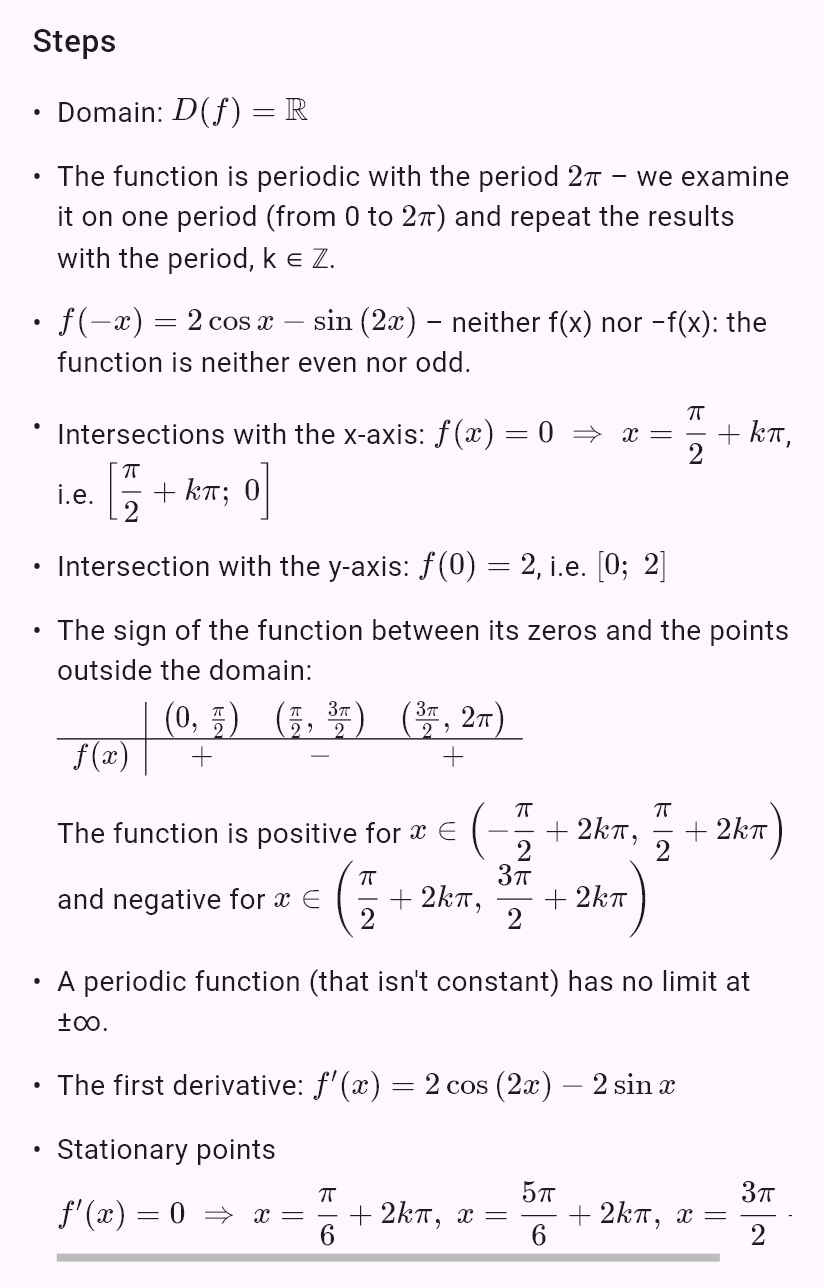
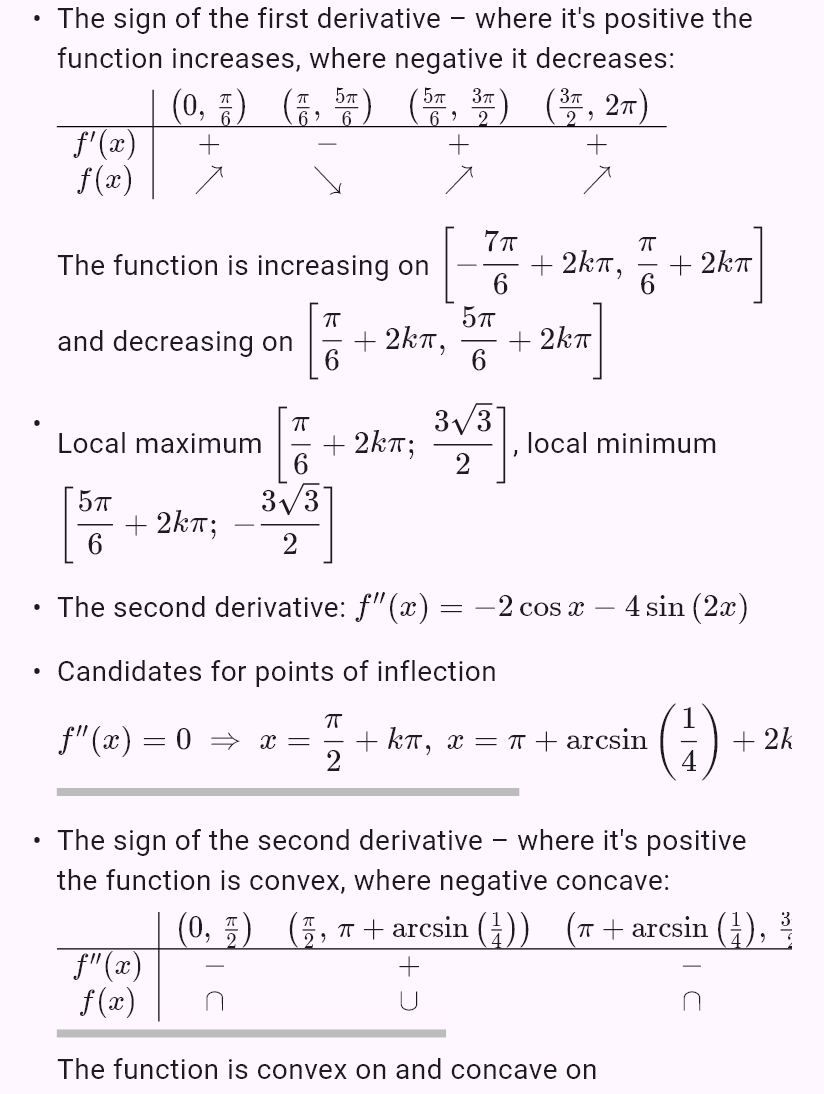
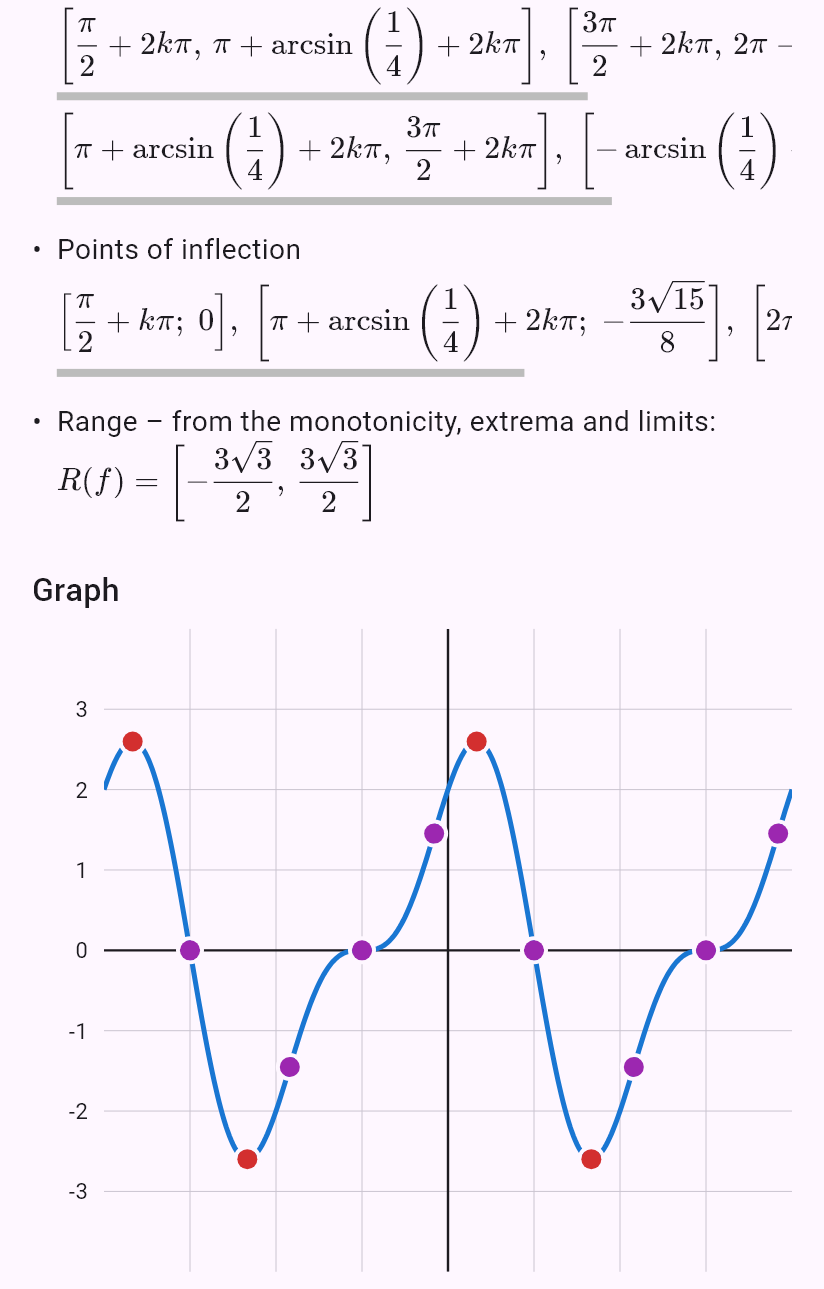
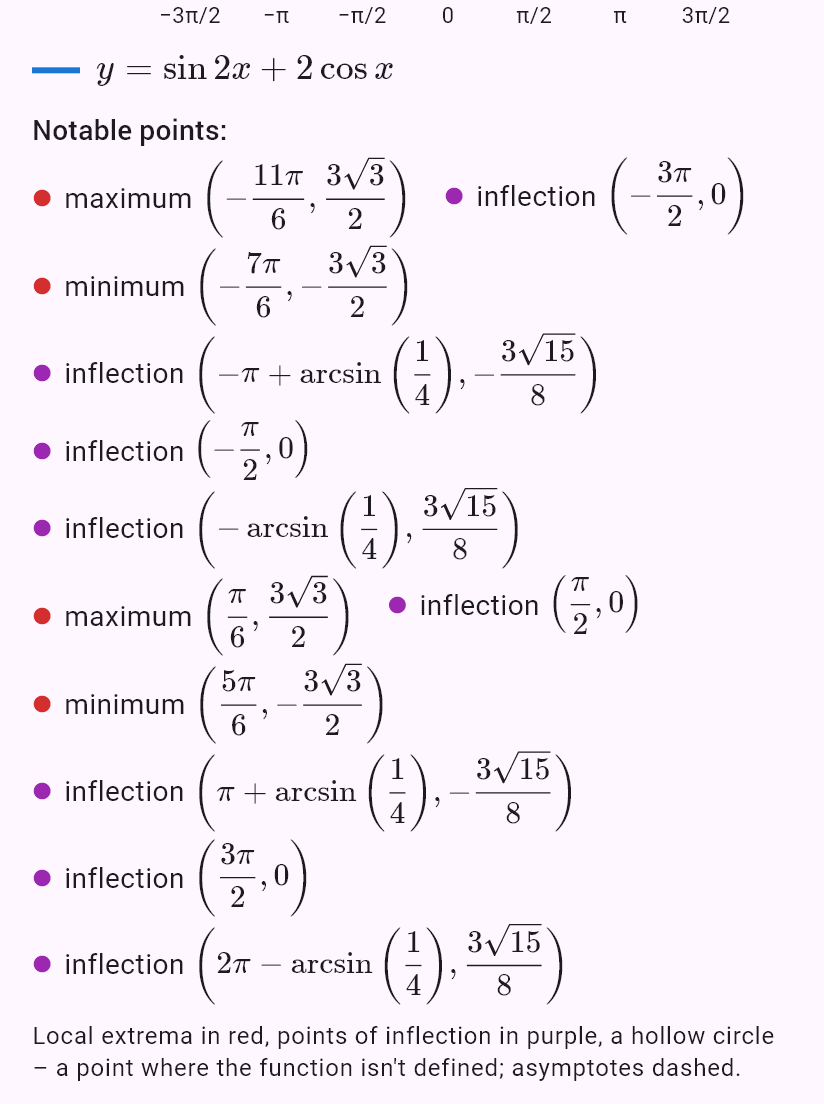
sin 2x + 2cos x Analyze function
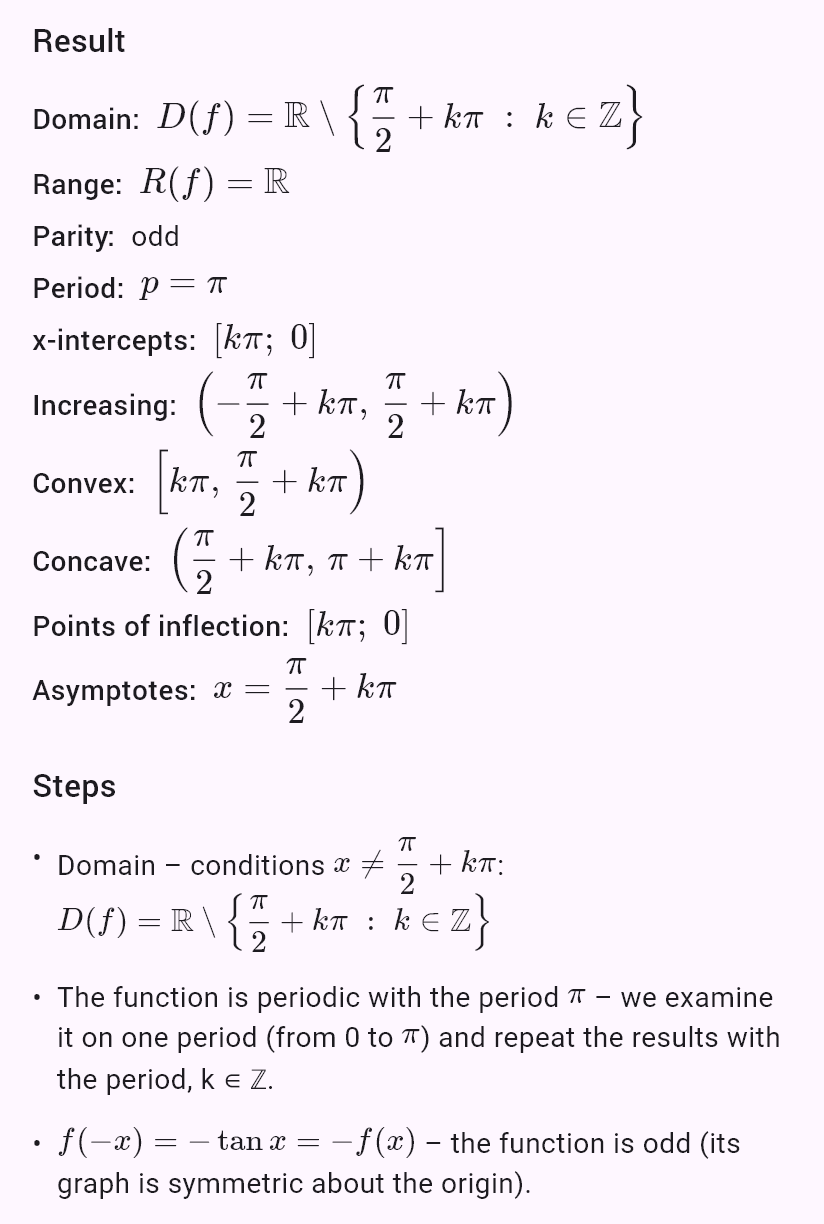
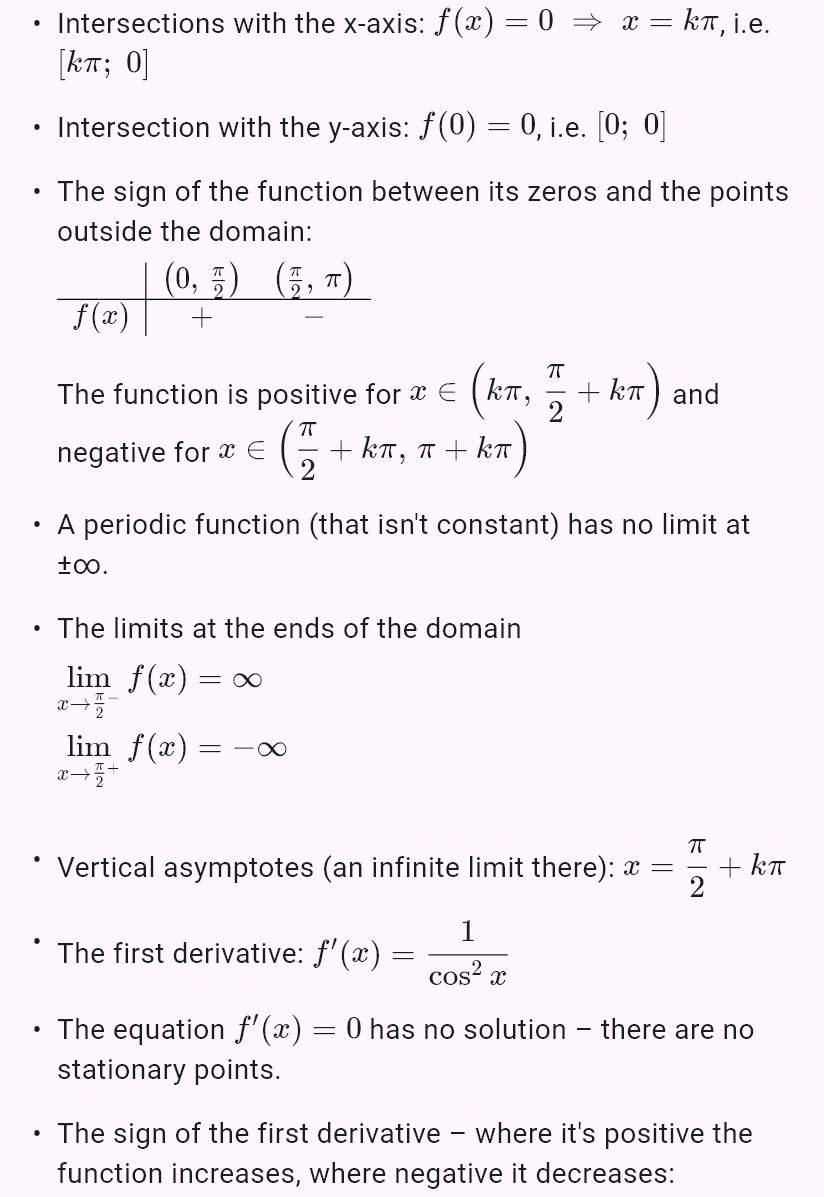
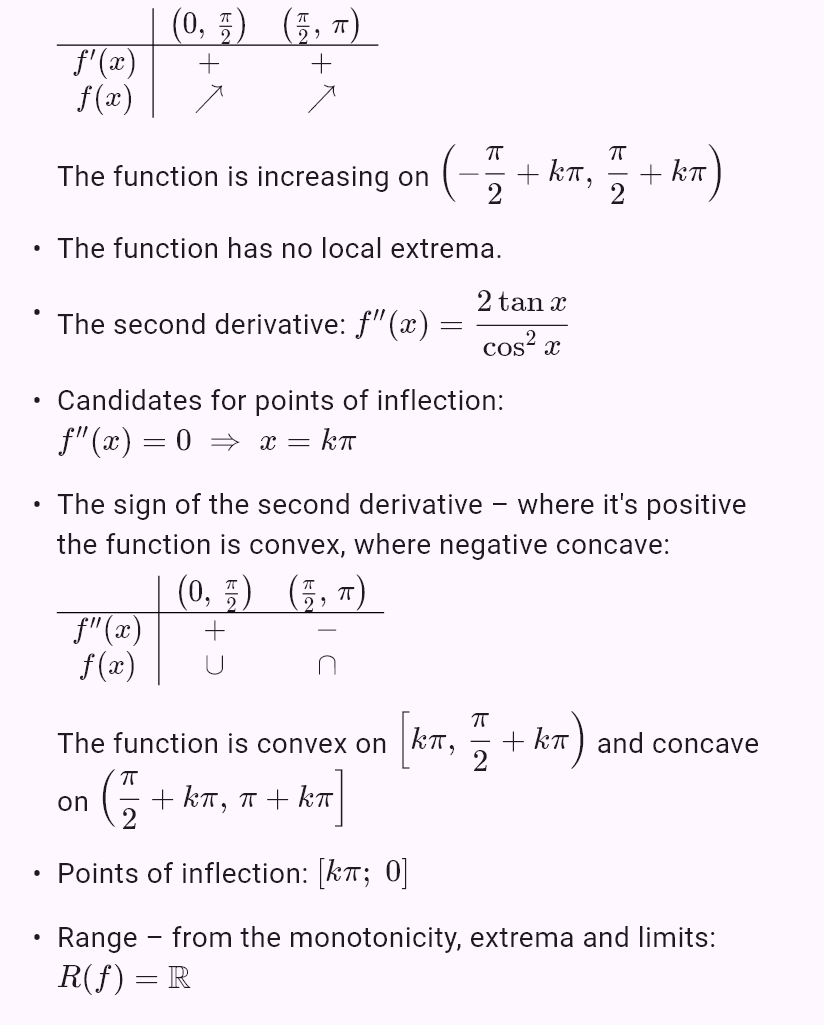
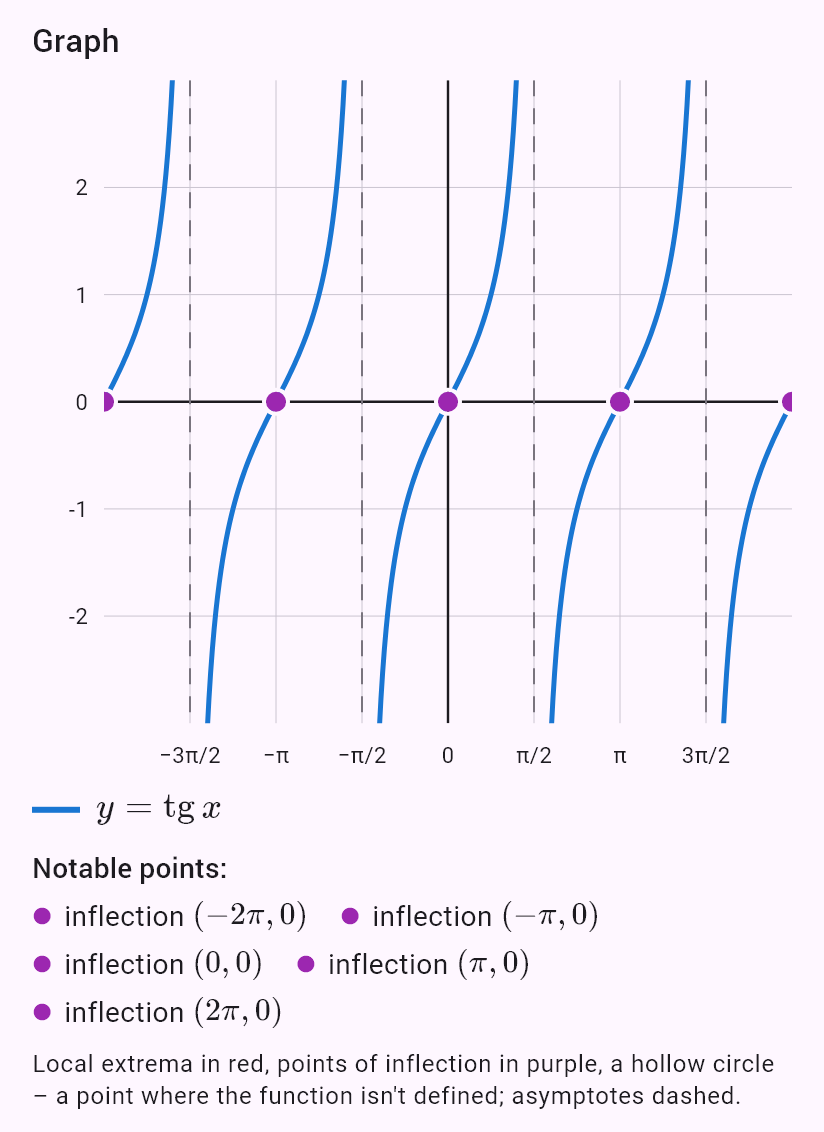
tg x Analyze function
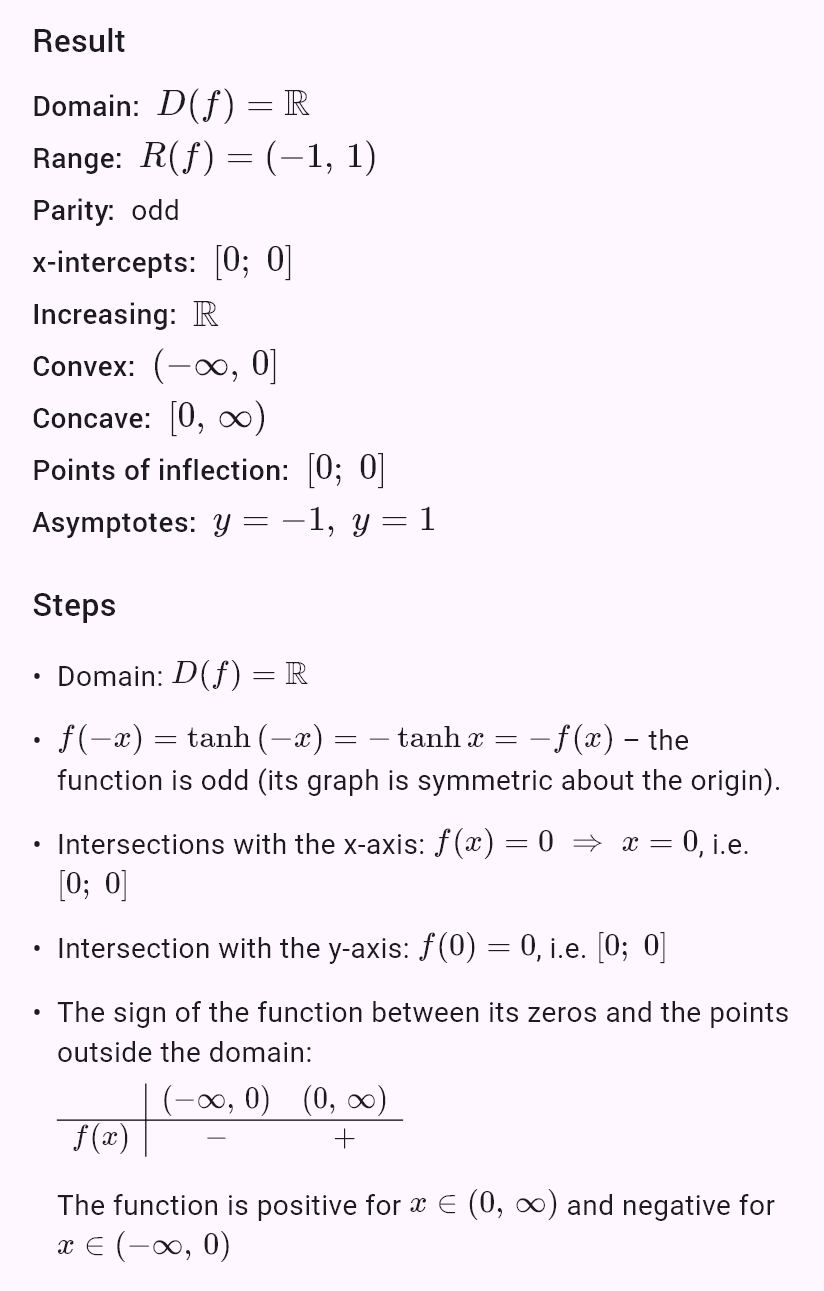
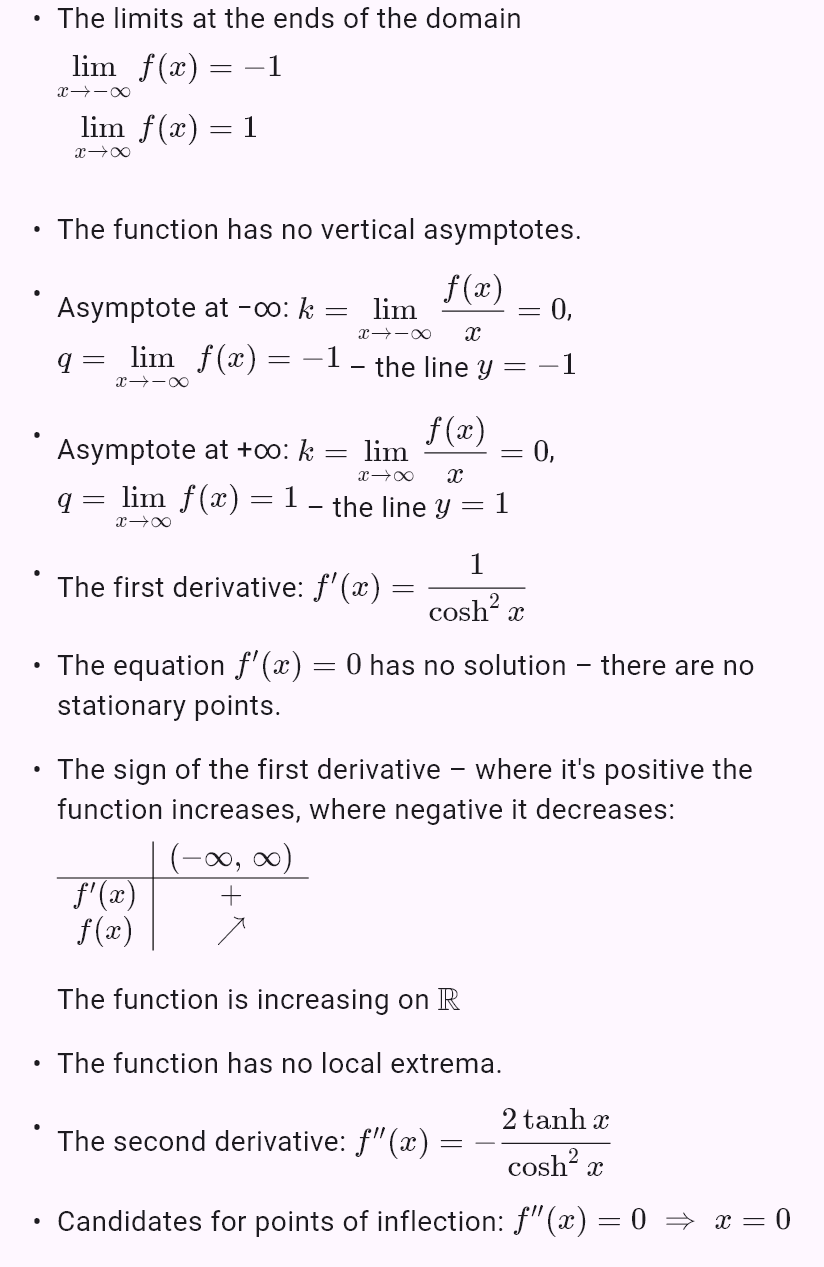
tanh x Analyze function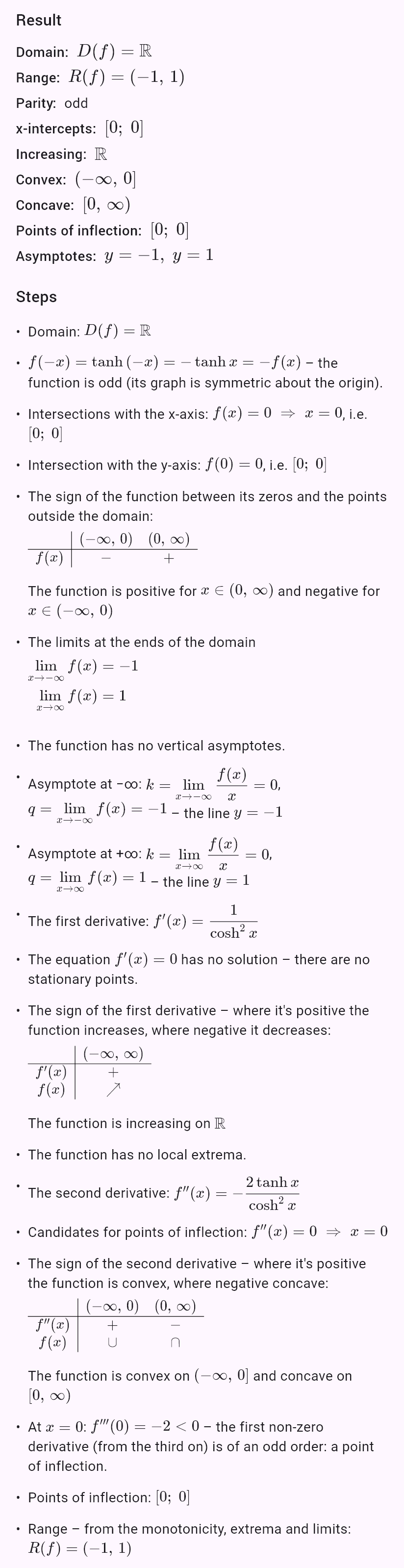
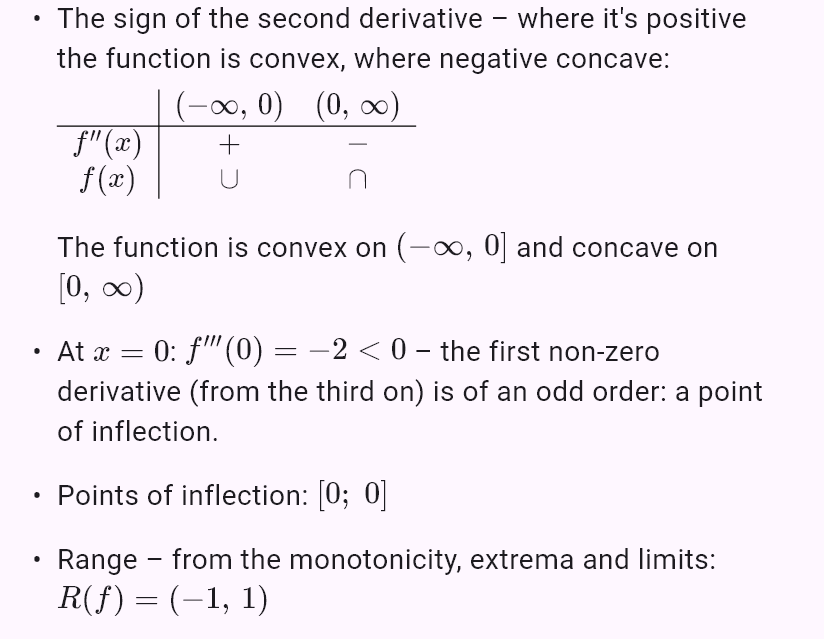
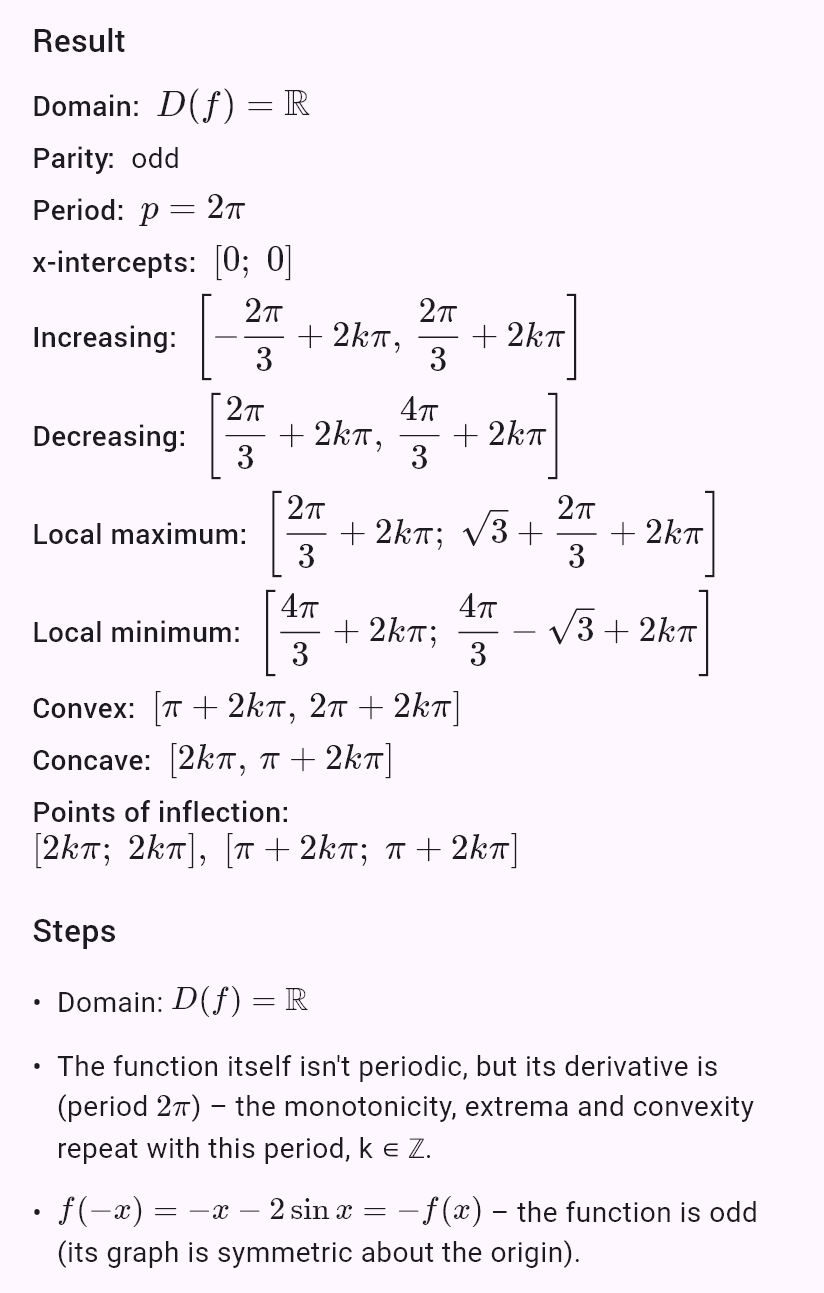
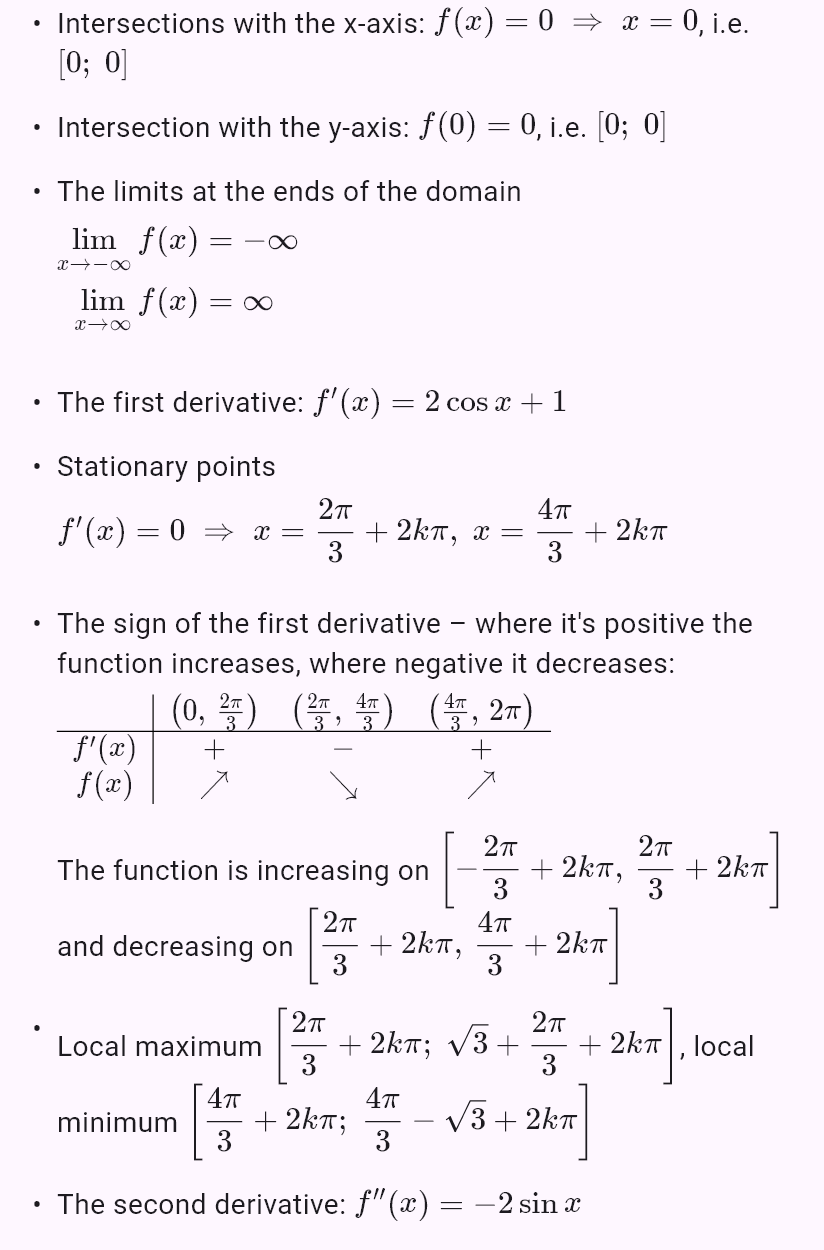
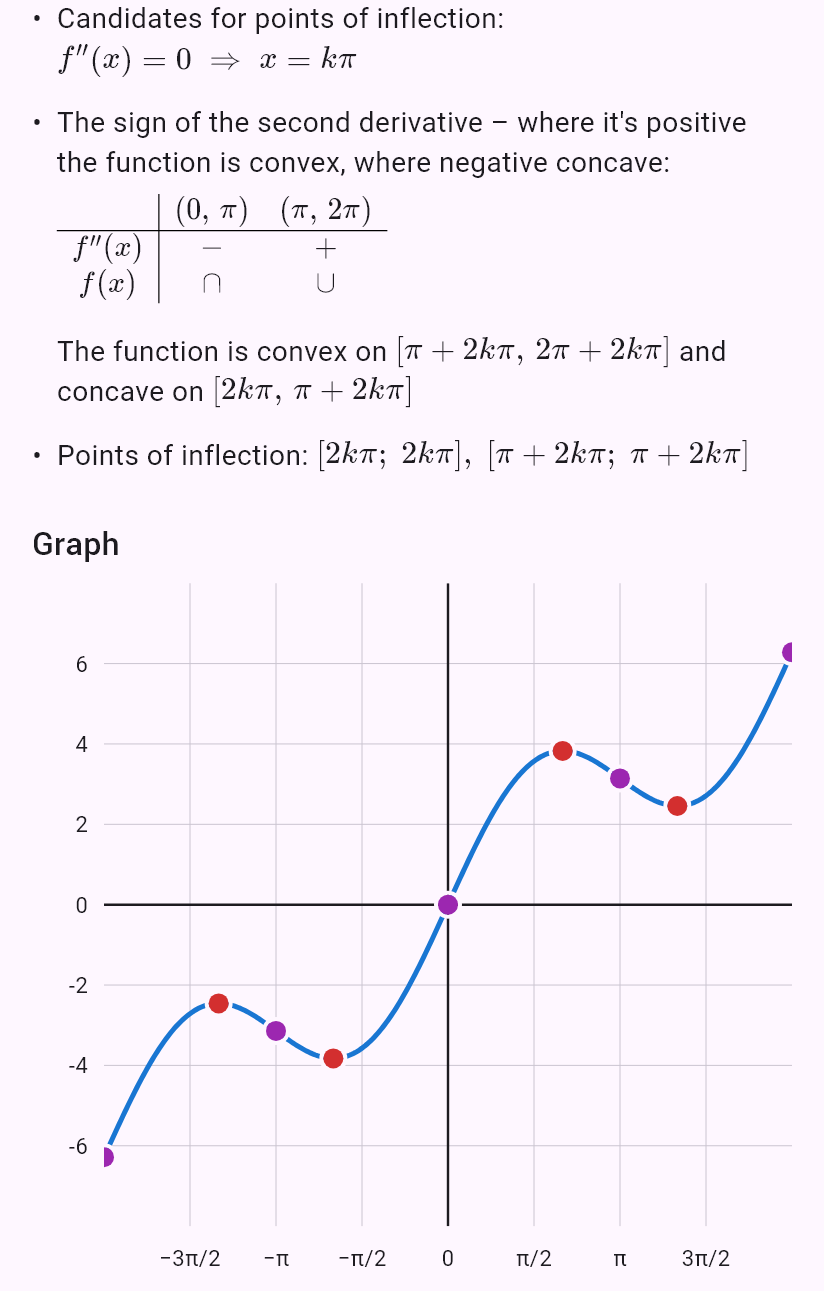
x + 2sin x Analyze function
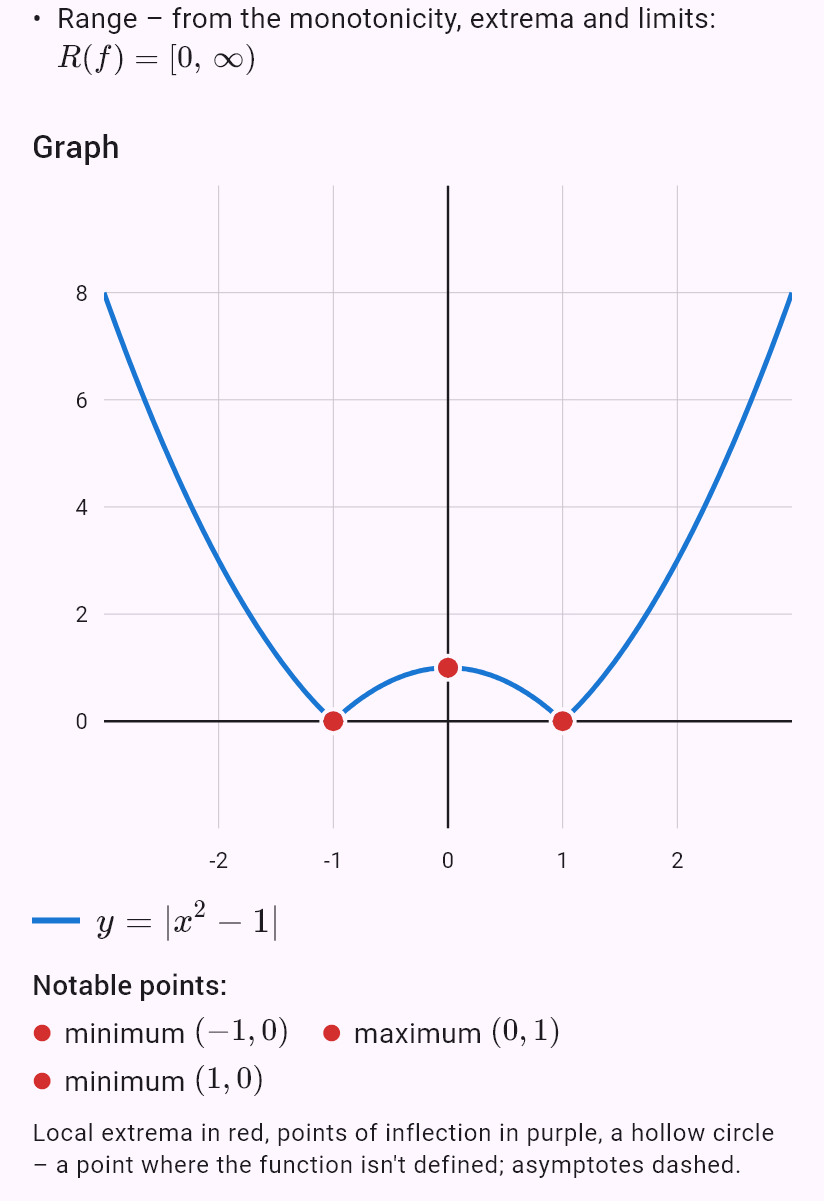
|x^2 - 1| Analyze function
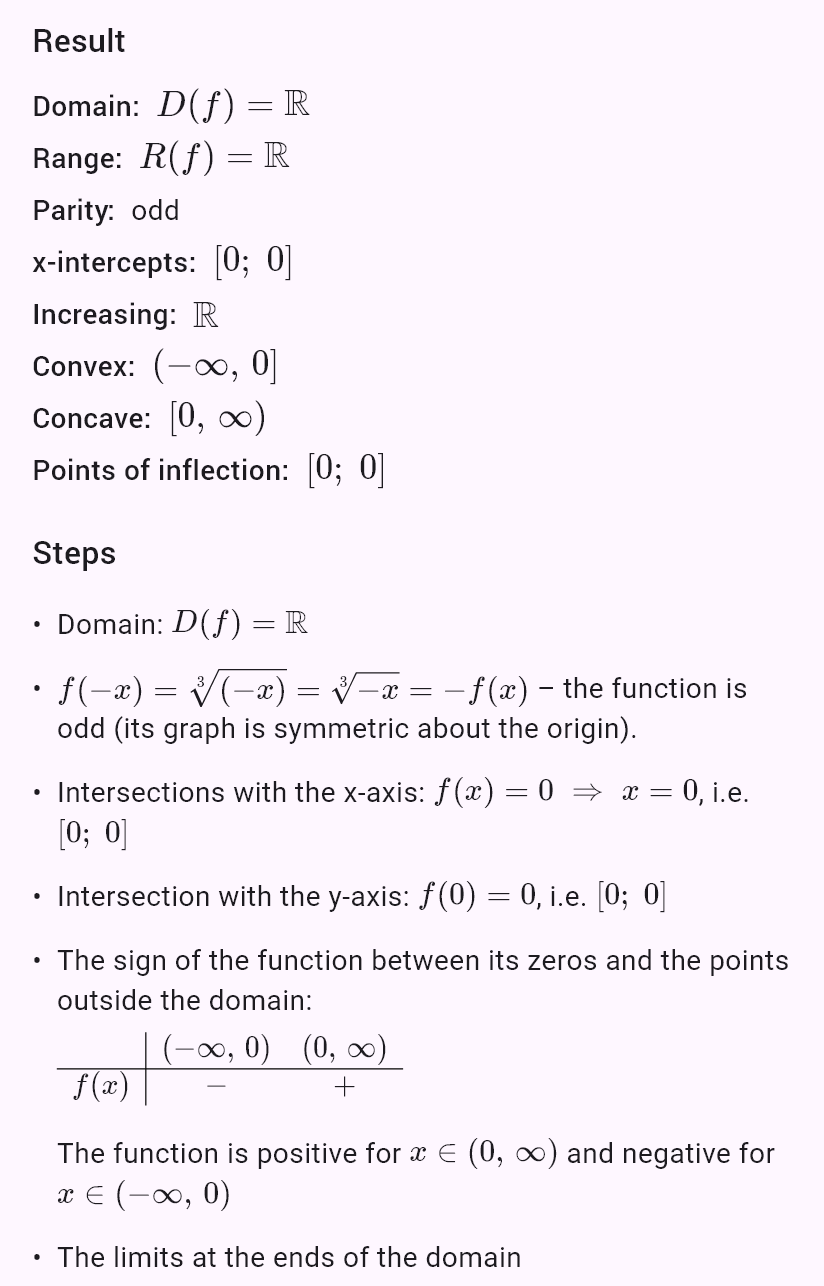
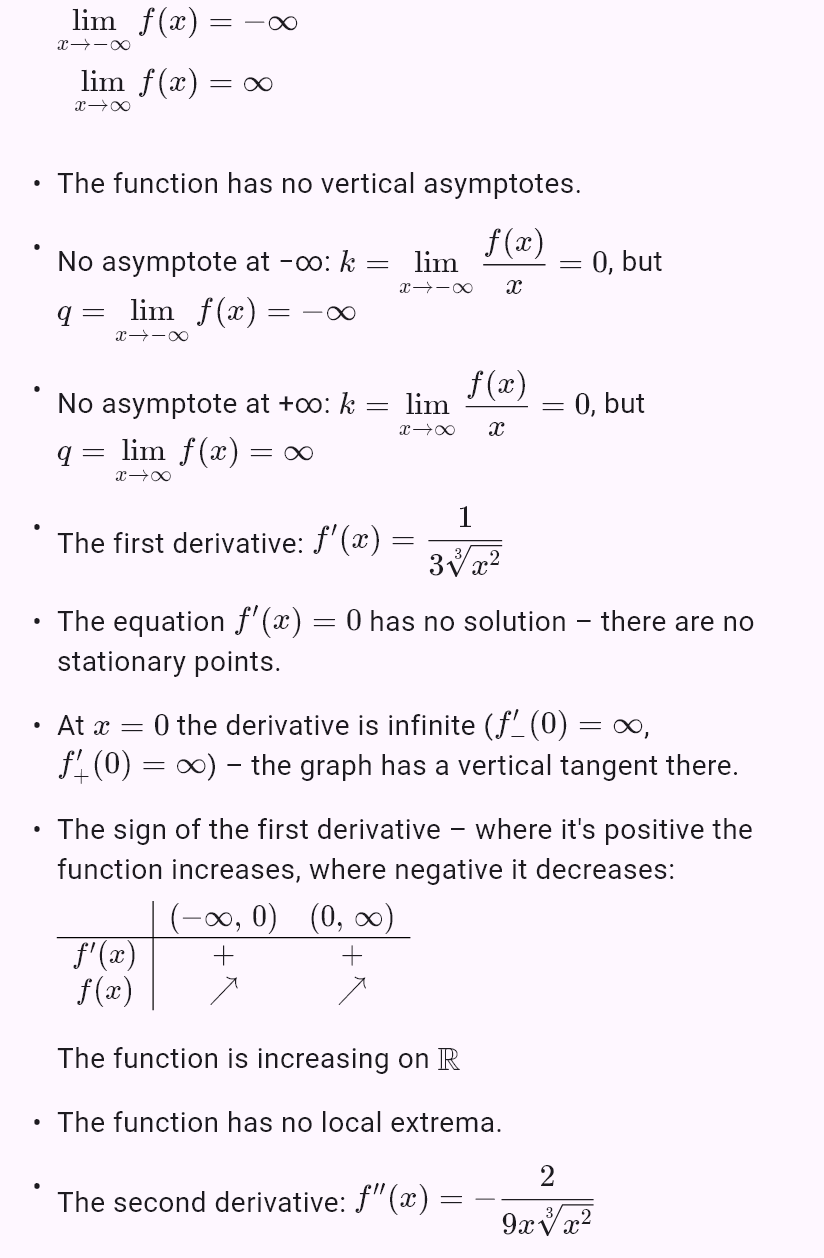
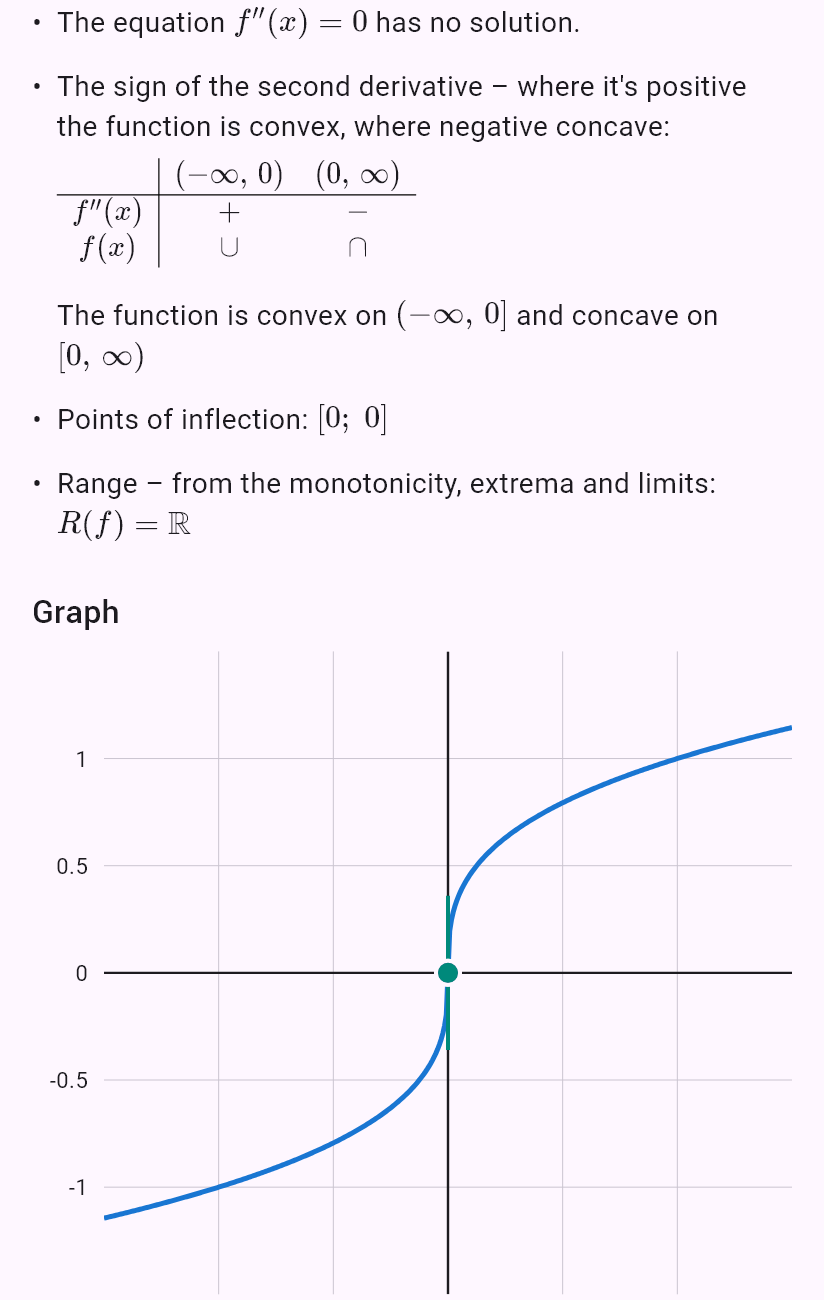
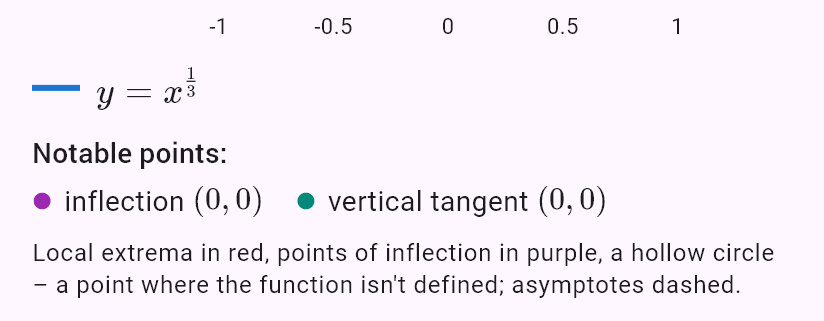
x^(1/3) Analyze function
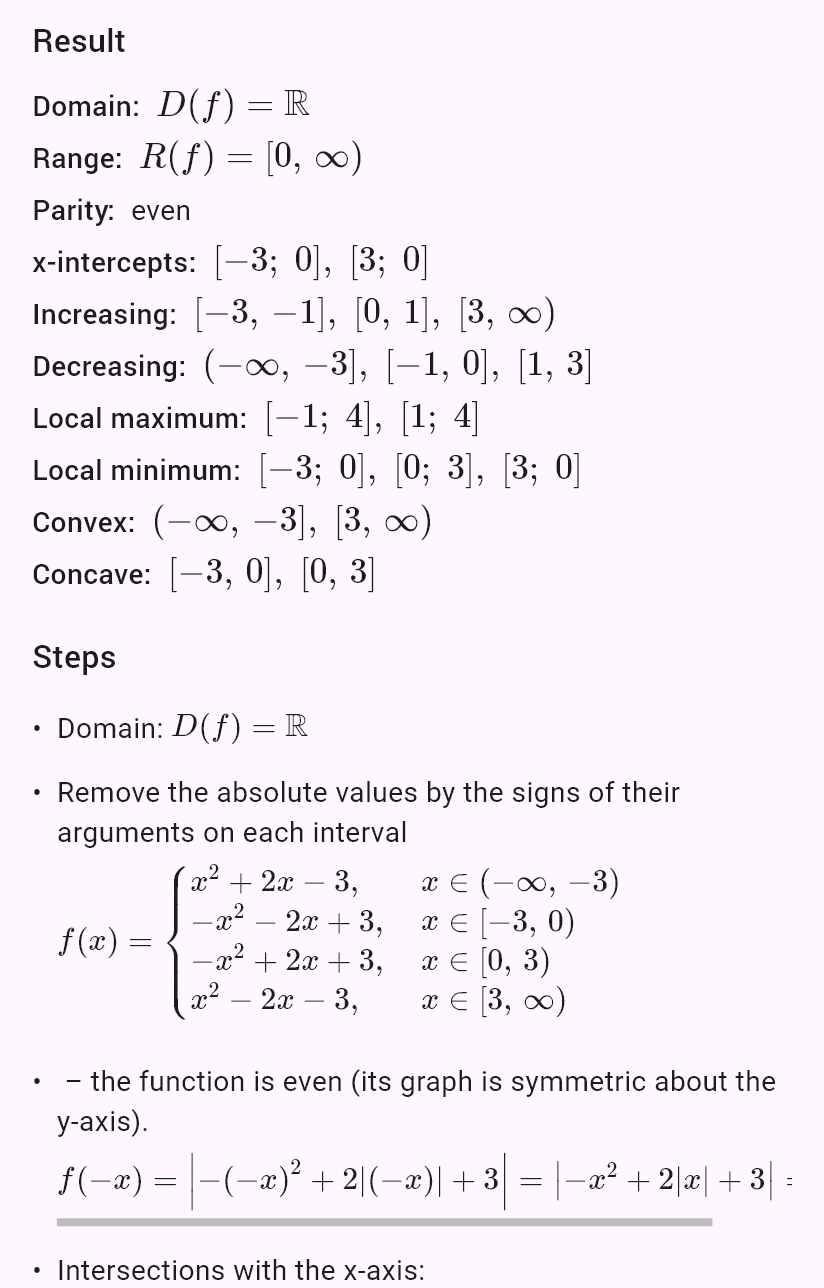
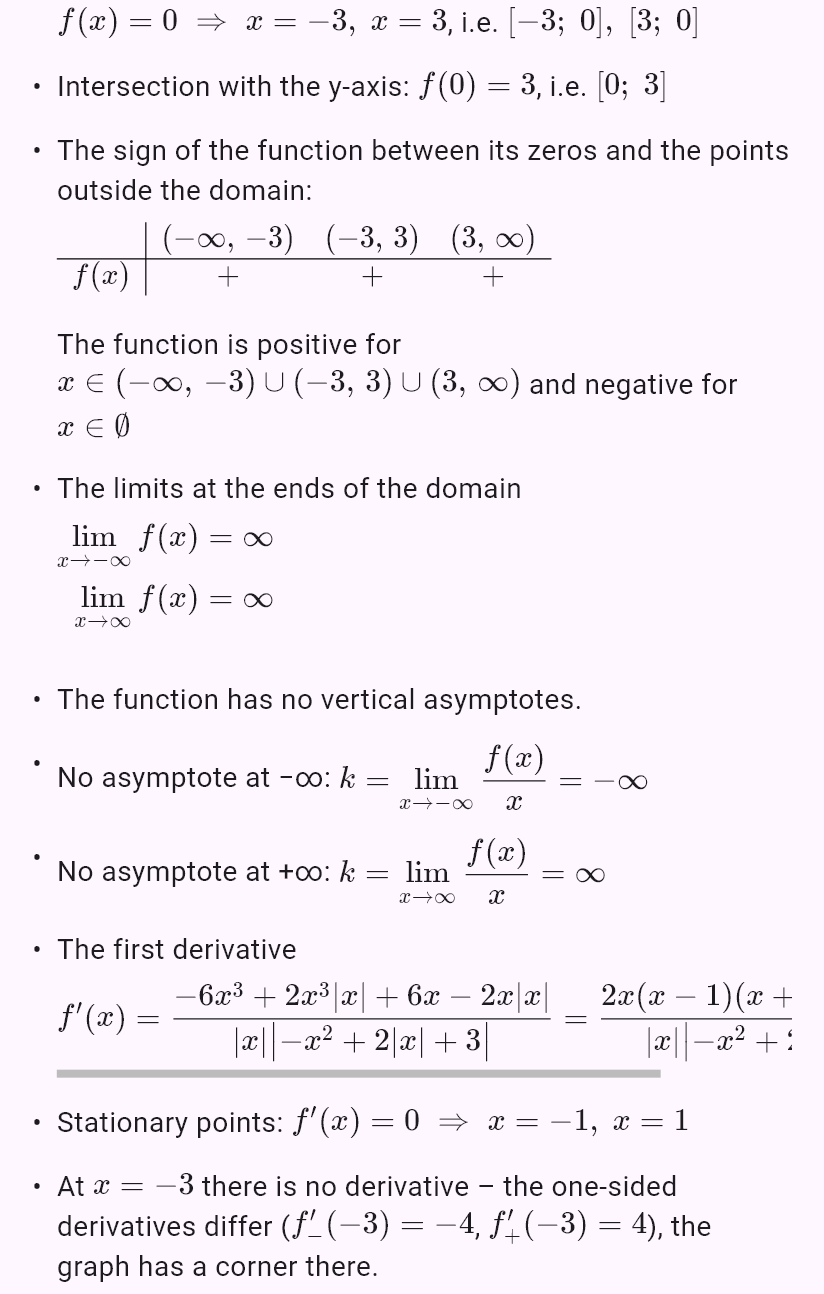
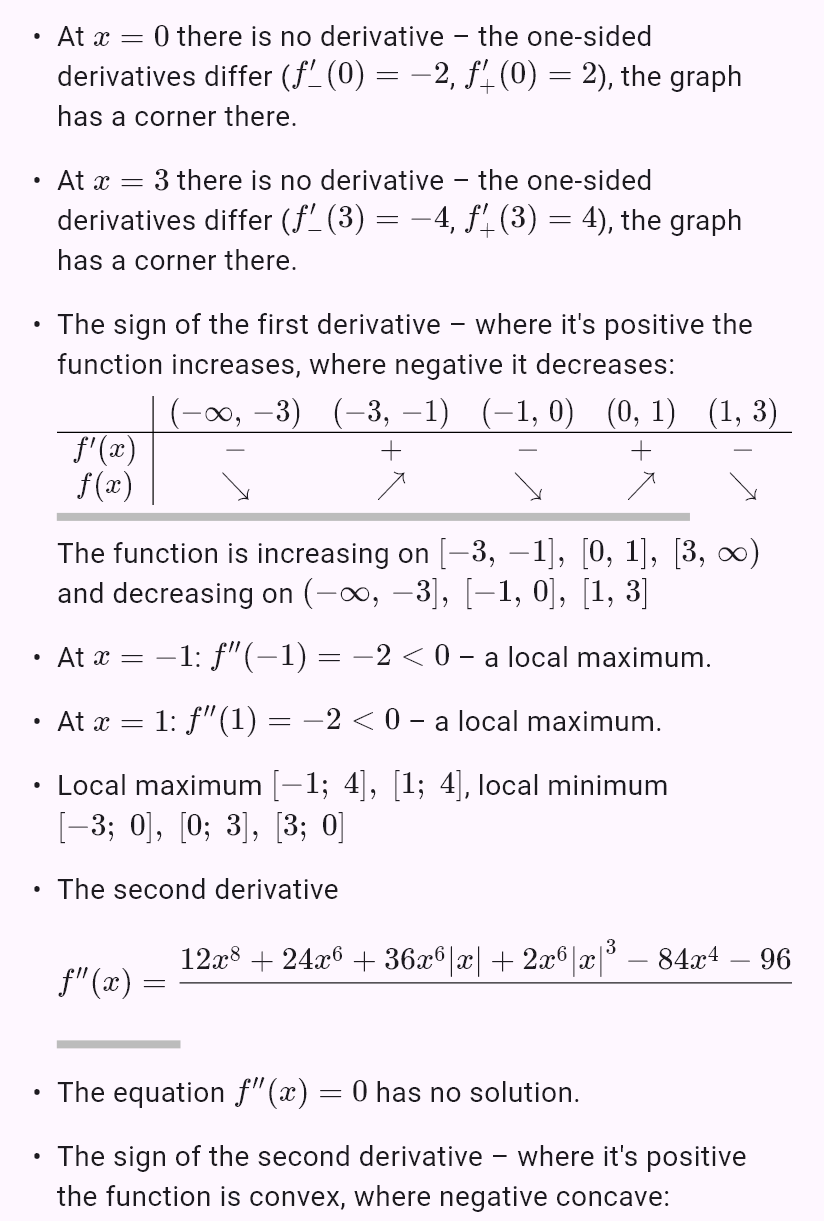
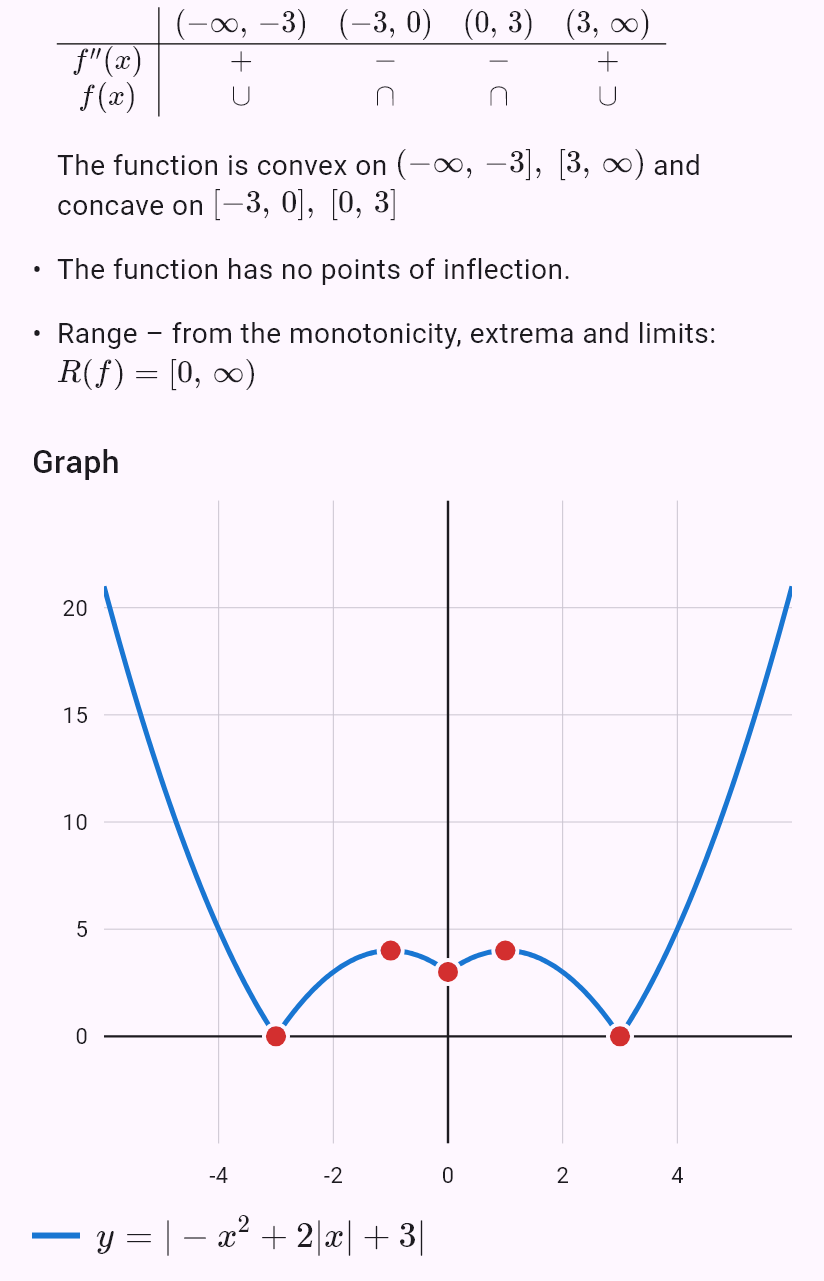
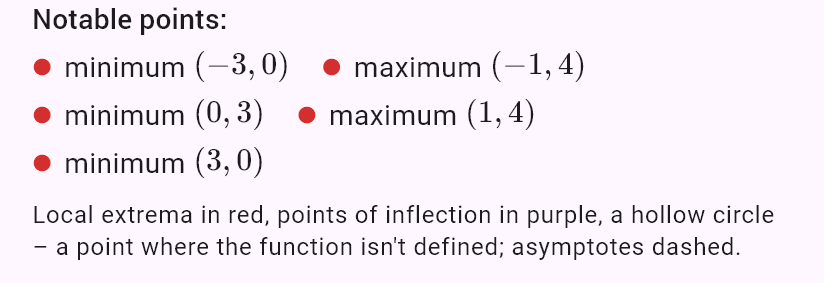
|-x^2 + 2|x| + 3| Analyze function
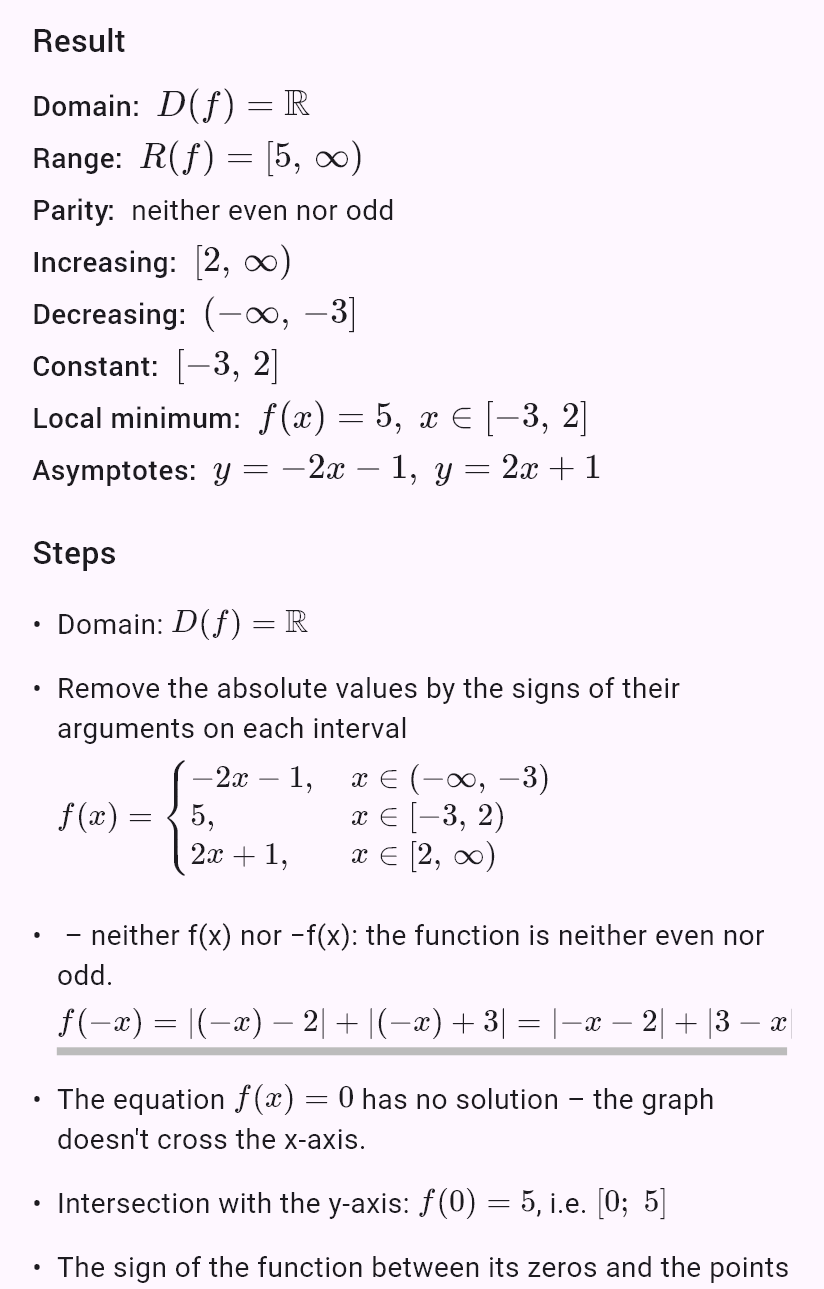
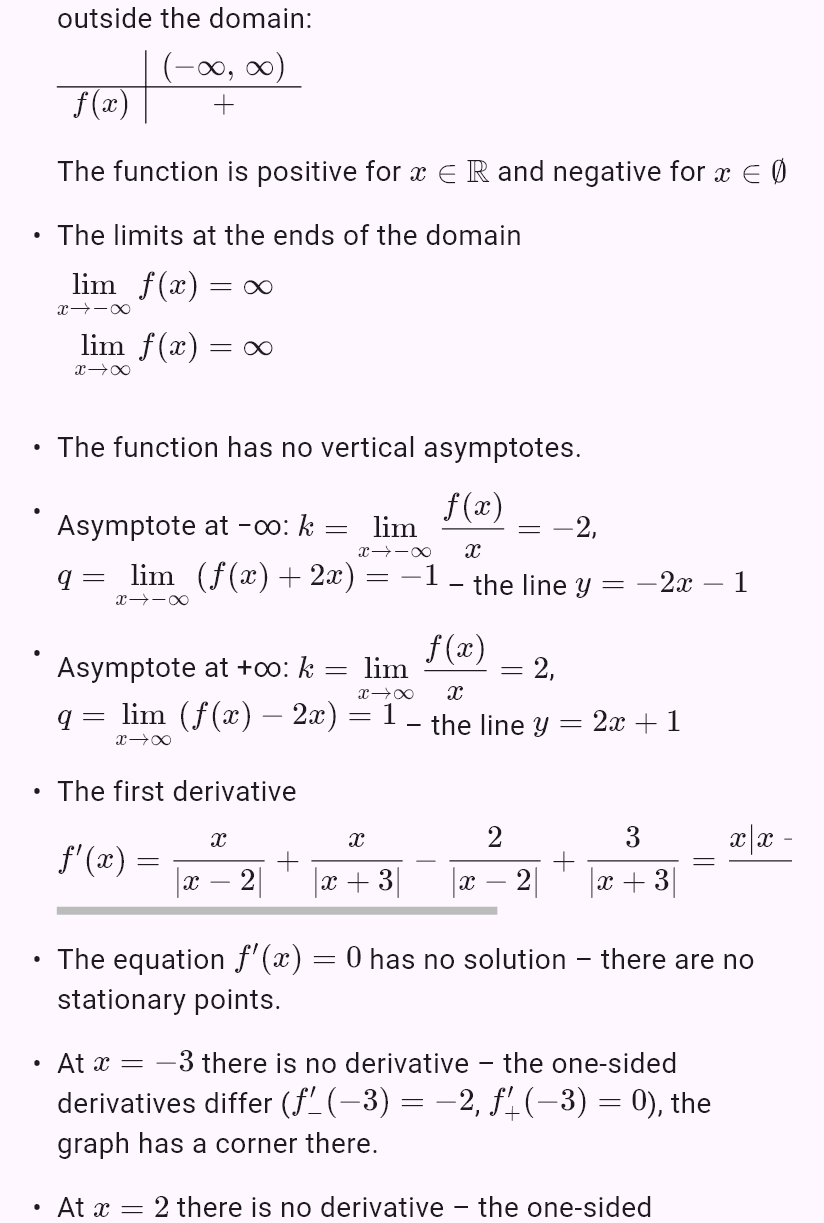
|x - 2| + |x + 3| Analyze function
Known limitations
- A function without even a periodic derivative (x·sin x) is analyzed only numerically on ⟨−2π; 2π⟩, without the period; inverse trigonometric functions (arcsin, arctan) are not supported yet.